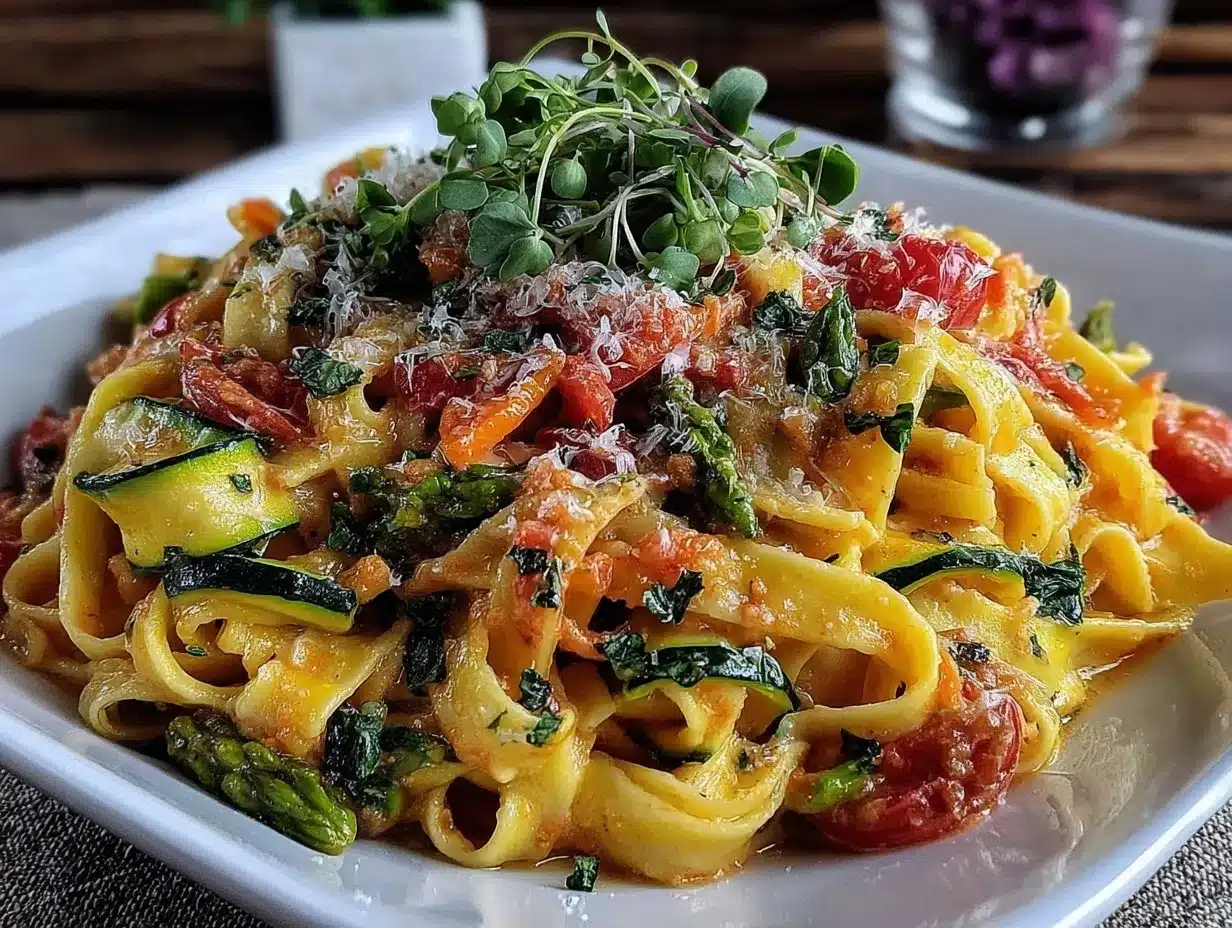
There’s something about the cheerful sizzle of garlic and olive oil in a hot skillet that never fails to draw everyone into the kitchen. The first whiff of sweet bell peppers and crisp zucchini mingling with sun-ripened tomatoes is pure magic—honestly, it’s the kind of aroma that makes the neighbors jealous (no shame there). When I made this Vegetable Primavera Pasta Recipe for the first time, the colors alone—reds, yellows, greens, and creamy pasta—made me pause, fork in midair, just to admire the rainbow I’d created. It’s the kind of moment that makes you grin, knowing you’ve just whipped up a plateful of happiness.
Years ago, when I was knee-high to a grasshopper, my grandma would let me help pick squash from her garden, teaching me that the freshest veggies make the best meals. That memory comes flooding back whenever I toss together this primavera. I first stumbled across the idea on a rainy weekend, flipping through an old cookbook, and thought, “Why not try my hand at a healthier, veggie-loaded pasta?” Now, it’s a staple for family dinners and weeknight meals—one of those dishes I wish I’d discovered ages ago.
My kids can’t stop sneaking bites straight from the pot, and my husband always goes back for seconds (even when he claims he’s full). Friends request this recipe for potlucks, and it’s the only pasta dish my picky niece will eat without complaint. The best part? It’s dangerously easy—ready in about 30 minutes—and brings pure, nostalgic comfort with every twirl of the fork. This Vegetable Primavera Pasta Recipe is just the ticket for busy nights, lazy Sundays, or anytime you want to brighten up your dinner table with fresh garden flavor. I’ve tested it every which way (in the name of research, of course), and I can tell you—it feels like a warm hug in a bowl. You’re going to want to bookmark this one!
Why You’ll Love This Vegetable Primavera Pasta Recipe
After years of tinkering with different pasta dishes—some good, some honestly not so good—I can say this Vegetable Primavera Pasta Recipe is a total game changer. Whether you’re a seasoned home cook or just getting comfortable in the kitchen, this one checks all the boxes. Here’s why you’ll reach for this recipe again and again:
- Quick & Easy: Comes together in under 30 minutes. Perfect for those nights when you want something delicious but don’t have hours to spare.
- Simple Ingredients: No need for a fancy grocery store run. Most of the ingredients are everyday veggies and pantry staples.
- Perfect for Any Occasion: Bright and colorful for a weeknight dinner, but impressive enough for guests or potluck gatherings.
- Crowd-Pleaser: Kids love it, adults rave about it, and even veggie skeptics clean their plates.
- Unbelievably Delicious: The combination of crisp-tender veggies, garlic, and a light, savory sauce makes every bite satisfying.
What sets this Vegetable Primavera Pasta apart? For starters, the veggies are sautéed just long enough to keep their bite and color—no soggy, sad zucchini here. I use a little pasta water to make a silky sauce that gently coats the noodles, which is a trick I learned from an old Italian neighbor (thanks, Mrs. Romano!). The result is a pasta that tastes fresh and vibrant, not heavy or greasy.
This isn’t just another average pasta primavera—it’s carefully balanced, with just the right amount of garlic, a pop of lemon, and a sprinkle of Parmesan to tie it all together. It’s the kind of meal that makes you close your eyes for a second and savor. Even better, it’s easily adaptable: gluten-free, vegan, low-carb—whatever your heart (or diet) desires!
At its core, this Vegetable Primavera Pasta Recipe brings comfort and joy to the table. It’s perfect for those moments when you need a quick meal but want something that feels a little special. Whether you’re feeding a crowd or just yourself, it’s sure to become a regular in your dinner rotation. And that first forkful? It’s pure, soul-soothing satisfaction.
What Ingredients You Will Need
This Vegetable Primavera Pasta Recipe uses a handful of simple, fresh ingredients to deliver bold flavor and a satisfying, colorful plate. Most of these are easy to find year-round, and you probably have several on hand already. Here’s what you’ll need:
- For the Pasta:
- 12 oz (340 g) penne pasta (or spaghetti, linguine, or your favorite shape)
- Salt, for cooking pasta
- For the Vegetables:
- 2 tbsp (30 ml) extra-virgin olive oil (plus more if needed)
- 3 cloves garlic, minced (fresh is best for bold flavor)
- 1 small red onion, thinly sliced
- 1 red bell pepper, sliced into strips
- 1 yellow bell pepper, sliced into strips
- 2 small zucchini, halved and sliced (about 2 cups/220 g)
- 1 small carrot, julienned or thinly sliced (optional but adds color and crunch)
- 1 cup (150 g) cherry tomatoes, halved (or diced Roma tomatoes)
- 1 cup (120 g) broccoli florets
- 1/2 cup (75 g) snap peas or green beans, trimmed and cut into 1-inch pieces
- For the Sauce & Finish:
- 1/2 cup (120 ml) low-sodium vegetable broth (or reserved pasta water)
- 1/2 lemon, juiced (plus more for serving)
- 1/2 cup (45 g) grated Parmesan cheese (plus extra for serving; sub vegan cheese as needed)
- 1/4 cup (10 g) fresh basil leaves, torn
- Salt and freshly ground black pepper, to taste
- Red pepper flakes, to taste (for a bit of heat, optional)
Ingredient tips & swaps:
- Swap the pasta for gluten-free or whole wheat if you prefer.
- Use whatever fresh veggies you have—yellow squash, asparagus, or mushrooms all work beautifully.
- For a vegan version, choose a plant-based Parmesan or sprinkle with nutritional yeast.
- Don’t skip the lemon—it really brightens the flavors!
- If tomatoes aren’t in season, use good quality canned diced tomatoes (drained).
- I love Barilla or De Cecco pasta, but any favorite brand works well here.
Honestly, the beauty of this Vegetable Primavera Pasta Recipe is its flexibility. You can make it with whatever’s in the crisper drawer and still end up with a dinner that shines.
Equipment Needed
You don’t need a fancy kitchen setup to make this Vegetable Primavera Pasta Recipe. Here’s what you’ll want on hand (and a few tips for making do if you’re missing something):
- Large pot: For boiling your pasta. Any sturdy stockpot will do.
- Large skillet or sauté pan: A 12-inch skillet is perfect for sautéing all those veggies without crowding them.
- Colander: For draining pasta. If you don’t have one, a slotted spoon works in a pinch.
- Sharp knife and cutting board: For prepping your veggies. A chef’s knife makes quick work of slicing.
- Wooden spoon or silicone spatula: For stirring.
- Microplane or cheese grater: For grating Parmesan (if using pre-grated, no worries!).
- Measuring cups and spoons: To get those sauce ingredients just right.
If you’re missing a sauté pan, try using a Dutch oven or even a deep fry pan (done it myself, works just fine). I’ve used budget-friendly sets from IKEA and Target for years—just keep the pan dry and avoid metal utensils to make them last. If you love freshly grated cheese (who doesn’t?), a simple box grater works wonders. And hey, if you’re cooking in a tiny kitchen, you can totally get away with one pot and a frying pan—no judgments here!
How to Make Fresh Garden Vegetable Primavera Pasta
-
Prep Your Ingredients (10 minutes):
Wash and dry all your veggies. Slice the red onion, bell peppers, zucchini, and carrot. Halve the cherry tomatoes, cut the broccoli into small florets, and trim the snap peas. Mince the garlic. Having everything ready to go makes the cooking process much smoother. (Trust me, you don’t want to be scrambling to slice peppers while the onions burn.)
-
Cook the Pasta (8-10 minutes):
Bring a large pot of salted water to a boil. Add 12 oz (340 g) penne or your pasta of choice. Cook according to package instructions until al dente—about 8-10 minutes. Reserve 1/2 cup (120 ml) of the pasta water, then drain the rest in a colander. Set aside.
Tip: Don’t overcook! The pasta will cook a bit more when tossed with the veggies and sauce.
-
Sauté the Vegetables (8-10 minutes):
While the pasta cooks, heat 2 tbsp (30 ml) olive oil in a large skillet over medium-high heat. Add the sliced onion and cook for 2 minutes, until just softened. Stir in the minced garlic and cook for 30 seconds—just until fragrant (don’t let it burn!).
Add the bell peppers, zucchini, and carrot. Sauté for 3-4 minutes, stirring occasionally. The veggies should be crisp-tender and bright—if they start to brown too much, turn down the heat. Add the broccoli and snap peas, and cook for another 2-3 minutes.
Toss in the cherry tomatoes and cook for another minute, until they just start to soften and release a little juice.
Note: If the pan gets dry, add a splash more olive oil or a bit of the reserved pasta water.
-
Make the Sauce (2 minutes):
Pour in 1/2 cup (120 ml) vegetable broth (or reserved pasta water). Scrape up any brown bits from the bottom of the pan—they add great flavor! Add the juice of half a lemon. Season with salt, pepper, and a pinch of red pepper flakes if you like a little heat. Let everything simmer for 1-2 minutes, just to marry the flavors.
-
Combine Pasta and Sauce (2 minutes):
Add the drained pasta to the skillet with the veggies and sauce. Toss everything together gently, adding more reserved pasta water if the sauce seems dry. Sprinkle in 1/2 cup (45 g) grated Parmesan cheese and half the torn basil leaves. Toss again so every noodle gets a little cheesy goodness.
Sensory cue: The pasta should be glossy and lightly coated, not soupy.
-
Taste and Adjust (1 minute):
Give everything a taste. Add more salt, pepper, lemon juice, or Parmesan to suit your preference. (I always add a little more cheese—can’t help myself!)
-
Serve:
Transfer to bowls or a big serving platter. Top with the remaining fresh basil, extra Parmesan, and a squeeze of lemon if you like.
Troubleshooting: If the sauce is too thin, simmer for a minute to reduce. If it’s too thick, add a splash of pasta water. Veggies too soft? Try cooking them in batches next time so the pan stays hot and everything sautés evenly. And remember, a little char on the veggies adds great flavor—just don’t let them burn!
Cooking Tips & Techniques
Let’s face it, pasta primavera can go sideways if you’re not careful. I’ve had my share of soggy vegetables and bland noodles, but after making this Vegetable Primavera Pasta Recipe more times than I can count, I’ve picked up some trusty tricks:
- Don’t Overcrowd the Pan: Give your veggies room to breathe. If you pile them all in at once, they’ll steam instead of sauté. Cook in batches if your skillet’s small.
- Stagger Your Veggies: Start with the firmer ones (carrots, onions), then add softer ones (zucchini, tomatoes) later. This keeps everything perfectly crisp-tender.
- Use Pasta Water: That starchy water is gold! It helps the sauce cling to the noodles and brings everything together. Don’t forget to reserve some before draining.
- Watch the Garlic: Burned garlic tastes bitter—add it after your onions have softened, and keep an eye on the heat.
- Balance the Flavors: Don’t skip the lemon or fresh basil. They brighten the dish and keep it from feeling heavy.
- Taste As You Go: Every veggie, cheese, and broth is a little different. Adjust salt, pepper, and lemon juice at the end so it’s just right for you.
I’ve learned (the hard way) that if you rush and dump everything in at once, you’ll end up with mushy vegetables and watery sauce. Slowing down—even just a minute or two—makes all the difference. Multitasking helps: start your pasta water, then chop veggies while it heats. And if you love a little crunch, don’t be afraid to leave the broccoli and snap peas a bit underdone—they’ll finish softening in the hot pasta.
Consistency is key. Use the same brand of pasta and cheese if you can, and stick to the cook times. Once you’ve made it a couple times, you’ll get a feel for the timing. And if something goes wrong? Just sprinkle on a little extra cheese and call it rustic—no one’s judging!
Vegetable Primavera Pasta Variations & Adaptations
The best part about this Vegetable Primavera Pasta Recipe is how easy it is to mix things up. Here are some of my favorite twists:
- Low-Carb or Gluten-Free: Swap regular pasta for chickpea, lentil, or gluten-free noodles. For a super-low-carb version, use spiralized zucchini or spaghetti squash in place of pasta.
- Seasonal Veggies: In spring, add fresh asparagus or peas. In fall, try roasted butternut squash or sautéed mushrooms. Whatever’s in season (and on sale) works great.
- Protein Boost: Stir in grilled chicken, shrimp, or white beans for extra staying power. For a vegan boost, add crispy tofu or tempeh cubes.
- Spicy Kick: Add more red pepper flakes or a spoonful of Calabrian chili paste for heat lovers.
- Dairy-Free: Skip the Parmesan or use nutritional yeast or your favorite vegan cheese for a plant-based version.
- Different Sauces: Swap the broth and lemon for a splash of homemade pesto, or stir in a spoonful of sun-dried tomato puree for a richer sauce.
Personally, I love adding thin asparagus and a handful of arugula in the spring—those delicate greens wilt right into the hot pasta and add a peppery bite. For my gluten-free friends, brown rice pasta works like a charm (just watch the cook time so it doesn’t get mushy). Whatever you do, don’t be afraid to experiment—this recipe is basically a blank canvas for your favorite flavors and dietary needs.
Serving & Storage Suggestions
This Vegetable Primavera Pasta Recipe is best served hot, straight from the skillet, when the veggies are still vibrant and the cheese is melty. If you’re feeling fancy, pile it high on a big platter, scatter more fresh basil and lemon zest over the top, and call everyone to the table—it’s a feast for the eyes as well as the taste buds.
Serving ideas:
- Pair with a simple green salad and crusty garlic bread for a complete meal.
- Add a glass of chilled white wine or sparkling water with lemon for a refreshing touch.
- Top with extra Parmesan and a drizzle of good olive oil for a restaurant-worthy finish.
Storage tips:
- Leftovers keep well in an airtight container in the fridge for up to 3 days.
- To reheat, add a splash of water or broth and warm gently in a skillet over low heat. (Microwaving works too, but the pasta can dry out—cover with a damp paper towel if you go this route.)
- Freezing isn’t ideal, since the veggies can get mushy, but it works in a pinch—just thaw overnight in the fridge and reheat as above.
Honestly, I think the flavors deepen after a night in the fridge—making leftovers even better for lunch the next day. Just don’t forget to add a squeeze of lemon before serving to freshen things up!
Nutritional Information & Benefits
This Vegetable Primavera Pasta Recipe is lighter than most creamy pastas but still super satisfying. Here’s a ballpark of what you’re getting per serving (based on 4 servings):
- Calories: 350-400
- Protein: 13-15g
- Carbs: 55-60g
- Fat: 10-12g
- Fiber: 7-9g
Key ingredients like zucchini, bell peppers, and broccoli are loaded with vitamins C and A, fiber, and antioxidants. You get a little protein from the pasta and cheese, and using olive oil keeps things heart-friendly. This dish is vegetarian, and with a simple cheese swap, it’s vegan too. For gluten-free folks, just use your favorite GF pasta.
If you have allergies, double-check your pasta and cheese labels. From a personal wellness standpoint, I love that this recipe is both nutrient-dense and hearty—fuel that tastes like comfort food but leaves you feeling light and energized.
Conclusion
If you’re craving a vibrant, wholesome meal that comes together in a flash, this Vegetable Primavera Pasta Recipe is your new best friend. It’s colorful, full of garden-fresh flavor, and endlessly customizable for whatever you have on hand (or whatever your family actually agrees to eat!). Whether you’re a seasoned cook or just starting out, you’ll find this recipe simple, forgiving, and always delicious.
Give it your own twist—try new veggies, swap the pasta, or throw in some spicy sausage if you’re feeling adventurous. I can honestly say this is one of my all-time favorite dinners, and it never fails to put a smile on my face or bring everyone running to the table. If you give it a try, let me know how it turns out! Drop a comment below, share your variations, or send a pic if you’re feeling proud (I’d love to see your creations!).
Remember, good food doesn’t have to be complicated—it just has to be made with love (and maybe a little extra cheese). Happy cooking!
Frequently Asked Questions (FAQs)
Can I use frozen vegetables for this Vegetable Primavera Pasta Recipe?
Yes, you can! Just thaw and drain them first, and sauté quickly so they don’t get mushy. Fresh is best for texture, but frozen works great in a pinch.
Is this recipe vegan or vegetarian?
This recipe is vegetarian as written. To make it vegan, simply swap the Parmesan cheese for a dairy-free alternative or nutritional yeast.
What pasta shape works best for primavera?
Penne, spaghetti, and linguine are my favorites, but any medium pasta shape will do. Use gluten-free pasta if needed for dietary preferences.
How can I add more protein to this dish?
Add grilled chicken, shrimp, or white beans for extra protein. For a plant-based boost, toss in baked tofu or tempeh at the end.
Can I make this ahead of time?
Absolutely! Make the pasta and veggies, cool, and store separately in the fridge. Toss together and reheat with a splash of broth or water when ready to serve. The flavors are even better the next day!
Pin This Recipe!
Vegetable Primavera Pasta Recipe
This easy Vegetable Primavera Pasta is a colorful, veggie-packed dinner ready in 30 minutes. Crisp-tender vegetables, garlic, lemon, and Parmesan create a fresh, comforting meal perfect for busy weeknights or family gatherings.
- Prep Time: 10 minutes
- Cook Time: 18 minutes
- Total Time: 28 minutes
- Yield: 4 servings 1x
- Category: Main Course
- Cuisine: Italian
Ingredients
- 12 oz penne pasta (or spaghetti, linguine, or your favorite shape)
- Salt, for cooking pasta
- 2 tbsp extra-virgin olive oil (plus more if needed)
- 3 cloves garlic, minced
- 1 small red onion, thinly sliced
- 1 red bell pepper, sliced into strips
- 1 yellow bell pepper, sliced into strips
- 2 small zucchini, halved and sliced (about 2 cups)
- 1 small carrot, julienned or thinly sliced (optional)
- 1 cup cherry tomatoes, halved (or diced Roma tomatoes)
- 1 cup broccoli florets
- 1/2 cup snap peas or green beans, trimmed and cut into 1-inch pieces
- 1/2 cup low-sodium vegetable broth (or reserved pasta water)
- 1/2 lemon, juiced (plus more for serving)
- 1/2 cup grated Parmesan cheese (plus extra for serving; sub vegan cheese as needed)
- 1/4 cup fresh basil leaves, torn
- Salt and freshly ground black pepper, to taste
- Red pepper flakes, to taste (optional)
Instructions
- Wash and dry all vegetables. Slice onion, bell peppers, zucchini, and carrot. Halve cherry tomatoes, cut broccoli into florets, and trim snap peas. Mince garlic.
- Bring a large pot of salted water to a boil. Add pasta and cook according to package instructions until al dente (8-10 minutes). Reserve 1/2 cup pasta water, then drain.
- While pasta cooks, heat olive oil in a large skillet over medium-high heat. Add onion and cook for 2 minutes until softened. Stir in garlic and cook for 30 seconds until fragrant.
- Add bell peppers, zucchini, and carrot. Sauté for 3-4 minutes, stirring occasionally. Add broccoli and snap peas, cook for another 2-3 minutes.
- Add cherry tomatoes and cook for 1 minute until just softened.
- Pour in vegetable broth (or reserved pasta water) and lemon juice. Season with salt, pepper, and red pepper flakes. Simmer for 1-2 minutes.
- Add drained pasta to skillet with veggies and sauce. Toss gently, adding more pasta water if needed. Sprinkle in Parmesan cheese and half the basil. Toss again.
- Taste and adjust seasoning with more salt, pepper, lemon juice, or Parmesan as desired.
- Serve in bowls or on a platter. Top with remaining basil, extra Parmesan, and a squeeze of lemon.
Notes
For vegan or gluten-free adaptations, swap Parmesan for plant-based cheese and use gluten-free pasta. Don’t overcrowd the pan—cook veggies in batches if needed. Reserve pasta water to help create a silky sauce. Taste and adjust seasoning before serving. Leftovers keep well for up to 3 days in the fridge.
Nutrition
- Serving Size: About 2 cups per ser
- Calories: 375
- Sugar: 8
- Sodium: 420
- Fat: 11
- Saturated Fat: 3
- Carbohydrates: 58
- Fiber: 8
- Protein: 14
Keywords: vegetable primavera, pasta primavera, vegetarian pasta, easy dinner, garden vegetables, quick pasta, healthy pasta, Italian, weeknight meal, primavera recipe