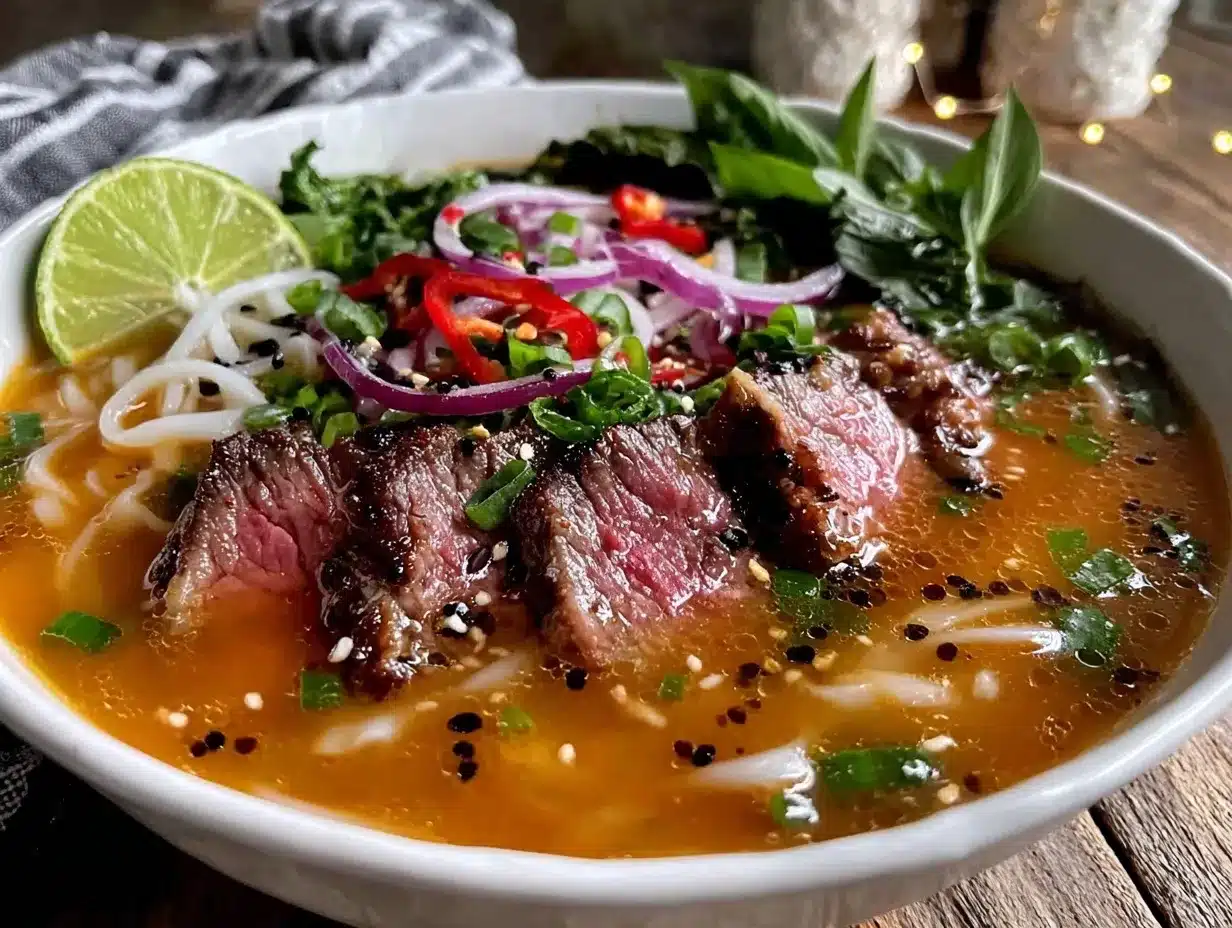
Let me set the scene: you walk into the kitchen, and the air is thick with the deep, savory aroma of simmering beef bones, star anise, and charred ginger. The scent alone pulls you in—like a gentle hug you didn’t know you needed after a long, chilly day. Steam rises as you peek into the pot, and you catch a glimpse of glossy broth swirling around silky rice noodles. The first time I made Vietnamese Pho Soup, honestly, I was just trying to warm up on a dreary evening and chase away a bit of homesickness. But when I slurped up that very first spoonful, it was the kind of moment where you pause, take a deep breath, and just smile because you know you’re onto something truly special.
My love for this cozy Vietnamese pho soup runs deep—probably because it reminds me of bustling street corners in Saigon, where bowls of piping hot pho are served at sunrise, or my grandmother’s kitchen, where she’d simmer broth for hours (days, really) and somehow always made it taste like magic. I remember, when I was knee-high to a grasshopper, how she’d let me pick fresh herbs from her garden—Thai basil, mint, cilantro—and we’d pile them high on top of our bowls. There’s something about the ritual of garnishing pho that feels like an act of love.
You know what? My family couldn’t stop sneaking tastes as the broth simmered (I had to chase away more than a few spoon thieves). These days, it’s become a staple for Sunday dinners, snow days, and even those last-minute, “what’s for dinner?” nights. And, to be honest, I wish I’d discovered just how simple homemade beef pho could be years ago. It’s dangerously easy, endlessly customizable, and somehow manages to feel both nourishing and a tiny bit luxurious.
Whether you’re looking to impress friends at a potluck, brighten up your Pinterest soup board, or just need a little bit of pure, nostalgic comfort in a bowl, this Vietnamese Pho Soup recipe is the answer. I’ve tested it more times than I can count (all in the name of research, of course), and I promise—it’ll quickly earn a spot in your cozy night rotation. You’re going to want to bookmark this one.
Why You’ll Love This Vietnamese Pho Soup Recipe
There’s a reason pho has become a beloved comfort food around the world, and this easy homemade beef pho brings all the best parts straight to your kitchen—no passport required. As someone who’s slurped down countless bowls (both in Vietnam and at home), and tweaked this recipe more times than I can remember, let me tell you why this version stands out:
- Quick & Easy: Forget about simmering bones for 12 hours. This recipe comes together in under 2 hours, making it perfect for busy weeknights or when the craving just won’t wait.
- Simple Ingredients: You don’t need a specialty market—most of these ingredients are pantry staples, with a few key aromatics you can grab at any grocery store.
- Perfect for Cozy Gatherings: There’s nothing like gathering around a steaming bowl of pho on a chilly evening. It’s a showstopper for casual dinners, game nights, or even just a quiet meal for one.
- Crowd-Pleaser: My picky kids and skeptical friends both go back for seconds (and thirds). It’s customizable—everyone can garnish their own bowl with all the fresh herbs and chili they want.
- Unbelievably Delicious: The broth is rich and fragrant, the beef is melt-in-your-mouth tender, and those fresh herbs and crunchy sprouts? Next-level comfort food, every time.
What makes this Vietnamese pho soup recipe different? I use a combination of both beef bones and a little store-bought beef stock for depth (so you get that classic flavor without waiting all day). I also char the onion and ginger under the broiler—just like my grandmother did—to add that signature smoky-sweet undertone. And you know what? The balance of fish sauce, rock sugar, and spices is spot on, but you can tweak it to taste.
This isn’t just good pho—it’s the kind that makes you close your eyes after the first bite and think, “Why haven’t I been making this all along?” It’s comfort food you can feel good about—lighter, fresher, and packed with wholesome ingredients. Whether you’re trying to impress dinner guests without breaking a sweat, or just want to treat yourself to a little homemade luxury, this recipe is your ticket. Trust me, it’s become my go-to for everything from cozy nights in to rainy Sunday afternoons.
What Ingredients You Will Need for Vietnamese Pho Soup
This Vietnamese pho soup recipe uses simple, wholesome ingredients to deliver bold flavor and that signature silky texture. Most of these are pantry staples, and you’ll only need a few special aromatics and herbs to really make your bowl sing. Let’s break them down:
- For the Broth:
- Beef bones (about 2 lbs / 900 g, preferably marrow or knuckle bones; these add richness and classic flavor)
- Beef brisket or chuck (1 lb / 450 g, adds beefy depth and tender slices for serving)
- Yellow onion (1 large, halved and charred; lends sweetness and aroma)
- Fresh ginger (4-inch piece, sliced and charred; brings warmth and spice)
- Star anise (4 whole; the signature “pho” flavor—don’t skip!)
- Cinnamon stick (1 large; adds subtle warmth)
- Cloves (4 whole; just a hint for depth)
- Coriander seeds (1 tablespoon / 8 g, lightly crushed)
- Fish sauce (1/4 cup / 60 ml; I like Red Boat for its clean flavor)
- Rock sugar or brown sugar (2 teaspoons / 8 g; balances the savory notes)
- Beef stock (4 cups / 960 ml; boosts broth flavor for weeknight speed)
- Water (8 cups / 1.9 L; forms the base of the broth)
- Salt (1 tablespoon / 18 g; season to taste)
- For the Bowls:
- Rice noodles (banh pho, 14 oz / 400 g; medium width, cooked according to package instructions)
- Thinly sliced raw beef sirloin or eye of round (1/2 lb / 225 g; slices will cook in the hot broth)
- For Garnish:
- Fresh Thai basil (1 big handful; adds signature aroma and flavor)
- Fresh cilantro leaves (1/2 cup / 10 g, chopped or whole)
- Mint leaves (optional, for extra freshness)
- Bean sprouts (2 cups / 100 g; crunchy and sweet)
- Lime wedges (2 limes, cut into wedges; brightens everything)
- Jalapeno or Thai chili (thinly sliced, for heat—totally up to you)
- Hoisin sauce and Sriracha (for drizzling, as desired)
Ingredient tips: For the best flavor, ask your butcher for fresh beef bones (frozen works in a pinch). If you can’t find rock sugar, brown sugar is just fine. Gluten-free? Double-check your fish sauce and hoisin labels. You can swap in chicken bones and breast for a lighter version, or use dried shiitakes for a vegetarian pho (just skip the beef). In summer, I toss in fresh herbs from the garden, and in winter, store-bought works perfectly well. Personal favorite: I always double up on Thai basil—it’s just too good.
Equipment Needed for Homemade Beef Pho
You really don’t need a fancy kitchen to make comforting Vietnamese pho soup. Here’s what I use (and a few alternatives if you’re working with a small kitchen):
- Large stockpot (at least 6 quarts / 6 liters): Essential for simmering the broth and fitting in all those bones. If you only have a 4-quart pot, halve the recipe for best results.
- Fine-mesh strainer or cheesecloth: Helps remove all the spices, bones, and stray bits for a clear, golden broth. Coffee filters work in a pinch, but they take longer!
- Skimmer or slotted spoon: For scooping out impurities and foam as the broth simmers. A regular spoon works, but it’s a bit messier.
- Broiler or grill pan: Needed for charring onions and ginger. If you’re short on time, a dry skillet does the trick.
- Saucepan: For cooking the rice noodles separately—so they don’t soak up all the broth.
- Sharp knife and cutting board: For slicing beef paper-thin and prepping all those fresh herbs.
- Soup bowls and chopsticks: Not required, but they make the experience so much more fun (and Instagram-worthy!).
Tip: I’ve made pho in a basic rental apartment kitchen with a tiny pot and a battered colander. It still turned out delicious. Just clean your strainer right after using (the spices can get stuck), and store your large pot upside down to save space.
How to Make Vietnamese Pho Soup with Beef and Fresh Herbs
- Char the aromatics. Place the onion (cut side down) and ginger slices under your oven broiler on high, or directly over a gas flame, for 5–7 minutes. You want a good amount of blackened spots—this gives your broth incredible depth. Flip halfway through for even charring. (If your smoke alarm goes off, you’re doing it right!)
- Blanch the bones. Add beef bones to your large stockpot. Cover with cold water (about 2 quarts / 2 liters), bring to a boil, and simmer for 10 minutes. Skim off any foam or scum. Drain and rinse both the bones and the pot (this keeps your broth clear, not cloudy!).
- Simmer the broth. Return the cleaned bones to the pot. Add 8 cups (1.9 L) fresh water, beef brisket, charred onion and ginger, star anise, cinnamon, cloves, and coriander seeds. Bring to a boil, then reduce to a gentle simmer. Skim the surface every 20 minutes or so. Simmer for 1 1/2 hours, or until the brisket is tender and the broth smells like pho heaven.
- Finish the broth. Remove the brisket and set aside (cover to keep moist). Strain the broth through a fine-mesh strainer into a clean pot. Discard solids. Stir in beef stock, fish sauce, rock sugar, and salt. Bring back to a simmer and taste—adjust with more fish sauce or sugar as needed. (Broth can be made ahead and refrigerated overnight—skim off any fat before reheating.)
- Prepare the noodles and beef. While the broth simmers, cook rice noodles according to package instructions (usually 4–6 minutes in boiling water). Drain and rinse with cold water so they don’t stick. Thinly slice the cooked brisket and the raw sirloin (if it’s tricky, freeze for 20 minutes first).
- Assemble the bowls. Divide cooked noodles among large soup bowls (about 2 cups / 100 g per bowl). Top with a few slices of brisket and raw beef. Ladle boiling hot broth over everything—the raw beef will cook instantly. (If you’re nervous about raw meat, dip slices in the hot broth for 10 seconds first.)
- Garnish and serve. Pile on the fresh Thai basil, cilantro, mint, bean sprouts, and lime wedges. Add sliced chili for heat, and drizzle with hoisin or sriracha as you like. Mix everything up, inhale, and dig in!
Troubleshooting: If your broth tastes bland, simmer for another 30 minutes with the lid off to concentrate flavors. Too salty? Add a splash of water. Cloudy broth? Don’t skip the blanch-and-rinse step (learned that the hard way!). For a richer broth, simmer the bones longer—up to 3 hours if you have the time.
Personal tip: Prep your herbs and garnishes while the broth simmers. It makes the final assembly feel like a breeze, and everyone can add their own toppings—pho party style!
Cooking Tips & Techniques for the Best Homemade Pho
- Char your aromatics deeply. It might feel weird to blacken your onions and ginger, but trust me—this step is crucial for that smoky-sweet pho note. If you skip it, you’ll still get soup, but not real pho.
- Don’t rush the simmer. If you’re in a hurry, a pressure cooker can speed things up, but gentle stovetop simmering (never boiling hard) gives the clearest, most flavorful broth. Impatience leads to cloudy soup—a lesson I learned after a few overzealous boils.
- Use the right cut of beef. For the tender slices on top, choose eye of round or sirloin and slice as thinly as possible. Pro tip: pop the beef in the freezer for 20–30 minutes for paper-thin cuts. I once tried with regular stew beef, and it just didn’t work—chewy and tough.
- Multitask the toppings. While the broth bubbles, wash, dry, and prep all your herbs, sprouts, and lime wedges. Lay them out on a big platter for easy serving (and pretty Pinterest photos!).
- Keep your broth hot. The broth should be just below boiling when you pour it over the noodles and beef—this is what cooks the raw slices instantly and keeps everything piping hot. If the broth cools down, reheat before assembling.
- Customize your bowl. Don’t be shy—pile on as many herbs and sauces as you like. There’s no “right” way to eat pho. I always add extra lime and a little chili for brightness and kick.
- Batch and freeze. Make a double batch of broth and freeze leftovers in quart containers. It’s a lifesaver for last-minute comfort food cravings.
Consistency tip: Taste and adjust your broth before serving. Every batch of bones is a little different, so don’t be afraid to tweak the fish sauce, sugar, or salt until it’s just right for you.
Variations & Adaptations for Vietnamese Pho Soup
- Chicken Pho (Pho Ga): Swap the beef bones and brisket for chicken carcasses and chicken breast or thigh. Use chicken stock instead of beef stock, and adjust the simmer time to about 1 hour. It’s lighter but just as comforting.
- Vegetarian Pho: Use a mix of dried shiitake mushrooms, carrots, and a dash of soy sauce for the broth. Swap in firm tofu for the protein and load up on all the fresh herbs and sprouts. Honestly, I make this version when I need a “clean out the fridge” night—it’s always a hit.
- Gluten-Free Pho: Most rice noodles are naturally gluten-free, but double-check your fish sauce and hoisin labels. Tamari or coconut aminos sub in fine for soy sauce if you want extra umami.
- Seasonal Toppings: In summer, add fresh corn kernels or thinly sliced zucchini. In winter, toss in baby spinach or bok choy for extra greens.
- Spicy Pho: Stir chili oil or sriracha into the broth, or add extra bird’s eye chili to your garnish plate. (If you love heat, you’ll love this twist!)
Personal favorite: I sometimes add a soft-boiled egg for extra richness—totally non-traditional, but so satisfying. And if you have leftover roast beef or steak, slice it thin and use it instead of raw sirloin. No waste, all flavor.
Serving & Storage Suggestions for Beef Pho
Pho is best served piping hot, straight from the pot to the bowl. I like to set out a big platter of fresh herbs, sprouts, lime wedges, and chili so everyone can build their own bowl (it’s the ultimate interactive dinner). Serve with chopsticks and a soup spoon, and encourage slurping—it’s part of the fun.
For a full meal, pair your pho with crisp spring rolls, a refreshing Vietnamese iced coffee, or a tangy green papaya salad. The bright, fresh flavors work beautifully together.
To store, cool leftover broth completely and refrigerate in airtight containers for up to 5 days. The flavors deepen overnight, so leftovers are even better. Rice noodles can be stored separately in a little water to prevent sticking. Reheat broth to a rolling boil before pouring over noodles and beef. For longer storage, freeze the broth (without noodles or herbs) for up to 3 months—thaw and reheat as needed.
Tip: Don’t add fresh herbs or sprouts until just before serving—they lose their crunch and aroma if left in the hot broth too long.
Nutritional Information & Benefits
A typical serving of homemade Vietnamese pho soup (about 2 cups broth, noodles, and beef with herbs) contains roughly 400–450 calories, 25 grams protein, 10 grams fat, and 55 grams carbohydrates. It’s naturally gluten-free as long as you use certified rice noodles and fish sauce.
Health benefits? The beef provides iron and protein, while the long-simmered broth is rich in collagen and minerals. Those heaps of fresh herbs add antioxidants and vitamins, while bean sprouts and lime bring crunch and vitamin C. You can make it lower-carb by using shirataki noodles or zucchini spirals.
Potential allergens include fish sauce (anchovies) and hoisin (often contains soy and wheat). For a lighter bowl, use leaner cuts of beef and go easy on the noodles. Personally, I find a bowl of pho is both body- and soul-nourishing—great for chilly nights, post-cold recovery, or when you just want something wholesome but deeply flavorful.
Conclusion: Cozy Pho Nights Await
If you’re craving something that’s equal parts comforting, aromatic, and satisfying, this Vietnamese pho soup with fresh herbs and tender beef is a must-make. It’s not just a soup—it’s an experience, a little taste of Vietnam, and a bowlful of nostalgia all at once.
Don’t be afraid to make it your own—add more lime, extra chili, or even toss in a few unconventional toppings. That’s the beauty of homemade pho. Honestly, I love this recipe because it brings people together, fills the house with warmth, and always gets rave reviews (even from the pickiest eaters).
Ready to try it? Pin, share, or drop your own tweaks and questions below—I love hearing how others make this classic their own. Here’s to cozy nights and steaming bowls of pho—happy cooking!
Frequently Asked Questions About Vietnamese Pho Soup
Can I make pho broth ahead of time?
Absolutely. The broth only gets better after a night in the fridge. Just reheat to a rolling boil before serving and skim off any solidified fat if you prefer a lighter soup.
What’s the best cut of beef for pho?
For the broth, brisket or chuck works best because it adds body and flavor. For topping, use thinly sliced sirloin or eye of round—they cook instantly in the hot broth.
Is pho gluten-free?
Yes, as long as you use gluten-free rice noodles and check that your fish sauce and hoisin are gluten-free. Always check labels if you have celiac disease or gluten sensitivity.
Can I freeze pho broth?
You sure can! Freeze strained broth in airtight containers for up to 3 months. Thaw overnight in the fridge, reheat, and assemble your bowls with fresh noodles and herbs.
How do I get clear pho broth?
Blanch the bones first, skim carefully during simmering, and gently simmer (never boil hard). Strain with a fine-mesh strainer or cheesecloth for the clearest results.
Pin This Recipe!
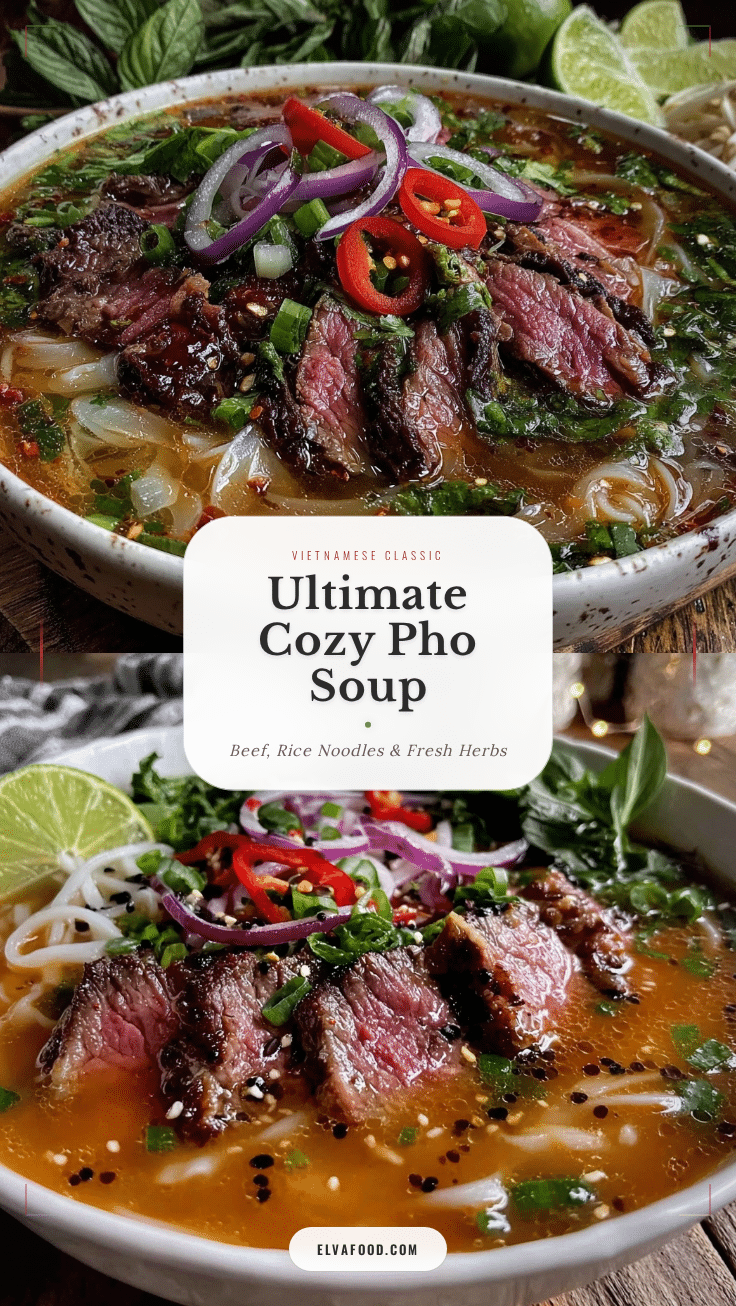
Vietnamese Pho Soup Recipe: Easy Homemade Beef Pho for Cozy Nights
This cozy Vietnamese pho soup features a rich, aromatic beef broth, silky rice noodles, and fresh herbs. It’s a comforting, customizable bowl that’s perfect for chilly nights and easy enough for weeknight dinners.
- Prep Time: 25 minutes
- Cook Time: 1 hour 35 minutes
- Total Time: 2 hours
- Yield: 4 servings 1x
- Category: Main Course
- Cuisine: Vietnamese
Ingredients
- 2 lbs beef bones (marrow or knuckle bones)
- 1 lb beef brisket or chuck
- 1 large yellow onion, halved and charred
- 4-inch piece fresh ginger, sliced and charred
- 4 whole star anise
- 1 large cinnamon stick
- 4 whole cloves
- 1 tbsp coriander seeds, lightly crushed
- 1/4 cup fish sauce
- 2 tsp rock sugar or brown sugar
- 4 cups beef stock
- 8 cups water
- 1 tbsp salt
- 14 oz rice noodles (banh pho, medium width)
- 1/2 lb thinly sliced raw beef sirloin or eye of round
- 1 handful fresh Thai basil
- 1/2 cup fresh cilantro leaves, chopped or whole
- Mint leaves (optional)
- 2 cups bean sprouts
- 2 limes, cut into wedges
- Jalapeno or Thai chili, thinly sliced (optional)
- Hoisin sauce (for drizzling, optional)
- Sriracha (for drizzling, optional)
Instructions
- Char the aromatics: Place onion (cut side down) and ginger slices under the broiler or over a gas flame for 5–7 minutes until deeply blackened, flipping halfway.
- Blanch the bones: Add beef bones to a large stockpot, cover with cold water, bring to a boil, and simmer for 10 minutes. Skim foam, then drain and rinse bones and pot.
- Simmer the broth: Return cleaned bones to pot. Add 8 cups fresh water, beef brisket, charred onion and ginger, star anise, cinnamon, cloves, and coriander seeds. Bring to a boil, then reduce to a gentle simmer. Skim surface every 20 minutes. Simmer for 1 1/2 hours until brisket is tender.
- Finish the broth: Remove brisket and set aside. Strain broth through a fine-mesh strainer into a clean pot. Discard solids. Stir in beef stock, fish sauce, rock sugar, and salt. Bring back to a simmer and adjust seasoning to taste.
- Prepare noodles and beef: Cook rice noodles according to package instructions (4–6 minutes in boiling water). Drain and rinse with cold water. Thinly slice cooked brisket and raw sirloin.
- Assemble bowls: Divide noodles among soup bowls (about 2 cups per bowl). Top with brisket and raw beef. Ladle boiling hot broth over everything to cook the raw beef instantly.
- Garnish and serve: Top with Thai basil, cilantro, mint, bean sprouts, and lime wedges. Add chili slices and drizzle with hoisin or sriracha as desired. Serve immediately.
Notes
Char your aromatics deeply for authentic flavor. Blanching bones and skimming broth ensures clarity. Prep garnishes while broth simmers for easy assembly. Broth can be made ahead and refrigerated or frozen. Customize toppings to taste.
Nutrition
- Serving Size: About 2 cups broth,
- Calories: 425
- Sugar: 6
- Sodium: 1200
- Fat: 10
- Saturated Fat: 4
- Carbohydrates: 55
- Fiber: 3
- Protein: 25
Keywords: pho, Vietnamese soup, beef pho, noodle soup, comfort food, homemade pho, easy pho recipe, gluten-free, cozy dinner, Asian soup