Let me tell you, the scent of tender asparagus, sweet peas, and fresh herbs mingling with creamy Arborio rice simmering on the stove is enough to make anyone’s mouth water. The first time I made this creamy spring vegetable risotto with fresh herbs, I was instantly hooked. It was one of those moments where you pause, take a deep breath, and just smile because you know you’re onto something truly special. Years ago, when I was knee-high to a grasshopper, my grandma used to make risottos that felt like warm hugs on a plate. This recipe reminds me of those afternoons spent in her cozy kitchen, with the sun streaming through the window and the promise of something delicious ahead.
You know what’s funny? I stumbled upon this particular spring vegetable twist on a rainy weekend when I wanted something comforting but fresh. My family couldn’t stop sneaking spoonfuls off the pot—honestly, I can’t really blame them! This risotto is dangerously easy to make, and the bright pop of fresh herbs balances the creamy texture perfectly. Whether you’re looking to brighten up your Pinterest cookie board or impress guests at your next brunch, this recipe is a total winner. After testing it multiple times (in the name of research, of course), it has become a staple for family gatherings and gifting because it feels like pure, nostalgic comfort in every bite. You’re going to want to bookmark this one.
Why You’ll Love This Creamy Spring Vegetable Risotto with Fresh Herbs
Honestly, creamy spring vegetable risotto with fresh herbs isn’t just any risotto—it’s the kind that makes you close your eyes after the first bite and sigh happily. Here’s why it’s earned a permanent spot in my recipe box:
- Quick & Easy: Comes together in about 40 minutes, perfect for busy weeknights or those last-minute dinner cravings.
- Simple Ingredients: No exotic items here—just fresh veggies, pantry staples, and herbs you can find at any market.
- Perfect for Springtime: It captures the essence of the season with bright peas, asparagus, and fresh herbs, bringing a light yet creamy dish to your table.
- Crowd-Pleaser: Whether you’re feeding picky kids or grown-up foodies, this risotto always gets rave reviews.
- Unbelievably Delicious: The texture is silky with a slight bite to the rice, and the herbaceous notes elevate every spoonful.
What sets this recipe apart? I blend a little mascarpone into the risotto at the end for an ultra-smooth, luscious finish that’s miles beyond your average risotto. Plus, the balance of lemon zest and fresh herbs like tarragon and chives brightens the dish without stealing the spotlight from the veggies. This isn’t just comfort food—it’s comfort food with a springtime twist that feels fresh and satisfying. Whether you want to impress guests without stress or just treat yourself to something nourishing and cozy, this risotto fits the bill perfectly.
What Ingredients You Will Need
This creamy spring vegetable risotto with fresh herbs uses simple, wholesome ingredients to deliver bold flavor and satisfying texture without the fuss. Most of these are pantry staples or easy-to-find fresh produce that capture the essence of spring.
- Arborio rice – 1 ½ cups (300g), the star for that creamy, chewy texture.
- Vegetable broth – about 5 cups (1.2 liters), warmed (I prefer a low-sodium brand like Imagine for best flavor).
- Asparagus – 1 bunch (about 12 spears), trimmed and cut into 1-inch pieces (adds fresh, tender crunch).
- Frozen peas – 1 cup (150g), thawed (sweet and bright).
- Shallots – 2 medium, finely diced (for a delicate, sweet onion flavor).
- Garlic – 2 cloves, minced (adds aromatic depth).
- Dry white wine – ½ cup (120ml), optional but highly recommended for that subtle tang.
- Unsalted butter – 3 tablespoons (45g), divided (keeps it rich and silky).
- Olive oil – 1 tablespoon (15ml), for sautéing.
- Parmesan cheese – ½ cup (50g), freshly grated (the umami bomb).
- Mascarpone – 2 tablespoons (30g), for extra creaminess (feel free to swap with cream cheese).
- Lemon zest – from 1 lemon, brightens the dish.
- Fresh herbs – 2 tablespoons each chopped tarragon, chives, and parsley (adds that garden-fresh pop).
- Salt and freshly ground black pepper – to taste.
If you want a gluten-free option, rest assured rice is naturally gluten-free. For a dairy-free twist, swap butter and mascarpone with coconut oil and a dairy-free cream cheese alternative. In summer, I love swapping peas for fresh fava beans for a different texture and flavor.
Equipment Needed
- Large heavy-bottomed saucepan or Dutch oven: Essential for even heat and preventing sticking.
- Medium saucepan: to keep the vegetable broth warm on the stove.
- Wooden spoon or silicone spatula: for stirring (a must-have—you want something sturdy but gentle on your cookware).
- Fine grater or microplane: for lemon zest and parmesan.
- Chef’s knife and cutting board: for prepping veggies and herbs.
- Measuring cups and spoons: for precise ingredient amounts.
If you don’t have a heavy-bottomed pan, a thick stainless steel skillet can work but watch the heat carefully to avoid scorching. I’ve also used a non-stick pan in a pinch, just be sure to stir often. For budget-friendly options, basic kitchen knives and wooden spoons from any store will do just fine; you don’t need fancy gear to nail this recipe.
Preparation Method
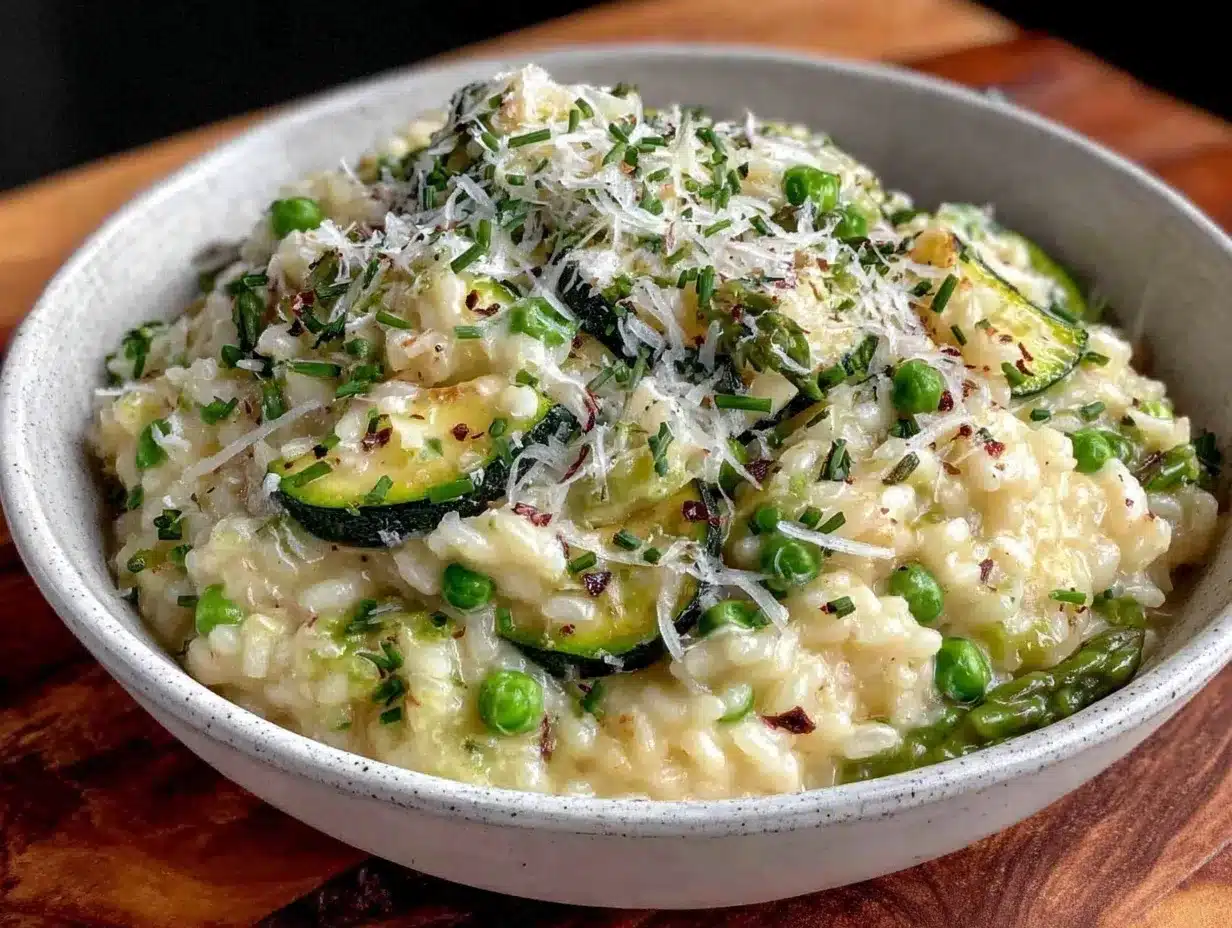
- Prep your broth: Pour about 5 cups (1.2 liters) of vegetable broth into a medium saucepan and keep it warm over low heat. It’s key to add warm liquid to the rice so it cooks evenly and stays creamy.
- Sauté aromatics: In your large pan, heat 1 tablespoon (15ml) olive oil and 1 tablespoon (15g) butter over medium heat. Add the finely diced shallots and sauté for 3-4 minutes until translucent and fragrant. Toss in the minced garlic and cook for another 30 seconds—you want it aromatic but not browned.
- Toast the rice: Add 1 ½ cups (300g) Arborio rice to the pan and stir well to coat every grain with the buttery goodness. Cook for 2 minutes, stirring constantly until the edges of the rice turn translucent but the center remains white. This step locks in the starch and helps build creaminess.
- Deglaze with wine: Pour in ½ cup (120ml) dry white wine and stir until fully absorbed. The wine adds a subtle tang and depth that makes this risotto stand out. If you’re skipping wine, just add ½ cup of warm broth instead.
- Slowly add broth: Begin adding the warm vegetable broth one ladleful (about ½ cup or 120ml) at a time, stirring frequently. Wait for the liquid to be mostly absorbed before adding the next ladle. This process should take about 20-25 minutes. Be patient—it’s the secret to that velvety texture.
- Add vegetables: When you’ve used about half of the broth (after roughly 10-12 minutes), stir in the asparagus pieces and peas. They’ll cook gently in the risotto, staying tender-crisp and vibrant green.
- Check texture: After all broth is absorbed, taste the rice. It should be creamy but still have a slight bite (al dente). If it’s too firm, add a splash more broth or water and cook a few minutes longer.
- Finish with flair: Turn off the heat and stir in 2 tablespoons (30g) butter, 2 tablespoons (30g) mascarpone, and ½ cup (50g) freshly grated Parmesan. Mix until silky and luscious. Fold in lemon zest and the chopped fresh herbs (tarragon, chives, parsley). Season with salt and freshly ground black pepper to taste.
- Serve immediately: Spoon into warm bowls and, if you like, add an extra sprinkle of Parmesan and herbs on top. The risotto should be creamy and comforting, with fresh pops of spring flavors.
Pro tip: Stirring consistently helps release the rice’s starch, but don’t overdo it or you’ll break the grains. Also, keep the broth warm so you don’t interrupt the cooking temperature, which can slow down the creamy magic. When adding the asparagus, try to time it so it stays tender but not mushy—freshness here is key!
Cooking Tips & Techniques
Risotto can seem intimidating, but honestly, it’s just a matter of patience and the right rhythm. Here’s what I’ve learned over countless batches of creamy spring vegetable risotto with fresh herbs:
- Keep broth warm: Cold broth shocks the rice and breaks the cooking rhythm. Warm broth helps the rice cook evenly and release starch for that silky texture.
- Stir often, not nonstop: Stir gently and frequently to prevent sticking and encourage creaminess, but don’t whisk vigorously or you’ll mash the rice.
- Don’t rush the liquid addition: Adding broth too fast can leave the rice undercooked or uneven. Take your time and let the rice absorb before the next ladle.
- Use fresh herbs last: Add delicate herbs like tarragon and chives at the very end to preserve their bright flavor and color.
- Watch your heat: Medium to medium-low heat is best to cook steadily without burning the rice or veggies.
- Learn from my mistakes: I once added asparagus too early and ended up with mushy stalks—don’t do that! Timing veggies right keeps their snap and freshness.
- Multitasking tip: While the risotto simmers, prep your herbs and zest your lemon to keep the flow smooth.
Variations & Adaptations
This creamy spring vegetable risotto with fresh herbs is super flexible and invites creativity. Here are some easy ways to switch it up:
- Seasonal swaps: Swap asparagus and peas for spring ramps, fava beans, or baby artichokes for different textures and flavors.
- Protein boost: Stir in cooked shrimp, chicken, or crispy pancetta for a heartier meal.
- Vegan version: Use vegan butter or olive oil instead of butter, skip mascarpone, and swap Parmesan for a vegan cheese alternative or nutritional yeast.
- Grain variations: Try using pearl barley or farro for a nuttier texture but keep broth amounts similar.
- Fresh herb mix: Customize your herb blend—basil, mint, or dill can add new layers of flavor.
Personally, I once made a lemon-thyme version with roasted baby carrots that was a big hit at a spring potluck. You can really make this recipe your own depending on what’s in season or your mood.
Serving & Storage Suggestions
Serve creamy spring vegetable risotto with fresh herbs hot from the stove for that perfect creamy texture. It pairs beautifully with a crisp green salad or grilled chicken for a light, balanced meal. A chilled glass of Sauvignon Blanc or a sparkling water with lemon complements the freshness perfectly.
If you have leftovers (which can be rare!), store them in an airtight container in the refrigerator for up to 2 days. Risotto thickens as it cools, so when reheating, add a splash of broth or water and gently warm on the stove or in the microwave, stirring to bring back its creamy consistency. Flavors often deepen overnight, making leftovers even tastier in some ways.
Nutritional Information & Benefits
This creamy spring vegetable risotto with fresh herbs offers a balanced mix of carbohydrates from Arborio rice and a good dose of vitamins and antioxidants from fresh asparagus, peas, and herbs. It’s naturally gluten-free and can be made dairy-free with simple substitutions. The fresh herbs provide anti-inflammatory benefits, and the lemon zest adds a boost of vitamin C.
Though creamy and comforting, this recipe uses moderate amounts of butter and cheese, so it’s a satisfying but not overly indulgent dish. It’s perfect for anyone wanting a wholesome, veggie-packed meal that feels like a treat without weighing you down.
Conclusion
In the end, this creamy spring vegetable risotto with fresh herbs is more than just a recipe—it’s a celebration of seasonal freshness wrapped in a cozy, creamy package. It’s easy enough for weeknights but impressive enough for guests. I love how it brings together simple ingredients into something that feels so thoughtfully crafted and comforting. Give it a try, tweak the herbs or veggies to your liking, and make it your own. I’d love to hear how you personalize it—so don’t be shy about leaving a comment or sharing your version. Happy cooking, and here’s to many bowls of risotto that feel like a warm hug!
Frequently Asked Questions
Can I use brown rice instead of Arborio rice?
Brown rice doesn’t release starch the same way as Arborio, so the texture won’t be as creamy. You can use it, but expect a chewier, less traditional risotto experience and longer cooking time.
What if I don’t have white wine for the risotto?
No worries! Simply replace the wine with an equal amount of warm vegetable broth. The risotto will still be delicious, just a bit less tangy.
How do I know when the risotto is done?
The rice should be tender but still have a slight bite in the center (al dente). The overall texture should be creamy and not dry or overly soupy.
Can I make this risotto ahead of time?
Risotto is best served fresh, but you can prepare it a day ahead. Reheat gently with some extra broth or water to bring back the creaminess.
What fresh herbs work best in this risotto?
Tarragon, chives, and parsley are my go-to, but basil, mint, or dill can also add lovely flavor depending on your preference.
Pin This Recipe!
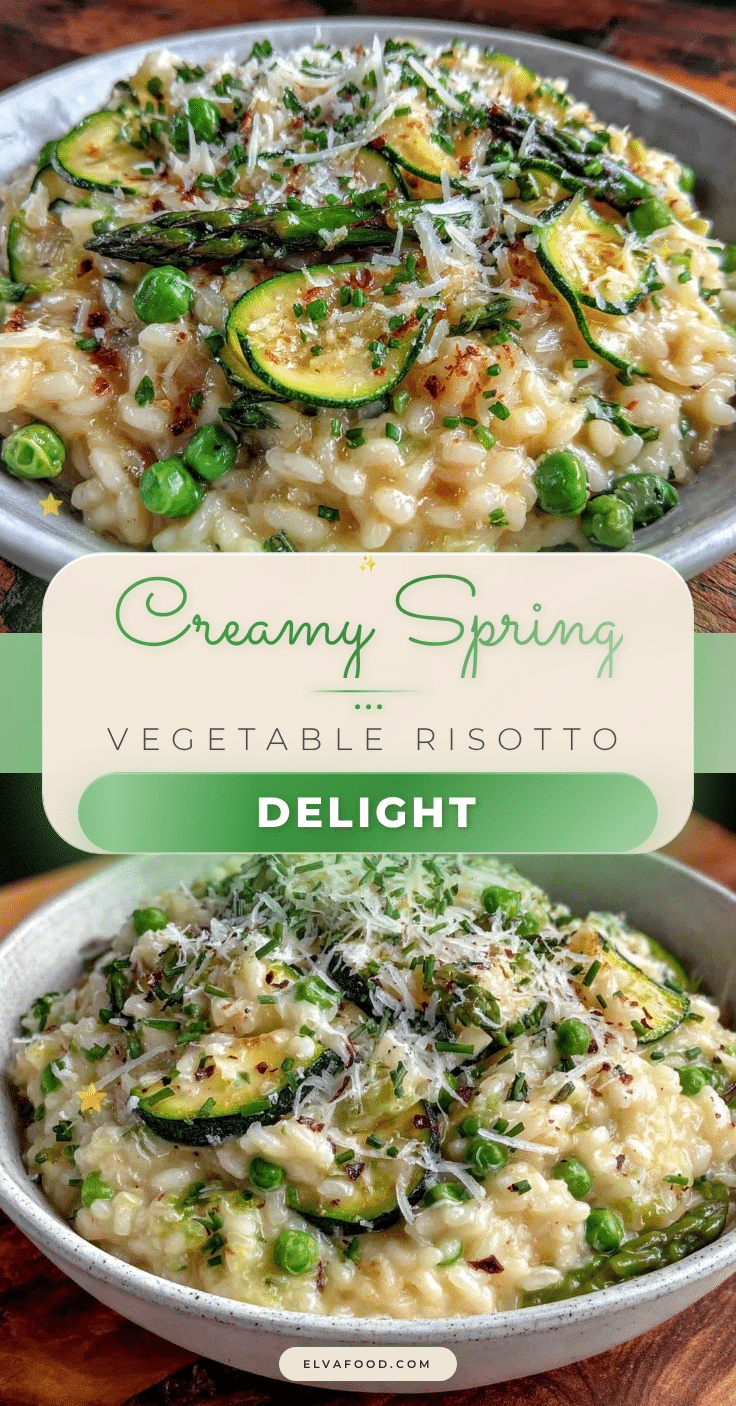
Creamy Spring Vegetable Risotto Easy Homemade Recipe with Fresh Herbs

A creamy and comforting risotto featuring tender asparagus, sweet peas, and fresh herbs, finished with mascarpone for an ultra-smooth texture and bright lemon zest.
- Prep Time: 10 minutes
- Cook Time: 30 minutes
- Total Time: 40 minutes
- Yield: 4 servings 1x
- Category: Main Course
- Cuisine: Italian
Ingredients
- 1 ½ cups Arborio rice (300g)
- about 5 cups vegetable broth (1.2 liters), warmed
- 1 bunch asparagus (about 12 spears), trimmed and cut into 1-inch pieces
- 1 cup frozen peas (150g), thawed
- 2 medium shallots, finely diced
- 2 cloves garlic, minced
- ½ cup dry white wine (120ml), optional
- 3 tablespoons unsalted butter (45g), divided
- 1 tablespoon olive oil (15ml)
- ½ cup Parmesan cheese (50g), freshly grated
- 2 tablespoons mascarpone (30g)
- lemon zest from 1 lemon
- 2 tablespoons chopped fresh tarragon
- 2 tablespoons chopped fresh chives
- 2 tablespoons chopped fresh parsley
- salt and freshly ground black pepper to taste
Instructions
- Pour about 5 cups (1.2 liters) of vegetable broth into a medium saucepan and keep it warm over low heat.
- In a large pan, heat 1 tablespoon olive oil and 1 tablespoon butter over medium heat. Add the diced shallots and sauté for 3-4 minutes until translucent and fragrant.
- Add the minced garlic and cook for another 30 seconds until aromatic but not browned.
- Add 1 ½ cups Arborio rice to the pan and stir well to coat every grain with butter. Cook for 2 minutes, stirring constantly until the edges of the rice turn translucent but the center remains white.
- Pour in ½ cup dry white wine and stir until fully absorbed. If skipping wine, add ½ cup warm broth instead.
- Begin adding the warm vegetable broth one ladleful (about ½ cup) at a time, stirring frequently. Wait for the liquid to be mostly absorbed before adding the next ladle. Continue for about 20-25 minutes.
- After about half the broth is used (10-12 minutes), stir in the asparagus pieces and peas. Cook gently in the risotto.
- Once all broth is absorbed, taste the rice. It should be creamy but still have a slight bite (al dente). Add more broth or water if needed and cook a few minutes longer.
- Turn off the heat and stir in 2 tablespoons butter, 2 tablespoons mascarpone, and ½ cup freshly grated Parmesan until silky and luscious.
- Fold in lemon zest and chopped fresh herbs (tarragon, chives, parsley). Season with salt and freshly ground black pepper to taste.
- Serve immediately, optionally topped with extra Parmesan and herbs.
Notes
Keep broth warm to maintain cooking temperature and ensure creamy texture. Stir gently and frequently but avoid vigorous whisking to prevent breaking rice grains. Add asparagus midway to keep it tender-crisp. For dairy-free, substitute butter and mascarpone with coconut oil and dairy-free cream cheese. Wine can be replaced with broth if unavailable.
Nutrition
- Serving Size: 1 cup risotto
- Calories: 380
- Sugar: 5
- Sodium: 600
- Fat: 14
- Saturated Fat: 8
- Carbohydrates: 50
- Fiber: 4
- Protein: 10
Keywords: risotto, spring vegetables, asparagus, peas, fresh herbs, creamy, mascarpone, easy recipe, vegetarian, gluten-free