“You really need to try this duck,” my neighbor said last winter, handing me a plate during a casual get-together. I was skeptical—duck breast always seemed like one of those fancy dishes that required hours of prep or some elusive ingredient I’d never find. But the moment I bit into that perfectly crisp skin, tender meat, and tangy-sweet glaze, I was hooked. Turns out, this recipe was her go-to for those evenings when she wanted something special but not complicated.
Since then, I’ve made this perfect slow roasted duck breast with orange pomegranate glaze more times than I can count—sometimes twice in a week if I’m honest. The slow roasting method means you don’t have to hover nervously over a pan, and the glaze is so straightforward it feels like cheating. The oranges and pomegranate molasses bring a brightness that cuts through the rich duck, making every bite memorable without being overwhelming.
The whole process feels like a little ceremony in the kitchen—scoring the skin, letting the duck rest, whisking up that glossy glaze while the house fills with the scent of citrus and caramelized fruit. It’s a dish that always invites a pause, a moment of quiet satisfaction. Honestly, it stuck with me because it’s simple enough for a midweek meal but impressive enough for company, a rare balance that keeps me coming back.
Why You’ll Love This Recipe
After testing this slow roasted duck breast with orange pomegranate glaze several times, I can say it’s a winner for a bunch of reasons. This isn’t just another duck recipe; it’s the one I trust when I want to impress without stress.
- Quick & Easy: The slow roast means minimal hands-on time—about 1 hour total—perfect for busy evenings or last-minute dinner plans.
- Simple Ingredients: You can find everything in your pantry or local grocery store, no exotic shopping trips necessary.
- Perfect for Special Occasions: Whether it’s a date night or holiday dinner, this duck recipe looks and tastes like you spent hours on it.
- Crowd-Pleaser: Friends and family always ask for seconds, and kids surprisingly enjoy the sweet and tangy glaze.
- Unbelievably Delicious: The crisp skin, tender meat, and perfectly balanced glaze create a dish that feels luxurious but approachable.
What makes this duck stand out is the slow roasting technique, which results in juicy meat that’s evenly cooked, paired with a glaze that complements without overpowering. The orange and pomegranate glaze isn’t just a topping; it’s a flavor partner that brightens and brings out the best in the duck breast.
This recipe feels like comfort food with a twist—a little fancy, a little cozy, and a lot satisfying. It’s the kind of meal that makes you pause, savor, and maybe even close your eyes after the first bite. If you want a dish that delivers big on flavor without a fuss, this is it.
What Ingredients You Will Need
This recipe uses simple, wholesome ingredients to deliver bold flavor and satisfying texture without the fuss. Most are pantry staples, with a few fresh touches that make all the difference.
- Duck Breasts: 2 large duck breasts (about 6-8 oz / 170-225 g each), skin on and trimmed. Look for firm breasts with even fat distribution for best results.
- Salt and Pepper: Kosher salt and freshly ground black pepper to season the duck and bring out its natural flavors.
- Olive Oil: 1 tablespoon for searing (extra virgin is fine, but use a neutral oil if you prefer).
- Orange Juice: Freshly squeezed juice of 1 large orange (about 1/3 cup / 80 ml). Adds bright citrus notes.
- Pomegranate Molasses: 2 tablespoons, the star ingredient for that deep tangy sweetness. I like to use Al Wadi brand for a rich flavor.
- Honey: 1 tablespoon for balancing acidity with subtle sweetness.
- Garlic: 2 cloves, minced, for aromatic depth.
- Fresh Thyme: 2 teaspoons, chopped. You can substitute dried thyme (1 teaspoon) if fresh isn’t available.
- Butter: 1 tablespoon unsalted, added to the glaze for richness and shine.
- Optional Garnish: Pomegranate seeds and orange zest for a festive touch and extra zing.
If you want to switch things up, almond flour works well for dusting if you’re preparing any sides, and swapping Greek yogurt for a creamy sauce on the side would pair beautifully. The ingredients are flexible, but the combination here locks in a perfect balance of savory, sweet, and tangy.
Equipment Needed
- Oven-Safe Skillet or Cast Iron Pan: Essential for searing the duck breasts and finishing them in the oven. Cast iron is my go-to because it holds heat evenly and gives a great crust.
- Baking Sheet or Roasting Pan: If you prefer to finish the duck breasts separately in the oven after searing.
- Sharp Paring Knife: For scoring the duck skin—make sure it’s sharp to avoid tearing the meat.
- Small Saucepan: For preparing the orange pomegranate glaze.
- Spoon and Whisk: To stir and blend the glaze ingredients smoothly.
- Meat Thermometer (Optional): Handy if you want to check the internal temperature for doneness (recommended 135°F / 57°C for medium-rare).
If you don’t have a cast iron skillet, a heavy-bottomed stainless steel pan works fine, just watch the heat carefully to avoid burning. For budget-friendly options, many stores sell affordable carbon steel pans that behave similarly to cast iron but are lighter.
Preparation Method
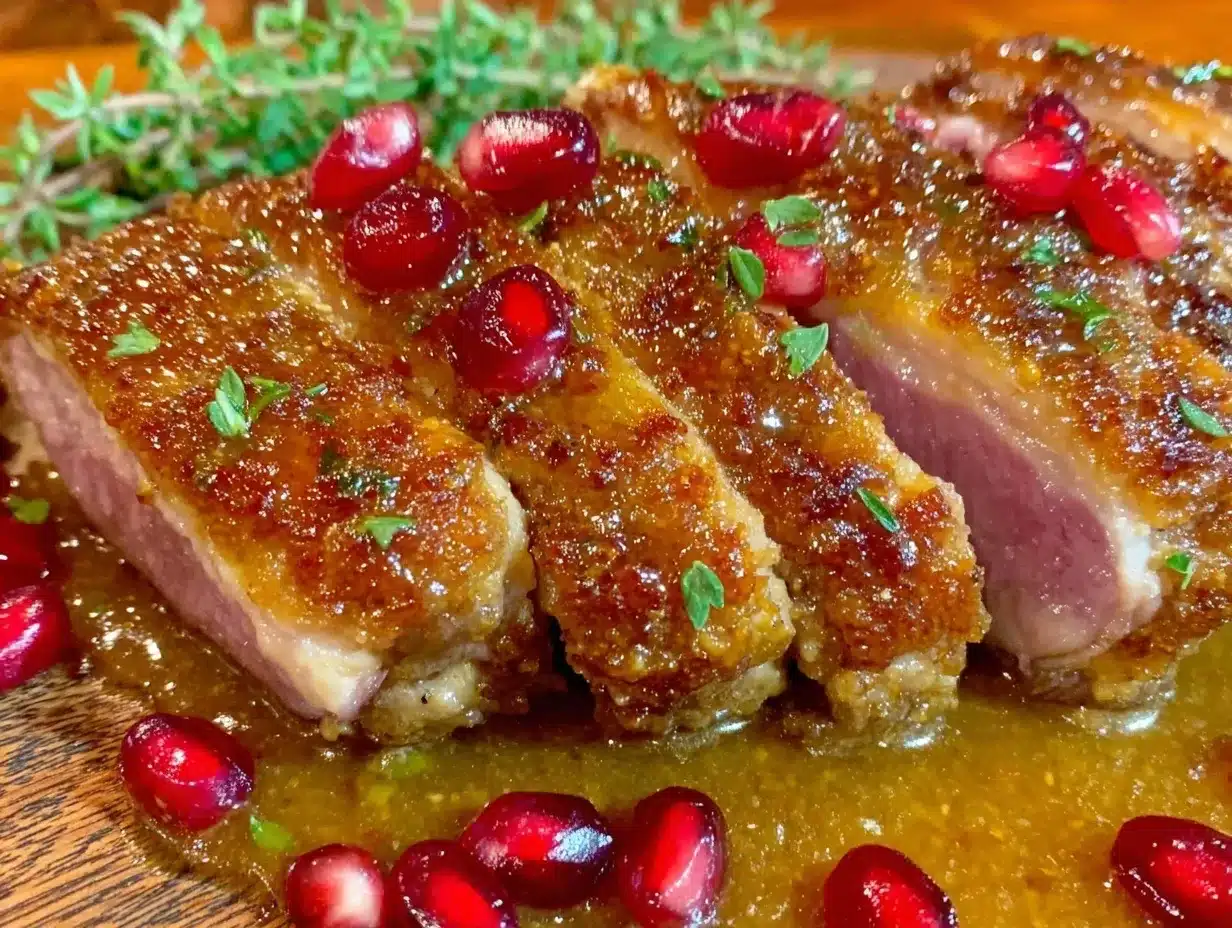
- Score the Duck Skin: Using a sharp paring knife, carefully score the skin in a crosshatch pattern, about 1/4 inch (6 mm) apart. Don’t cut into the meat itself—this helps the fat render and the skin crisp up. Pat dry with paper towels before seasoning.
- Season the Duck: Generously salt and pepper both sides of the duck breasts. This step is crucial for flavor and texture. Let them sit at room temperature for 10 minutes to take the chill off.
- Preheat the Oven: Set your oven to 275°F (135°C) for slow roasting. This low temperature gently cooks the duck to tender perfection without drying it out.
- Sear the Duck Breasts: Heat 1 tablespoon olive oil in your cast iron skillet over medium-high heat. Place duck breasts skin-side down; you’ll hear a satisfying sizzle. Sear for 6-8 minutes until the skin is golden brown and crispy, rendering much of the fat. Flip and sear the other side for 1-2 minutes.
- Roast Slowly: Transfer the skillet (or move the duck to a baking sheet) to the preheated oven. Roast for 20-25 minutes for medium-rare, or longer for more well-done. Use a meat thermometer to check for 135°F (57°C) internal temperature.
- Rest the Meat: Remove the duck breasts from the oven and transfer to a plate. Tent loosely with foil and let rest for 10 minutes. This step allows the juices to redistribute, keeping the meat juicy.
- Prepare the Glaze: While the duck rests, combine orange juice, pomegranate molasses, honey, minced garlic, and thyme in a small saucepan over medium heat. Let it simmer gently, whisking occasionally, until thickened and syrupy (about 8-10 minutes). Stir in butter at the end for a glossy finish.
- Slice and Serve: Slice the duck breasts thinly against the grain. Drizzle generously with the warm orange pomegranate glaze. Garnish with pomegranate seeds and orange zest if desired for that extra pop of color and flavor.
If you find the skin isn’t as crispy as you want, a quick pass under the broiler for 1-2 minutes after roasting can help, but watch carefully to avoid burning. When slicing, resist the urge to cut too thickly—thin slices showcase the tender texture best.
Cooking Tips & Techniques
Getting the perfect slow roasted duck breast with orange pomegranate glaze is all about patience and attention to detail. Here are some tips I learned the hard way:
- Score the Skin Properly: Too shallow and the fat won’t render well; too deep and you lose juicy meat. Aim for just through the skin and fat.
- Don’t Rush the Searing: That initial skin crisp comes from steady, moderate heat. If it’s too hot, the skin burns before the fat renders.
- Slow Roast at Low Temp: This method keeps the meat succulent. I used to roast duck breasts at high heat and got dry, tough results. Lower temp plus time is the secret.
- Resting Matters: Let the meat rest after roasting to lock in moisture. Skipping this will cause juices to run out when sliced.
- Make the Glaze Ahead: You can prepare the orange pomegranate glaze earlier in the day and gently rewarm it. It thickens nicely and the flavors meld beautifully with time.
One thing I always do now is keep a meat thermometer handy. Duck breast is best at medium-rare to medium for tenderness—overcooking is all too easy without temp checks.
Variations & Adaptations
This recipe is pretty flexible if you want to tweak it for different tastes or dietary needs:
- Spicy Twist: Add a pinch of cayenne or chili flakes to the glaze for a warm kick that contrasts beautifully with the sweet pomegranate.
- Gluten-Free: The recipe is naturally gluten-free, but double-check your pomegranate molasses brand for any additives.
- Seasonal Fruit Swap: In place of orange juice, try using fresh blood orange or even a mix of cranberry juice and orange zest for a wintery vibe.
- Cooking Method: If you don’t have an oven-safe skillet, sear the duck breasts on the stovetop and finish roasting on a tray in the oven. Alternatively, pan-sear then finish in a covered roasting dish.
- Personal Favorite: Sometimes I brush the duck with a mix of honey and Dijon mustard before roasting for an extra layer of flavor—just a little something I picked up experimenting after making crispy sesame chicken.
Serving & Storage Suggestions
Serve this duck breast warm, sliced thinly to highlight its tender texture and glossy glaze. I like plating it alongside a light salad with arugula and toasted walnuts or creamy mashed potatoes to soak up the sauce.
For drinks, a fruity red like Pinot Noir or a sparkling rosé pairs beautifully. The citrus and pomegranate in the glaze call for something bright but not overpowering.
Leftovers keep well wrapped in the fridge for up to 2 days. Reheat gently in a low oven (around 300°F / 150°C) covered with foil to avoid drying out. The flavors deepen overnight, so cold slices on a salad the next day make an easy, elegant lunch.
If you want to prep ahead, roast the duck and make the glaze separately. Then combine just before serving. This method worked wonders when I made it alongside my Irish lamb stew with Guinness for a cozy dinner party last fall.
Nutritional Information & Benefits
Each serving of this slow roasted duck breast with orange pomegranate glaze provides approximately 350 calories, with 25 grams of protein and 25 grams of fat, mostly from heart-healthy monounsaturated fats found in the duck skin and olive oil.
Duck is a great source of iron, zinc, and B vitamins, supporting energy and immune health. The orange juice and pomegranate molasses add antioxidants and vitamin C, which complement the rich protein nicely.
This recipe is naturally gluten-free and can be adapted for low-carb diets by serving with steamed vegetables or cauliflower mash instead of potatoes.
Conclusion
This perfect slow roasted duck breast with orange pomegranate glaze is a recipe that’s earned its spot in my regular rotation. It strikes that rare balance of impressive and approachable, channeling rich, comforting flavors with a fresh, tangy twist.
I love how it invites me to slow down just a bit in the kitchen without turning the whole evening into a project. Plus, the glaze is so simple but really makes the dish sing. Feel free to play around with the seasoning or fruits based on what you have on hand—it’s forgiving that way.
Give this recipe a try, and I’d love to hear how it turns out for you. There’s something special about sharing meals and swapping stories, and this duck breast recipe always sparks both.
FAQs About Perfect Slow Roasted Duck Breast with Orange Pomegranate Glaze
How do I know when the duck breast is cooked perfectly?
Use a meat thermometer to check for an internal temperature of 135°F (57°C) for medium-rare. The meat should feel tender and juicy with crispy skin.
Can I use frozen duck breasts for this recipe?
It’s best to use fresh duck breasts, but if frozen, thaw them completely in the fridge overnight before cooking.
What can I substitute for pomegranate molasses?
If you don’t have pomegranate molasses, a mix of balsamic vinegar and a little honey can mimic the sweet-tart flavor.
Is it necessary to score the duck skin?
Yes, scoring helps the fat render and crisp the skin. Be careful not to cut through the meat.
Can the glaze be made ahead of time?
Absolutely! The orange pomegranate glaze holds well in the refrigerator and can be gently reheated before serving.
Pin This Recipe!
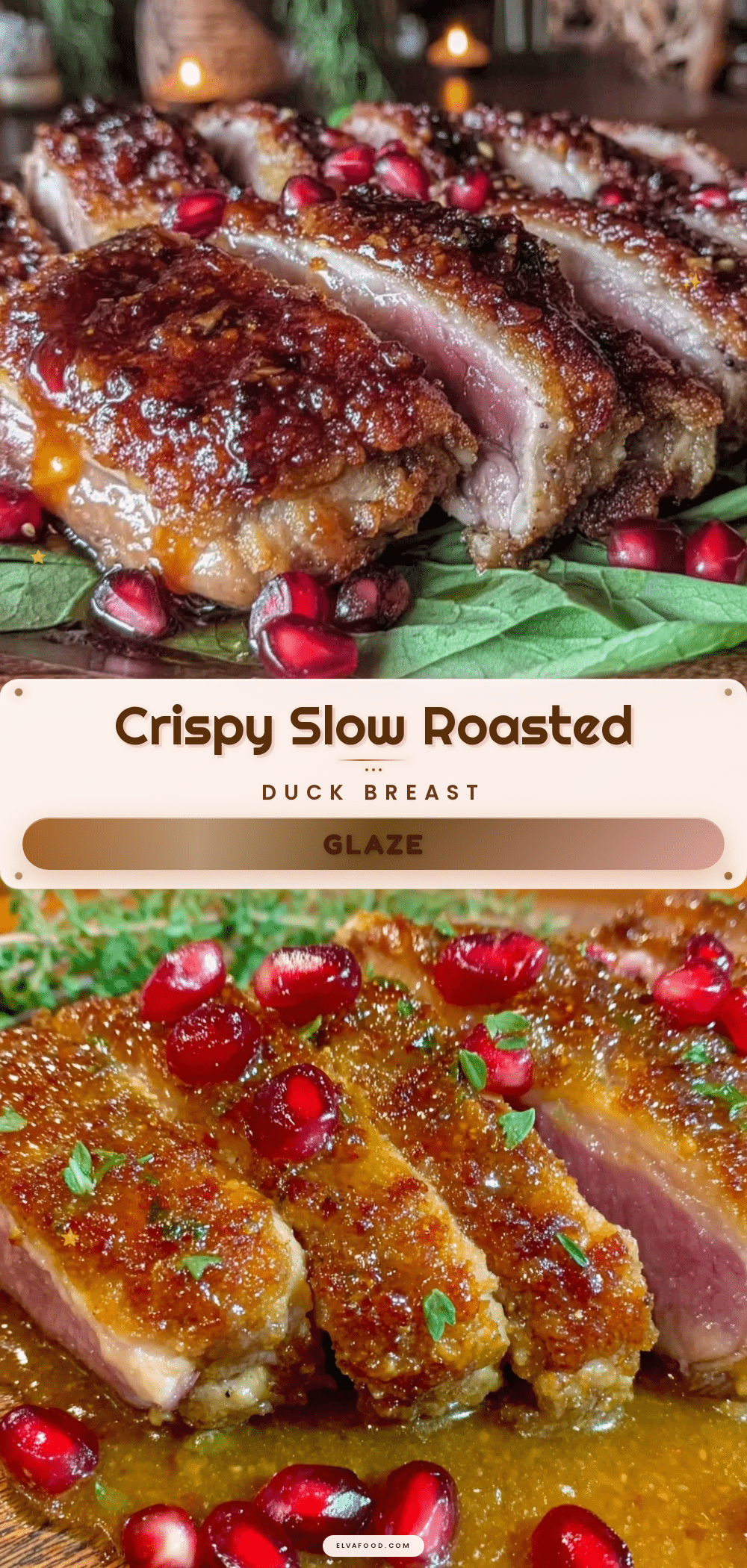
Perfect Slow Roasted Duck Breast Recipe with Easy Orange Pomegranate Glaze
A simple yet impressive slow roasted duck breast recipe featuring a tangy-sweet orange pomegranate glaze that delivers crispy skin and tender meat.
- Prep Time: 15 minutes
- Cook Time: 45 minutes
- Total Time: 1 hour
- Yield: 2 servings 1x
- Category: Main Course
- Cuisine: American
Ingredients
- 2 large duck breasts (6–8 oz / 170–225 g each), skin on and trimmed
- Kosher salt, to taste
- Freshly ground black pepper, to taste
- 1 tablespoon olive oil
- 1/3 cup (80 ml) freshly squeezed orange juice
- 2 tablespoons pomegranate molasses
- 1 tablespoon honey
- 2 cloves garlic, minced
- 2 teaspoons fresh thyme, chopped (or 1 teaspoon dried thyme)
- 1 tablespoon unsalted butter
- Optional garnish: pomegranate seeds and orange zest
Instructions
- Score the duck skin in a crosshatch pattern about 1/4 inch (6 mm) apart without cutting into the meat. Pat dry with paper towels.
- Season both sides of the duck breasts generously with kosher salt and freshly ground black pepper. Let sit at room temperature for 10 minutes.
- Preheat the oven to 275°F (135°C) for slow roasting.
- Heat 1 tablespoon olive oil in an oven-safe skillet or cast iron pan over medium-high heat. Place duck breasts skin-side down and sear for 6-8 minutes until skin is golden brown and crispy. Flip and sear the other side for 1-2 minutes.
- Transfer the skillet or duck breasts to a baking sheet and roast in the oven for 20-25 minutes for medium-rare (135°F / 57°C internal temperature) or longer for desired doneness.
- Remove duck breasts from the oven and tent loosely with foil. Let rest for 10 minutes to redistribute juices.
- While the duck rests, prepare the glaze: combine orange juice, pomegranate molasses, honey, minced garlic, and thyme in a small saucepan over medium heat. Simmer gently, whisking occasionally, until thickened and syrupy (about 8-10 minutes). Stir in butter for a glossy finish.
- Slice the duck breasts thinly against the grain. Drizzle generously with the warm orange pomegranate glaze and garnish with pomegranate seeds and orange zest if desired.
Notes
Score the skin properly to render fat and crisp skin without cutting into the meat. Use moderate heat when searing to avoid burning the skin. Rest the meat after roasting to keep it juicy. The glaze can be made ahead and reheated gently. For extra crispiness, broil the duck skin for 1-2 minutes after roasting, watching carefully to avoid burning.
Nutrition
- Serving Size: 1 duck breast with g
- Calories: 350
- Fat: 25
- Protein: 25
Keywords: duck breast, slow roasted duck, orange pomegranate glaze, easy duck recipe, dinner, main course, gluten-free, poultry