“You’ve got five minutes,” my friend texted me one hectic Thursday evening, “Can you whip up something tasty?” Honestly, I was barely holding it together—papers scattered, kids yelling, and the clock ticking loud enough to drown out the chaos. That’s when I threw together what I now call my quick flavorful Korean beef bowl with gochujang, mostly because it felt like a total gamble on flavor and speed. I didn’t expect much, just a warm bite to reset the evening. But wow, the spicy-sweet punch from the gochujang and that tender beef? It hit differently.
It became an instant favorite—not just because it’s fast, but because it’s bold and comforting in a way that makes you pause and savor amid the madness. I remember one night, after a particularly rough day, sitting quietly in the kitchen with a bowl in hand, realizing this simple dish had quietly become my comfort food reset button. The smoky, rich notes paired with a hint of sweetness from a quick stir-fry sauce made it unforgettable.
What stuck with me, beyond the flavor, was how approachable this recipe felt. You don’t need a ton of fancy ingredients or hours of prep. It’s just good, honest cooking that fits into life’s unpredictable rhythm. That’s why this quick flavorful Korean beef bowl with gochujang remains a staple in my rotation—and why I think you’ll appreciate its no-fuss, satisfying charm as much as I do.
Why You’ll Love This Recipe
Having tested this quick flavorful Korean beef bowl with gochujang multiple times (sometimes twice in one week!), I can confidently say it’s one of those meals that just works on so many levels. Here’s why it might become your go-to too:
- Quick & Easy: Ready in about 20 minutes, it’s perfect for those busy weeknights when you want something tasty but can’t spend hours in the kitchen.
- Simple Ingredients: No hunting for obscure items—most are pantry staples or easy to find. I usually grab my gochujang from the Asian aisle at my local grocery store, but it’s steadily becoming a kitchen essential.
- Perfect for Any Occasion: Whether a solo dinner or feeding a hungry crowd, it’s flexible and satisfying. I’ve even brought it to casual potlucks, where it disappeared fast.
- Crowd-Pleaser: The spicy-sweet balance hits just right, winning over both kids and adults. It’s a dish that sparks curiosity but never overwhelms.
- Unbelievably Delicious: The tender beef combined with the punchy gochujang sauce is next-level comfort food without the guilt of heavy takeout.
What really sets this apart is the way the gochujang’s fermented chili flavor melds with the savory soy and a touch of sweetness, creating a sauce that clings lovingly to every bite of beef. Unlike other recipes that might drown the meat or get lost in complexity, this one keeps things simple but deeply flavorful. Honestly, it’s a little magic in a bowl.
Plus, it’s a great intro to Korean flavors without feeling intimidating or requiring hours of prep like some traditional dishes. So if you’ve enjoyed recipes like the Mongolian beef or love dishes with bold sauces, this Korean beef bowl will slide right into your favorites list.
What Ingredients You Will Need
This recipe uses simple, wholesome ingredients to deliver bold flavor and satisfying texture without the fuss. Most of these are pantry staples or easy finds, and a few tips on what to pick make all the difference.
- Ground Beef (80/20 blend): The fat content helps keep the beef juicy and flavorful. You can swap for ground turkey or chicken if you want a lighter option.
- Gochujang (Korean chili paste): This is the star. Look for a good-quality brand like Chung Jung One for authenticity and vibrant flavor.
- Soy Sauce: Use low-sodium to balance the saltiness and let the other flavors shine through.
- Brown Sugar or Honey: Adds a subtle sweetness that cuts through the spice and rounds out the sauce.
- Garlic, minced: Fresh is best here for that punchy aroma and depth.
- Ginger, grated: Just a teaspoon adds a bright note that lifts the overall flavor.
- Green Onions: For garnish and a fresh bite—slice them thinly.
- Sesame Oil: A drizzle at the end gives a toasty finish.
- Cooked Jasmine Rice or Brown Rice: The warm bed for everything to come together. I like jasmine for its floral aroma, but brown rice adds a nice chew.
- Optional toppings: Toasted sesame seeds, shredded carrots, or a fried egg for extra indulgence.
For a gluten-free twist, swap regular soy sauce with tamari. And if you’re after a dairy-free meal, this recipe fits perfectly as is. I usually keep a jar of gochujang in my fridge since it’s so versatile—great for marinades or even spicy mayo.
Equipment Needed
No fancy tools required here—just the basics you likely already own. Here’s a quick list to have on hand:
- Large Skillet or Nonstick Pan: A wide pan helps cook the beef evenly without crowding.
- Measuring Spoons and Cups: For precise flavor balance—especially with the gochujang and soy sauce.
- Wooden Spoon or Spatula: To break up the beef while cooking.
- Knife and Cutting Board: For prepping garlic, ginger, and green onions.
- Rice Cooker or Pot: To prepare your rice base.
If you don’t have a nonstick skillet, a well-seasoned cast-iron pan works wonderfully too, giving a slight caramelization to the beef that’s hard to beat. I also recommend rinsing your rice before cooking to keep it fluffy and less sticky.
Preparation Method
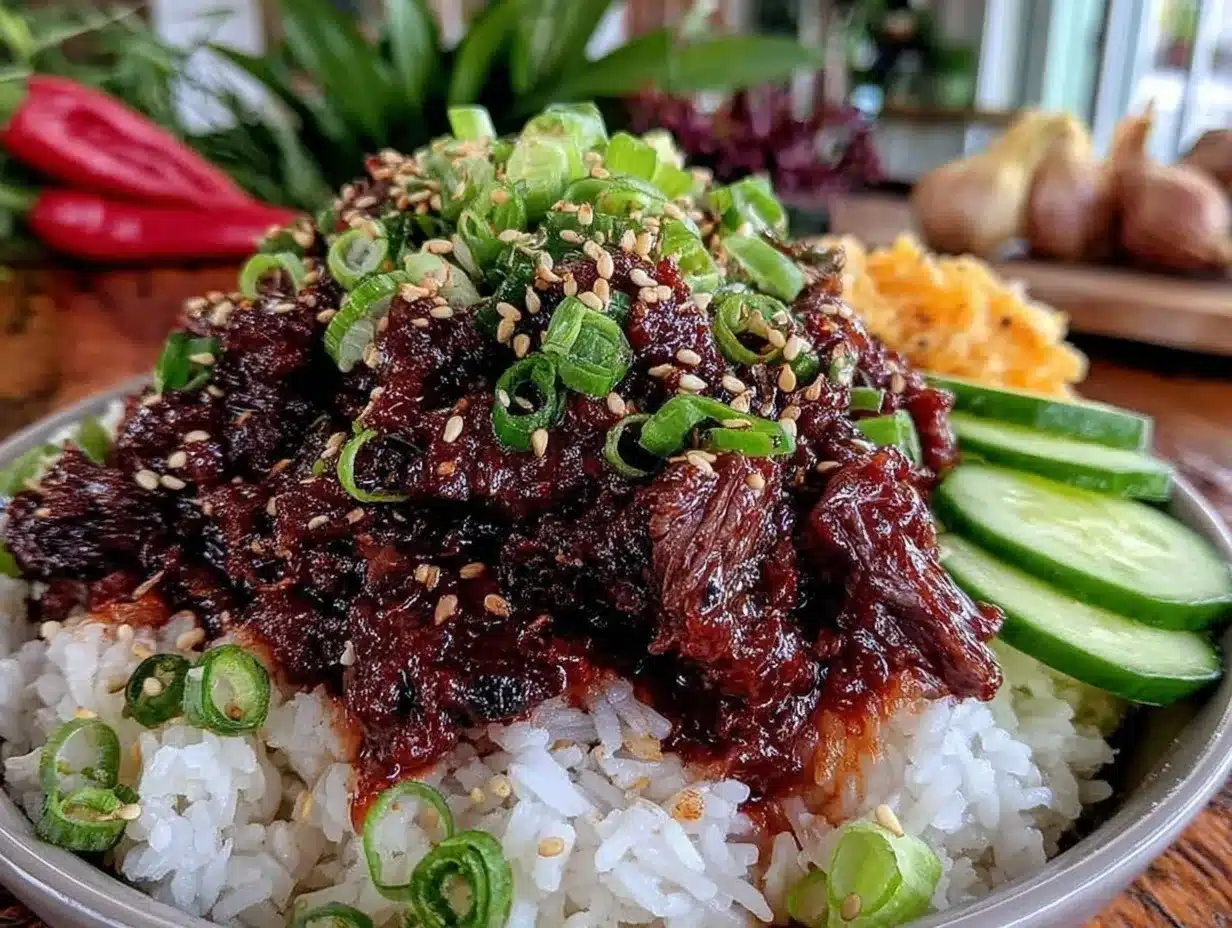
- Cook the Rice (15-20 minutes): Start by cooking 2 cups (370 g) of jasmine or brown rice according to package instructions. While this cooks, you can prep and cook the beef.
- Prep Aromatics: Mince 3 cloves of garlic and grate about 1 teaspoon (2 g) of fresh ginger. Slice 2 green onions thinly and set aside.
- Brown the Beef (5-7 minutes): Heat a large skillet over medium-high heat. Add 1 pound (450 g) of ground beef and cook, breaking up with a spatula until no longer pink and starting to brown. Drain excess fat if desired.
- Add Garlic and Ginger: Stir in the minced garlic and grated ginger, cooking for about 30 seconds until fragrant—don’t let it burn!
- Make the Sauce: In a small bowl, mix 3 tablespoons (45 ml) soy sauce, 2 tablespoons (30 g) brown sugar or honey, and 2 tablespoons (30 g) gochujang. Pour this over the beef and stir well to coat evenly.
- Simmer and Thicken: Reduce heat to medium and let the mixture cook for another 3-4 minutes, stirring occasionally. The sauce should thicken and cling to the beef.
- Finish with Sesame Oil and Green Onions: Remove from heat and drizzle 1 teaspoon (5 ml) sesame oil over the beef. Stir in half of the sliced green onions.
- Assemble the Bowl: Spoon cooked rice into bowls, top generously with the Korean beef mixture, then sprinkle remaining green onions and optional sesame seeds or shredded carrots.
Watch for the beef’s color shifting from raw pink to rich brown, and the sauce glossy and thickening—that’s your cue. If the sauce feels too thick, splash in a tablespoon of water to loosen it. Quick tip: stirring gently but often helps prevent sticking and burning.
Cooking Tips & Techniques
Cooking this quick flavorful Korean beef bowl with gochujang is pretty forgiving, but a few pointers can make all the difference:
- Don’t rush the browning: Let the beef get a nice sear before stirring too much. This adds a deeper flavor through caramelization.
- Balance the heat: Gochujang can be spicy, so start with 1 tablespoon if you’re unsure and adjust to taste. It’s easier to add than take away!
- Use fresh aromatics: Garlic and ginger add brightness and freshness that dried powders can’t match.
- Multitask efficiently: While the rice cooks, prep your ingredients and start the beef. This keeps everything moving without last-minute scrambling.
- Adjust sweetness: Brown sugar or honey tames the chili’s heat and rounds out the sauce. If your gochujang is salty, add a pinch more sugar for balance.
One time I forgot the sesame oil at the end and the whole bowl felt a bit flat—little finishing touches like that really bring the dish alive. Also, don’t overcrowd your pan; if you want to make a larger batch, cook the beef in batches for the best texture.
Variations & Adaptations
This recipe is a solid base that welcomes plenty of tweaks depending on what you’re craving or have on hand:
- Vegetarian version: Swap ground beef for diced firm tofu or tempeh. Press the tofu to remove excess moisture and pan-fry until crispy before adding the sauce.
- Seasonal vegetables: Throw in quick-cooking veggies like bell peppers, snap peas, or shredded carrots for color and crunch. I often add spinach at the end for a boost of greens.
- Spice level: For a milder bowl, reduce gochujang and add a splash of hoisin sauce or mild chili paste instead. If you like it fiery, add red pepper flakes or a dash of sriracha on top.
- Alternative grains: Try serving over quinoa, cauliflower rice, or even noodles for a different texture and flavor.
- Protein swap: Ground pork or chicken work well too, with slight adjustments in cooking time.
Once, I tried a quick version with frozen mixed veggies stirred in right at the end—super convenient and still tasty. And if you want to try a noodle variation, you might appreciate the easy lo mein noodles recipe with chicken and veggies from this site—it’s a great way to play with Asian-inspired flavors.
Serving & Storage Suggestions
This Korean beef bowl tastes best served hot, straight from the stove, with a little crunch and freshness on top. I like to finish mine with an extra sprinkle of green onions and toasted sesame seeds for texture and color.
Pair it with a simple cucumber salad or steamed broccoli to round out the meal without overshadowing the bold beef flavors. A cold glass of iced green tea complements the spicy-sweet notes nicely.
To store leftovers, transfer the beef and rice separately into airtight containers and refrigerate for up to 3 days. Reheat the beef gently in a skillet or microwave, adding a splash of water to loosen the sauce if needed. Rice reheats well with a sprinkle of water and a cover to retain moisture.
Flavors tend to deepen after a day, so sometimes I make this ahead intentionally. Just add fresh toppings before serving to keep it vibrant. If you want to freeze portions, the beef does freeze well, but the rice texture changes a bit—still tasty but best eaten fresh or refrigerated.
Nutritional Information & Benefits
This quick flavorful Korean beef bowl with gochujang packs a balanced profile for a weeknight meal. A typical serving (about 1 bowl) contains approximately:
| Nutrient | Amount |
|---|---|
| Calories | 450-500 kcal |
| Protein | 30-35 g |
| Fat | 20-25 g (mostly from beef and sesame oil) |
| Carbohydrates | 40-45 g (from rice and sauce sugars) |
| Fiber | 2-4 g (depending on rice type and added veggies) |
The ground beef provides a solid protein source with essential amino acids and iron. Gochujang, made from fermented chilies and soy, offers probiotics that support digestion. Using brown rice can boost fiber and nutrients, making the bowl more filling and blood sugar-friendly.
Note: This recipe contains soy and sesame, common allergens to be mindful of. For gluten-sensitive diets, tamari or coconut aminos replace soy sauce nicely.
Conclusion
This quick flavorful Korean beef bowl with gochujang is proof that weeknight dinners don’t have to be dull or complicated. It’s a recipe that came out of a whirlwind evening but stuck because it’s just so satisfying and easy to pull together. Whether you’re new to Korean flavors or looking for a simple, hearty meal, this bowl offers a perfect balance of spice, sweetness, and comfort.
Feel free to play around with the toppings or swap in your favorite veggies to make it truly yours. I personally love adding a fried egg on top for extra richness and a pop of color.
If you’ve enjoyed recipes like the creamy cacio e pepe pasta or the miso glazed salmon, you’ll appreciate how this Korean beef bowl fits right into a week of flavorful, fuss-free meals.
Give it a try, and I’d love to hear your twists or how it fits into your busy life. Cooking should feel like a friend helping you out, not a chore—this bowl is just that kind of recipe.
FAQs About Quick Flavorful Korean Beef Bowl with Gochujang
Can I use other cuts of beef instead of ground beef?
Yes! Thinly sliced ribeye or sirloin works well if you prefer a more traditional Korean bulgogi style. Just adjust cooking time to avoid overcooking.
Is gochujang very spicy?
It has a moderate heat level with a sweet and savory profile. If you’re sensitive to spice, start with a smaller amount and add more to taste.
Can I make this recipe ahead of time?
Absolutely. Prepare the beef and rice separately, then store refrigerated for up to 3 days. Reheat gently before serving.
What can I use if I don’t have gochujang?
You can substitute with a mix of chili paste and a bit of miso paste or even a spicy sriracha and honey combo, but the flavor won’t be quite the same.
Is this recipe gluten-free?
It can be if you use gluten-free soy sauce alternatives like tamari or coconut aminos. Double-check your gochujang brand, as some contain wheat.
Pin This Recipe!
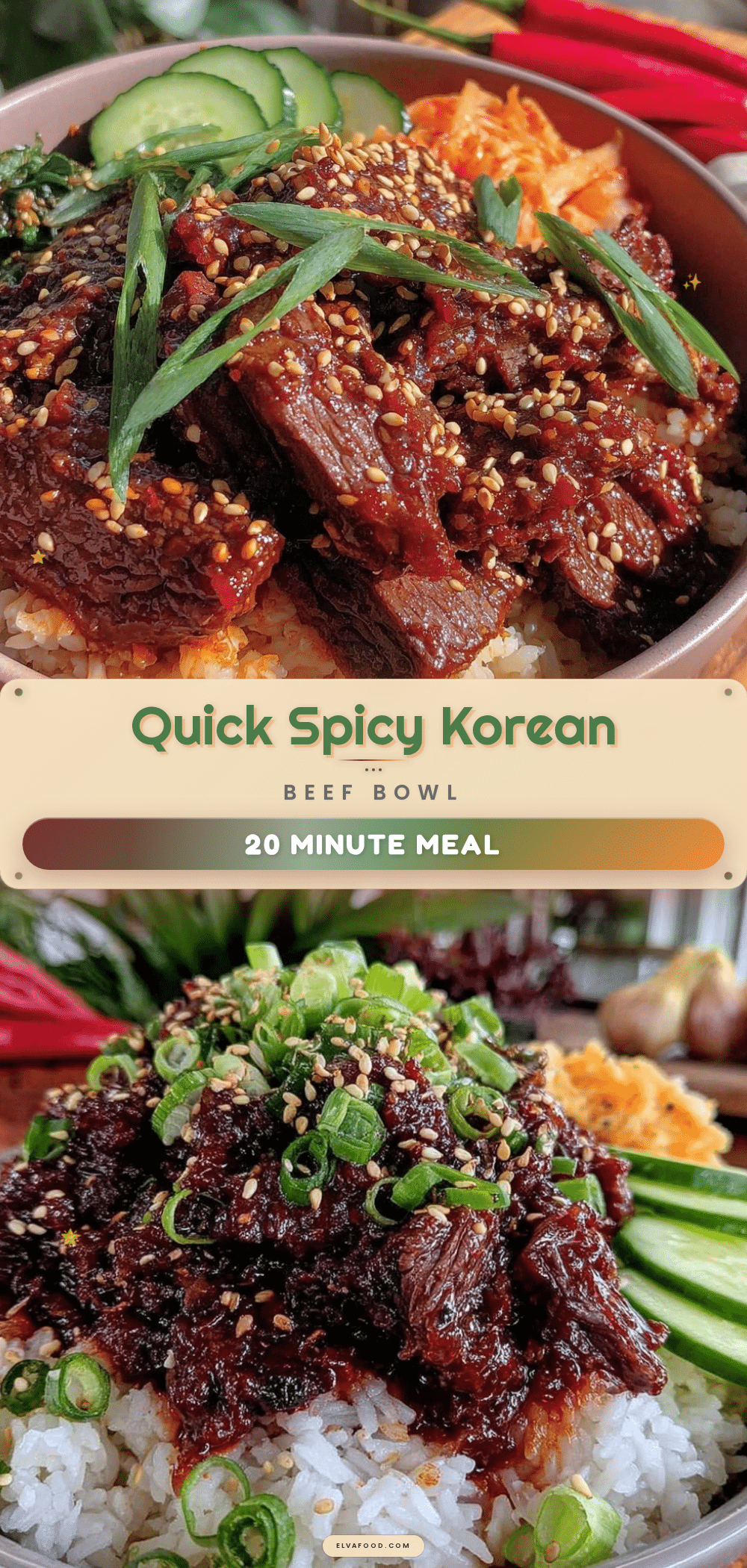
Quick Flavorful Korean Beef Bowl Recipe with Gochujang for Easy Dinners
A fast and bold Korean beef bowl featuring tender ground beef and a spicy-sweet gochujang sauce, perfect for busy weeknights and comforting meals.
- Prep Time: 5 minutes
- Cook Time: 15 minutes
- Total Time: 20 minutes
- Yield: 4 servings 1x
- Category: Main Course
- Cuisine: Korean
Ingredients
- 1 pound (450 g) ground beef (80/20 blend)
- 2 tablespoons (30 g) gochujang (Korean chili paste)
- 3 tablespoons (45 ml) low-sodium soy sauce
- 2 tablespoons (30 g) brown sugar or honey
- 3 cloves garlic, minced
- 1 teaspoon (2 g) fresh ginger, grated
- 2 green onions, thinly sliced
- 1 teaspoon (5 ml) sesame oil
- 2 cups (370 g) cooked jasmine or brown rice
- Optional toppings: toasted sesame seeds, shredded carrots, fried egg
Instructions
- Cook 2 cups (370 g) of jasmine or brown rice according to package instructions (15-20 minutes).
- Mince 3 cloves of garlic and grate 1 teaspoon (2 g) of fresh ginger. Slice 2 green onions thinly and set aside.
- Heat a large skillet over medium-high heat. Add 1 pound (450 g) ground beef and cook, breaking up with a spatula until no longer pink and starting to brown (5-7 minutes). Drain excess fat if desired.
- Stir in minced garlic and grated ginger, cooking about 30 seconds until fragrant.
- In a small bowl, mix 3 tablespoons (45 ml) soy sauce, 2 tablespoons (30 g) brown sugar or honey, and 2 tablespoons (30 g) gochujang. Pour over beef and stir well to coat evenly.
- Reduce heat to medium and cook for another 3-4 minutes, stirring occasionally until sauce thickens and clings to beef.
- Remove from heat and drizzle 1 teaspoon (5 ml) sesame oil over beef. Stir in half of the sliced green onions.
- Spoon cooked rice into bowls, top with Korean beef mixture, then sprinkle remaining green onions and optional sesame seeds or shredded carrots.
Notes
For gluten-free, use tamari instead of soy sauce and verify gochujang brand for wheat content. Adjust gochujang amount to control spice level. If sauce thickens too much, add a tablespoon of water to loosen. Do not overcrowd pan when cooking beef; cook in batches if needed. Fresh garlic and ginger add best flavor. Rinse rice before cooking for fluffier texture.
Nutrition
- Serving Size: 1 bowl
- Calories: 475
- Sugar: 10
- Sodium: 800
- Fat: 22.5
- Saturated Fat: 8
- Carbohydrates: 42.5
- Fiber: 3
- Protein: 32.5
Keywords: Korean beef bowl, gochujang recipe, quick dinner, easy Korean recipe, spicy beef bowl, weeknight meal