“You really should try making pesto with garlic scapes,” my neighbor said casually one sunny afternoon while handing over a generous bundle from her garden. I’d never cooked with garlic scapes before — honestly, I was a bit skeptical. Garlic cloves, sure, but these curly, green shoots? I wasn’t convinced they’d deliver the punch I expected from garlic. But curiosity got the best of me. That evening, with a kitchen counter full of scapes and a half-forgotten bag of pine nuts, I threw together a batch of fresh garlic scape pesto with Parmesan and pine nuts.
What happened next was one of those happy kitchen accidents. The pesto came out bright, grassy, and just mildly garlicky — no overwhelming bite, just this perfect balance that made me want to spread it on everything. Over the next week, I found myself making it repeatedly, slathering it on toasted bread, stirring it through pasta, and even dolloping it over roasted potatoes. It was a quiet discovery that turned into a reliable staple, and honestly, it’s become my go-to sauce for bringing a fresh, vibrant twist to everyday meals.
It’s funny how a simple suggestion from a friend can lead to something that feels so personal and comforting. This recipe stuck with me because it’s easy, uses ingredients that don’t require a special trip to the store, and it has that kind of flavor that makes you pause and smile after the first bite. No fuss, no complicated steps, just fresh, honest ingredients coming together in a way that feels both new and familiar.
So here’s the story behind my fresh garlic scape pesto with Parmesan and pine nuts — a recipe born from a casual chat and a bit of kitchen experimentation. If you ever find yourself with a bunch of garlic scapes, you’ll want to keep this one close.
Why You’ll Love This Fresh Garlic Scape Pesto Recipe
Having made this pesto multiple times (and honestly, more than I can count), I can say it’s a recipe that truly wins on every front. Here’s why it’s worth keeping in your recipe rotation:
- Quick & Easy: Whip this together in under 15 minutes — perfect for those moments when you want something homemade but don’t have hours to spare.
- Simple Ingredients: Garlic scapes, Parmesan, pine nuts, olive oil, and a pinch of salt. No fancy or hard-to-find items needed.
- Perfect for Seasonal Cooking: Garlic scapes only show up in spring and early summer, so this recipe feels like a little celebration of fresh, fleeting produce.
- Crowd-Pleaser: Whether it’s drizzled over grilled chicken, tossed with pasta, or spread on crusty bread, it gets compliments from everyone — even those who usually shy away from strong garlic flavors.
- Unbelievably Delicious: The creamy Parmesan and nutty pine nuts round out the fresh, slightly grassy punch of the scapes with a silky texture that’s downright addictive.
What makes this pesto stand apart isn’t just the ingredients but how they come together. The garlic scapes have a subtler, fresher garlic flavor than raw cloves, which means the pesto tastes bright but not overpowering — a nuance that’s hard to beat. Plus, blending the Parmesan into the mix, rather than sprinkling it on top, creates an ultra-smooth sauce that clings beautifully to noodles, roasted veggies, or even as a dip for fresh bread.
Honestly, this isn’t just any pesto — it’s the kind that makes you pause, savor, and want to make it again soon. If you’ve ever tried making classic pesto, you’ll find this version refreshingly different but just as satisfying. And if you’re planning a cozy dinner, this pesto pairs like a charm with hearty dishes — I often think about it alongside an Irish lamb stew or the comforting layers of Dublin coddle.
What Ingredients You Will Need
This fresh garlic scape pesto recipe relies on fresh, wholesome ingredients that deliver bold flavor and a satisfying texture without any fuss. Most of these are pantry staples or easy-to-find fresh items, making it simple to prepare whenever garlic scapes are in season.
- Garlic scapes (about 1 cup, chopped): The star of the show. Look for firm, vibrant green scapes with a mild garlic flavor. If you can’t find fresh, you could experiment with scallions or mild green garlic, but the taste won’t be quite the same.
- Parmesan cheese (½ cup, finely grated): I recommend using a high-quality Parmigiano-Reggiano for the best texture and flavor. It adds that salty, nutty richness that balances the scapes beautifully.
- Pine nuts (¼ cup): Lightly toasted for a warm, nutty flavor. If pine nuts are hard to find or pricey, you can substitute with walnuts or almonds, but pine nuts give the classic pesto creaminess.
- Extra virgin olive oil (about ½ cup): Use a fruity, good-quality olive oil since it makes a big difference in the final flavor.
- Fresh lemon juice (1 tablespoon): Adds brightness and helps balance the richness of the cheese and oil.
- Salt (½ teaspoon or to taste): Enhances all the flavors without overpowering the gentle garlic notes.
- Optional: Fresh basil leaves (a handful): If you want to add a touch of herbal freshness, though the pesto is delicious without it.
When selecting your ingredients, I like to keep things as fresh and simple as possible. For example, pine nuts from Fisher or Colavita usually give consistent results in terms of flavor and texture. Also, if you want to keep the pesto vegan, you can swap the Parmesan for a nutritional yeast alternative, although the classic version really shines with real cheese.
Because garlic scapes are seasonal, if you find yourself craving pesto outside of their availability, you might try the creamy cacio e pepe pasta instead — it’s another recipe that celebrates simple, fresh ingredients with bold flavor.
Equipment Needed
You don’t need much to whip up this fresh garlic scape pesto — just a handful of basic kitchen tools will do.
- Food processor or high-speed blender: Essential for blending the scapes, pine nuts, and Parmesan into a smooth, creamy pesto. I’ve tried making pesto with just a mortar and pestle, which works but takes much longer and results in a chunkier texture.
- Measuring cups and spoons: For accuracy, especially when balancing oil and lemon juice.
- Spatula: Handy for scraping down the sides of the processor to make sure everything blends evenly.
- Toaster oven or skillet: To lightly toast pine nuts before adding them. This step is simple but really enhances the flavor.
If you don’t have a food processor, a sturdy blender can work too, though you might need to pulse and scrape more often. For those on a budget, small personal blenders are surprisingly effective for making pesto in small batches.
Preparation Method
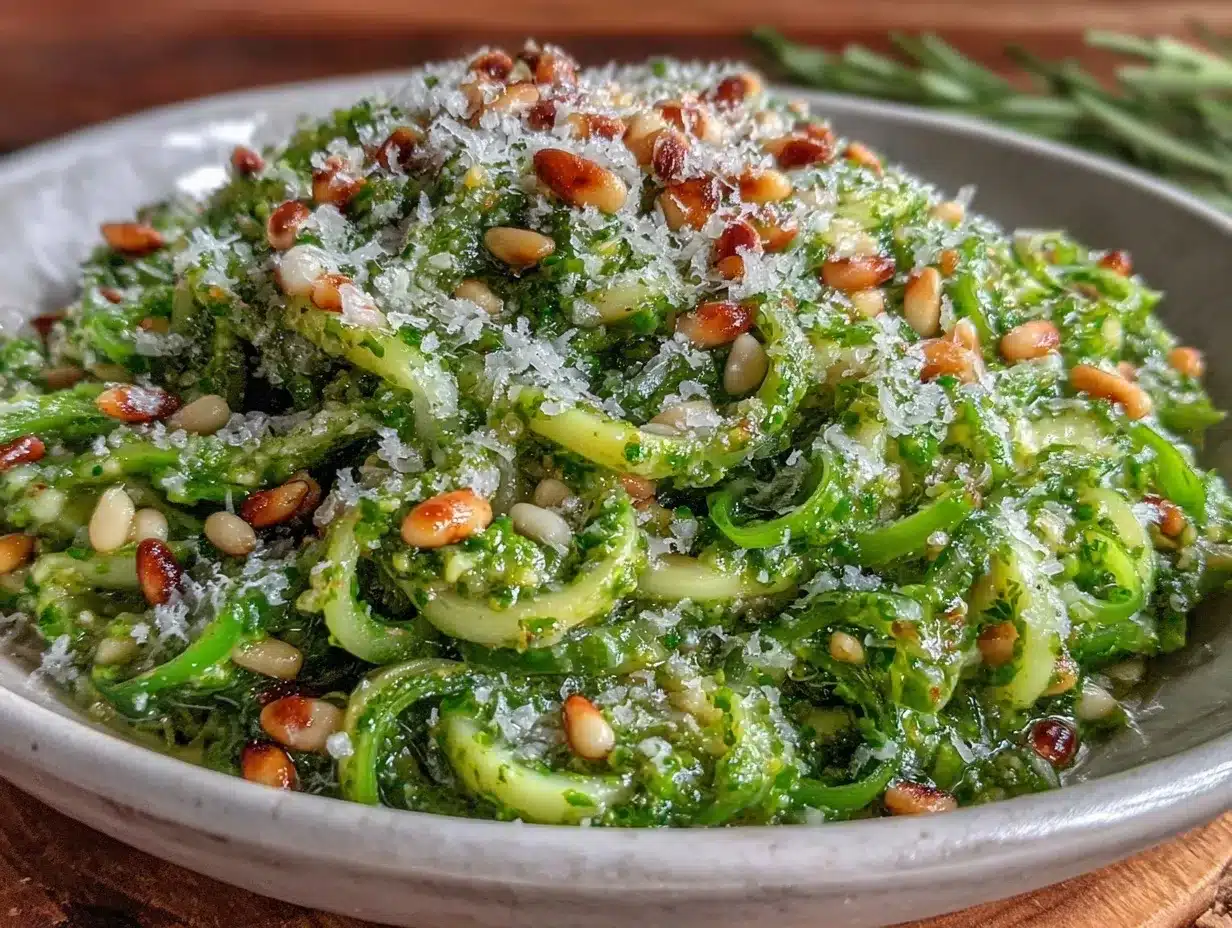
- Toast the pine nuts (about 3-5 minutes): Place the pine nuts in a dry skillet over medium heat. Stir frequently until they’re golden brown and fragrant. Watch carefully — they can burn quickly. Set aside to cool.
- Prepare the garlic scapes: Rinse well and trim off the tough ends. Chop into 1-inch pieces for easier blending.
- Combine the ingredients: In your food processor, add the chopped garlic scapes, cooled pine nuts, grated Parmesan, and salt.
- Pulse to roughly combine: Pulse a few times to break down the mixture, then slowly stream in the olive oil while running the processor. You want a smooth but slightly textured consistency — think spreadable but not watery. This should take about 1-2 minutes.
- Add lemon juice: Pour in the tablespoon of lemon juice and give it one last quick pulse to mix.
- Taste and adjust: Sample your pesto. If it needs more salt, lemon, or oil to achieve your desired texture, add a little more and pulse again.
- Store or serve immediately: Use right away for the brightest flavor or store in an airtight container in the fridge for up to 3-4 days. A thin layer of olive oil on top helps keep it fresh.
If the pesto seems too thick, I add a teaspoon or two of warm water to loosen it up. Also, if you want a creamier texture, try blending in a small handful of fresh basil leaves or even a spoonful of ricotta.
When cooking pasta to go with this pesto, save some pasta water and stir it in at the end — it helps the pesto cling to every strand perfectly. (This little trick also works wonders for sauces like the one in the easy lo mein noodles recipe.)
Cooking Tips & Techniques
Making pesto might seem straightforward, but a few insider tips make all the difference between “meh” and memorable.
- Don’t over-process: You want some texture left in the pesto for that rustic feel. Blending too long turns it into a green soup.
- Toast nuts gently: Toasting releases oils and adds depth, but it’s easy to go from toasted to burnt in seconds. Keep the nuts moving and stay close to the stove.
- Balance flavors carefully: Garlic scapes are milder than raw garlic, so salt and lemon juice are crucial for brightening and rounding out flavors.
- Use fresh Parmesan: Pre-grated cheese can be dry or clumpy. Freshly grated Parmigiano-Reggiano dissolves better and gives a smoother pesto.
- Work quickly: Pesto oxidizes and can brown if left exposed. Transfer it to airtight containers and cover the surface with a drizzle of olive oil to slow this down.
One personal lesson learned: the first time I skipped the lemon juice, the pesto felt a little flat. Adding that acidic note changed everything — it’s a small step that punches up freshness. Also, don’t be shy about adjusting olive oil quantity. Depending on your scape batch, you might want a looser or thicker pesto.
Variations & Adaptations
This recipe is flexible and lends itself well to tweaks based on your pantry, dietary needs, or flavor cravings.
- Nut-free version: Substitute pine nuts with sunflower seeds or pumpkin seeds for a similar texture and a different nutty flavor.
- Vegan adaptation: Replace Parmesan with nutritional yeast or a vegan hard cheese alternative to keep that cheesy umami without dairy.
- Herb boost: Add a handful of fresh basil, parsley, or cilantro for an herbal twist that changes the flavor profile subtly but deliciously.
- Spicy kick: Toss in a pinch of red pepper flakes or a small fresh chili for a pesto with a little heat.
- Different oils: Try toasted walnut oil or avocado oil for a unique flavor dimension.
One variation I’ve personally enjoyed is blending in some roasted red peppers for a smoky-sweet pesto that pairs beautifully with grilled meats or roasted vegetables. It’s a nice companion to a plate of miso-glazed salmon if you want to try something a bit different.
Serving & Storage Suggestions
This pesto is incredibly versatile when it comes to serving and storing.
- Serving Temperature: Best served at room temperature to allow the flavors to shine. If refrigerated, let it sit out for 15 minutes before serving.
- Presentation: Drizzle over freshly cooked pasta, spread on toasted baguette slices, or use as a sauce for grilled chicken or fish. It also makes a fantastic topping for roasted potatoes or steamed veggies.
- Storage: Store in an airtight container in the refrigerator for up to 4 days. To keep the vibrant green color, pour a thin layer of olive oil over the top before sealing.
- Freezing: Pesto freezes well in ice cube trays. Once frozen, transfer cubes to a freezer bag for up to 3 months. Perfect for quick flavor boosts later on.
- Reheating Tips: Thaw gently at room temperature or in the fridge. Avoid heating pesto directly over high heat to preserve the fresh flavors.
Flavors tend to deepen the next day, so sometimes I make a batch a day ahead to let everything meld. It’s a small trick I’ve picked up from making sauces like the rich, creamy base in Italian wedding soup.
Nutritional Information & Benefits
This fresh garlic scape pesto is not just tasty but also carries several nutritional benefits:
- Calories: Approximately 150-180 calories per 2-tablespoon serving, mostly from healthy fats in olive oil and pine nuts.
- Healthy Fats: Olive oil and pine nuts provide heart-healthy monounsaturated fats and essential nutrients like vitamin E.
- Vitamins and Minerals: Garlic scapes offer antioxidants and trace amounts of vitamins C and K, while Parmesan adds calcium and protein.
- Dietary Considerations: Naturally gluten-free and can be made vegan with simple substitutions.
- Allergens: Contains nuts and dairy; easy to modify if you have allergies.
From a wellness perspective, I appreciate how this pesto combines fresh plant ingredients with wholesome fats and protein, making it a satisfying and nourishing addition to meals without feeling heavy or processed.
Conclusion
Fresh garlic scape pesto with Parmesan and pine nuts is one of those recipes that quietly becomes a kitchen favorite without much fuss. It’s simple, flavorful, and offers a fresh take on classic pesto that feels both seasonal and timeless. Whether you’re looking to brighten up weeknight dinners or add a fresh herbaceous note to your meals, this pesto delivers every time.
Feel free to customize it to your taste — add more lemon for zing, swap nuts for allergies, or mix in herbs to suit your mood. Personally, I keep coming back to this recipe because it’s reliable, delicious, and a little reminder of spring’s fleeting gifts.
If you try it, I’d love to hear how you use it or any twists you discover. Sharing food stories and recipes like this is what keeps me cooking with joy — so don’t be shy about leaving a comment or sharing your own pesto moments.
Happy cooking and savor every bite!
Frequently Asked Questions About Fresh Garlic Scape Pesto
What are garlic scapes, and can I substitute them?
Garlic scapes are the curly flower stalks that grow from garlic bulbs in spring. They have a mild garlic flavor and a crisp texture. If you can’t find them, scallions or mild green garlic can be used, but the flavor will differ.
How long does homemade garlic scape pesto last?
Stored in an airtight container with a layer of olive oil, it lasts 3-4 days in the fridge. You can also freeze pesto in ice cube trays for up to 3 months.
Can I make this pesto nut-free?
Yes! Substitute pine nuts with toasted sunflower seeds or pumpkin seeds for a similar texture and a nut-free version.
Is this pesto gluten-free?
Absolutely. The ingredients are naturally gluten-free, making it safe for those avoiding gluten.
What dishes pair well with fresh garlic scape pesto?
This pesto is fantastic tossed with pasta, spread on toasted bread, drizzled over grilled meats like in the perfect saltimbocca recipe, or used as a dip for fresh veggies.
Pin This Recipe!
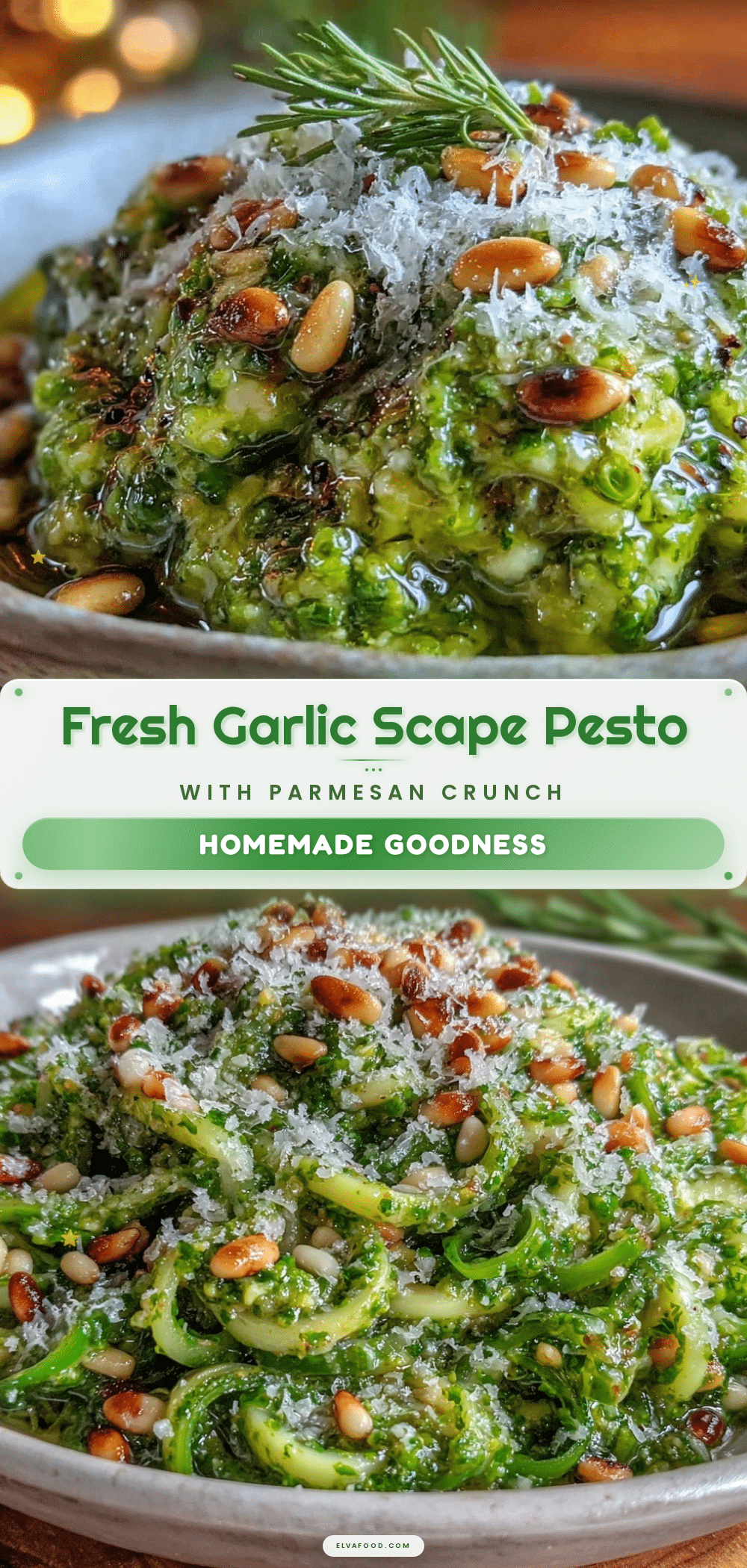
Fresh Garlic Scape Pesto with Parmesan and Pine Nuts
A bright, grassy pesto made with fresh garlic scapes, Parmesan cheese, and toasted pine nuts. This easy homemade recipe is perfect for spring and early summer, offering a mild garlic flavor and creamy texture.
- Prep Time: 10 minutes
- Cook Time: 5 minutes
- Total Time: 15 minutes
- Yield: About 1 cup (approximately 4 servings) 1x
- Category: Sauce
- Cuisine: Italian
Ingredients
- 1 cup garlic scapes, chopped
- 1/2 cup Parmesan cheese, finely grated
- 1/4 cup pine nuts, lightly toasted
- 1/2 cup extra virgin olive oil
- 1 tablespoon fresh lemon juice
- 1/2 teaspoon salt, or to taste
- Optional: a handful of fresh basil leaves
Instructions
- Toast the pine nuts in a dry skillet over medium heat for 3-5 minutes, stirring frequently until golden brown and fragrant. Set aside to cool.
- Rinse garlic scapes well, trim off tough ends, and chop into 1-inch pieces.
- In a food processor, combine chopped garlic scapes, cooled pine nuts, grated Parmesan, and salt.
- Pulse a few times to roughly combine, then slowly stream in olive oil while running the processor until smooth but slightly textured, about 1-2 minutes.
- Add lemon juice and pulse once more to mix.
- Taste and adjust seasoning with more salt, lemon juice, or olive oil if needed, pulsing again to combine.
- Use immediately or store in an airtight container in the refrigerator for up to 3-4 days, covering the surface with a thin layer of olive oil to keep fresh.
Notes
Do not over-process the pesto to keep some texture. Toast pine nuts gently to avoid burning. Freshly grated Parmesan gives the best texture and flavor. Add lemon juice to brighten the flavor. Store with a thin layer of olive oil on top to prevent browning. If pesto is too thick, add a teaspoon or two of warm water to loosen. For a creamier texture, blend in fresh basil or ricotta.
Nutrition
- Serving Size: 2 tablespoons
- Calories: 165
- Sugar: 0.2
- Sodium: 150
- Fat: 16
- Saturated Fat: 3
- Carbohydrates: 2
- Fiber: 0.5
- Protein: 3
Keywords: garlic scape pesto, pesto recipe, homemade pesto, Parmesan pesto, pine nuts, spring recipe, easy pesto, fresh pesto