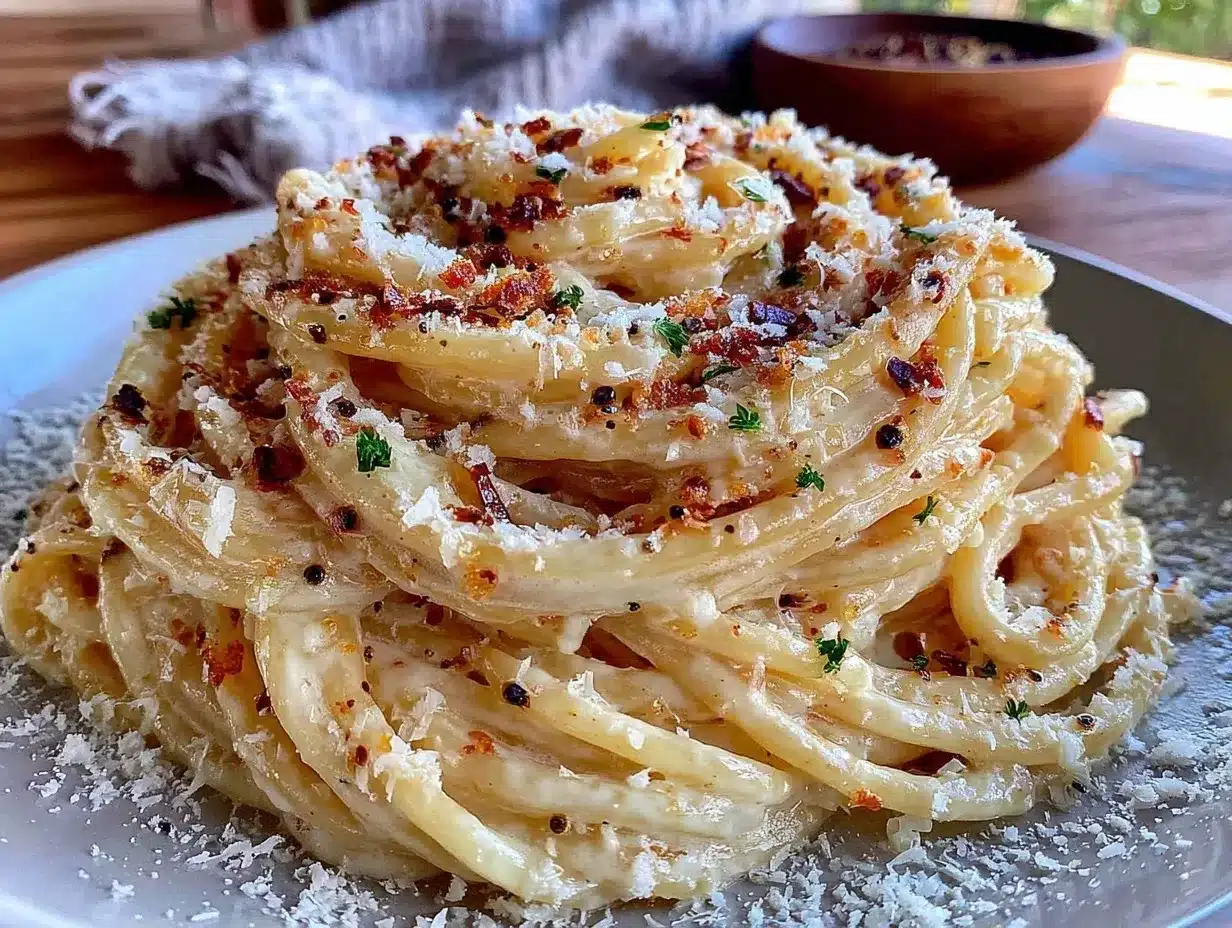
Picture this: a swirl of hot pasta, tangled in a glossy, creamy sauce that clings to every strand like a gentle hug. The scent of freshly cracked black pepper blooms in the kitchen, mingling with the unmistakable tang of Pecorino Romano—sharp, salty, and just begging to be twirled onto your fork. It’s the kind of aroma that draws everyone in, noses up, asking, “What’s for dinner?”
The first time I made creamy Cacio e Pepe, I had no idea such simple ingredients could create such pure magic. I remember standing over the stovetop, the pepper sizzling in buttery foam, and that moment when the cheese hit the hot pasta—suddenly, a sauce was born out of nowhere. I paused, took a breath, and just grinned. It was the kind of moment where you know you’ve stumbled onto something that’s going to stick around your repertoire forever.
Years ago, when I was knee-high to a grasshopper, my Italian grandma would tell me, “The best dishes come from humble beginnings.” She wasn’t wrong. Creamy Cacio e Pepe is a recipe that’s been passed down and riffed on for generations. I wish I’d discovered the creamy twist sooner, honestly. My family couldn’t resist sneaking tastes straight from the pan (and hey, who can blame them?). It’s become a staple for our weeknight dinners, a hit at impromptu get-togethers, and a must for cozy evenings when only carbs and cheese will do.
This creamy Cacio e Pepe pasta is dangerously easy, delivers pure, nostalgic comfort, and will brighten up your Pinterest board (or your dinner table). Whether you’re making it for a crowd or just yourself, it’s one of those recipes that feels like a warm hug. Trust me, you’re going to want to bookmark this one—I’ve tested it more times than I’d like to admit (in the name of research, of course) and it’s here to stay.
Why You’ll Love This Creamy Cacio e Pepe Pasta Recipe
Let’s face it—there are a million pasta recipes out there, but this creamy Cacio e Pepe with Pecorino Romano isn’t just another one in the crowd. After years of cooking, tasting, and serving up pasta dinners to my ever-hungry family and picky friends, I can say with confidence you’ll fall head over heels for this one. Here’s why:
- Quick & Easy: You’ll have dinner on the table in under 30 minutes. No marathon cooking sessions, just pure pasta joy—even on a busy weeknight.
- Simple Ingredients: No fancy shopping trips needed. If you’ve got pasta, cheese, and pepper, you’re basically halfway there.
- Perfect for Any Occasion: Whether it’s a lazy Sunday, a romantic dinner, or a last-minute potluck, this dish fits right in.
- Crowd-Pleaser: Kids, grown-ups, even those who “aren’t into pasta” (impossible, but they exist) can’t resist going back for seconds.
- Unbelievably Delicious: The creamy sauce is velvety without any cream, the Pecorino Romano packs a punch, and the black pepper adds just enough heat to keep things interesting.
What makes this creamy Cacio e Pepe pasta recipe unique? I use a little pasta water magic and gently melt the cheese, making an extra creamy sauce that coats each strand instead of clumping up. I’ve learned (the hard way) that the order you add ingredients really matters—no more stringy cheese globs or watery sauce here!
Honestly, this isn’t just comfort food. It’s the kind of meal you close your eyes for after the first bite. It’s a taste of Rome—elevated by the creamy texture and the boldness of Pecorino Romano. If you’re aiming to impress guests without breaking a sweat, or just want a bowl of something soul-soothing after a long day, this creamy Cacio e Pepe is your answer.
So, whether you’re a seasoned cook or just starting out, this recipe proves you don’t need a long list of ingredients or complex steps to make a meal that’s both impressive and heartwarming. Give it a whirl and see why my friends now call me “the pasta whisperer” (I’ll take it!).
What Ingredients You Will Need
This creamy Cacio e Pepe pasta relies on just a handful of straightforward, no-fuss ingredients. Most of these are probably already in your pantry or fridge. Each one plays an important role—bringing the sauce together, adding flavor, and creating that iconic creamy texture. Here’s what you’ll need:
- Pasta: 12 oz (340 g) spaghetti or tonnarelli (classic, but bucatini or linguine work too)
- Pecorino Romano Cheese: 1 ½ cups (120 g), finely grated (I recommend buying a wedge and grating it yourself for best melt—it’s worth the extra minute)
- Freshly Cracked Black Pepper: 2-3 teaspoons, coarsely ground (don’t use pre-ground—trust me, the flavor isn’t the same!)
- Unsalted Butter: 2 tablespoons (28 g), cut into pieces (adds an extra hint of creaminess—optional, but I love the richness it brings)
- Salt: For the pasta water (Pecorino is salty, so go easy here)
- Pasta Cooking Water: At least 1 cup (240 ml), reserved before draining
Ingredient notes and swaps:
- Pasta: If you need a gluten-free option, use a good-quality gluten-free spaghetti (like Barilla or Jovial). The sauce works just as well.
- Cheese: Authentic Cacio e Pepe uses Pecorino Romano for its tangy, salty bite. If you can’t find it, Parmigiano-Reggiano is a decent stand-in, though less bold.
- Butter: For a dairy-free variation, swap in a plant-based butter or simply leave it out for a lighter version.
- Black Pepper: The fresher the better. I use a pepper mill set to coarse for maximum aroma. If you’re sensitive to spice, start with less and add to taste.
Why these ingredients? The magic is in their simplicity. The starchy pasta water helps the cheese melt into a smooth, creamy sauce without needing any cream. Pecorino Romano brings big flavor, while freshly cracked pepper gives the dish its signature kick. Honestly, you don’t need anything else—simple, classic, and pretty much foolproof!
Equipment Needed
- Large Pot: For boiling pasta (any sturdy stockpot works, but I love my old enameled Dutch oven—it holds heat and makes draining easier).
- Large Skillet or Sauté Pan: To toss the pasta and build the sauce. Nonstick or stainless steel both work—just avoid cast iron for this one (the cheese sticks!).
- Fine Grater or Microplane: For grating Pecorino Romano. Pre-shredded cheese won’t melt as smoothly—trust me, I’ve tried.
- Pepper Mill: For freshly cracked black pepper. You’ll want a coarse grind for texture and punch.
- Tongs: For tossing the pasta—makes life so much easier than a spoon.
- Measuring Cups: For reserving pasta water (I always use a Pyrex cup—easy to scoop and heat safe).
If you don’t have a microplane, a box grater on the finest side will do the trick. No tongs? A large fork or two spoons can substitute in a pinch, though tossing is trickier. For budget options, I’ve used IKEA pots and pans for years with great results—no need for anything fancy. Just avoid old nonstick pans with scratches, as they can make sauce stick and clump (been there, done that!).
Preparation Method
-
Boil the Pasta:
- Bring a large pot of water to a boil. Add 1-2 tablespoons salt—remember, Pecorino is salty, so don’t overdo it.
- Add 12 oz (340 g) spaghetti and cook until just al dente (about 8-9 minutes, but check your package).
- Tip: Stir in the first 2 minutes to prevent sticking.
-
Grate the Cheese:
- While pasta cooks, finely grate 1 ½ cups (120 g) Pecorino Romano. Set aside.
- Warning: Don’t use pre-shredded! It doesn’t melt smoothly.
-
Reserve Pasta Water:
- 1-2 minutes before draining, carefully scoop out at least 1 cup (240 ml) of pasta water. You’ll need this magic elixir for the sauce.
- Drain pasta, but don’t rinse. Let it sit in the colander for a minute while you prepare the sauce.
-
Toast the Pepper:
- In a large skillet over medium heat, add 2-3 teaspoons coarsely ground black pepper.
- Toast for 1 minute, stirring, until fragrant (your nose will know!).
- Add 2 tablespoons (28 g) unsalted butter and let it melt, swirling to combine with the pepper.
-
Build the Sauce:
- Pour in ½ cup (120 ml) hot reserved pasta water. The butter will sizzle and bubble—that’s a good sign.
- Add drained pasta, using tongs to toss and coat in the peppery butter. Keep heat on low-medium.
-
Add the Cheese:
- Sprinkle half the grated Pecorino Romano over the pasta. Toss vigorously, adding more hot pasta water as needed (about ¼ cup / 60 ml at a time).
- Repeat with the rest of the cheese, tossing until a creamy sauce forms and clings to each strand. Add water slowly—too much and the sauce thins out, too little and it clumps.
- Sensory cue: The sauce should be glossy and coat the pasta without pools at the bottom.
-
Troubleshooting:
- If the cheese clumps, add a splash more hot water and toss over low heat until smooth. If the sauce seems too thin, keep tossing off heat for 1-2 minutes—pasta will absorb excess liquid.
-
Serve Immediately:
- Transfer to warm bowls, sprinkle with extra Pecorino and black pepper if you like. Serve piping hot!
Personal tip: Work quickly once the pasta is cooked. The cheese melts best when everything is hot. Don’t step away mid-toss—I did once and ended up with a sticky mess. There’s a sweet spot for creamy Cacio e Pepe, and once you nail it, you’ll never go back!
Cooking Tips & Techniques
Here are my go-to tips for making the creamiest, most luscious Cacio e Pepe every time (learned through plenty of trial and error):
- Use Freshly Grated Cheese: Pre-grated cheese contains anti-caking agents, which can lead to clumpy sauce. Trust me, a quick grate is worth it.
- Save Extra Pasta Water: This is your insurance policy. If the sauce thickens or clumps, a splash of hot starchy water brings it back to glossy.
- Don’t Overheat the Cheese: Take the pan off direct heat when adding Pecorino. Too much heat, and it gets stringy or greasy (been there, not fun).
- Toss, Toss, Toss: Use tongs and move quickly. The more you toss, the smoother your sauce will be.
- Coarse Pepper is Key: Cracked, not ground. This gives the sauce its signature bite and aroma.
- Timing is Everything: Have all ingredients prepped and ready. The sauce comes together in minutes, and hesitation leads to sticky pasta.
- Use the Right Pan: Stick with stainless steel or nonstick. Cast iron can cause cheese to stick and burn.
- Consistency Test: If the sauce runs off the pasta, toss a bit longer or add a bit more cheese. If too thick, loosen with more water.
Honestly, my first few tries were clumpy disasters—I thought I’d never get it right. But once I started tossing the cheese off the heat and adding water slowly, the sauce turned out creamy every time. So, don’t stress if it’s not perfect the first go. You’ll get the hang of it—and when you do, it’s pasta paradise!
Variations & Adaptations
While traditional Cacio e Pepe is a thing of beauty, it’s fun to switch things up depending on your mood, diet, or what’s hanging out in your pantry. Here are some tasty twists and adaptations:
- Gluten-Free: Use your favorite gluten-free spaghetti. The sauce is naturally gluten-free, so you won’t miss a thing.
- Dairy-Free: Try a good plant-based Parmesan-style cheese (like Violife) and vegan butter. It’s not classic, but it works in a pinch (I made it for a dairy-sensitive friend, and she was thrilled!).
- Lemon Zest: Add a little fresh lemon zest at the end for a bright, springy flavor—so good for summer!
- Extra Creamy: Stir in a tablespoon of mascarpone or a splash of heavy cream for even more richness (not traditional, but oh my).
- Spicy: Add a pinch of crushed red pepper flakes with the black pepper for a little extra kick.
- Vegetable Boost: Toss in some steamed peas, baby spinach, or roasted mushrooms for extra nutrition and color.
- Different Pasta Shapes: Try rigatoni, fusilli, or even orecchiette for a fun twist—just adjust cooking times as needed.
My go-to variation? I like to add a scoop of ricotta on top and sprinkle with chives for a fresh, modern take. Play around and see what makes your taste buds happy—there’s no wrong way to enjoy creamy Cacio e Pepe!
Serving & Storage Suggestions
This creamy Cacio e Pepe pasta is best served hot—right out of the pan, when the sauce is at its glossiest and the aroma is irresistible. Here’s how I like to present and store it:
- Serving: Swirl the pasta into shallow bowls, sprinkle with extra Pecorino Romano and a final crack of black pepper. A drizzle of good olive oil is a nice finishing touch. Pair with a simple arugula salad and a crisp white wine for a picture-perfect meal.
- Accompaniments: Garlic bread or a rustic baguette is always welcome. For a heartier dinner, add grilled chicken or roasted veggies on the side.
- Storage: Leftovers (if you have any!) can be stored in an airtight container in the fridge for up to 3 days. The sauce thickens as it sits, but you can revive it with a splash of hot water or milk when reheating.
- Reheating: Warm gently on the stovetop over low heat, adding a little reserved pasta water or milk to loosen the sauce. Stir constantly to keep it creamy.
- Flavor Development: The flavors mellow and deepen as the pasta sits, making for a comforting lunch the next day—even if it’s a little less silky than fresh.
Pro tip: If you want to make this for a dinner party, you can cook the pasta ahead, toss it with a little olive oil, and finish the sauce right before serving. That way, you’re not stuck at the stove while everyone else is having fun.
Nutritional Information & Benefits
This creamy Cacio e Pepe pasta recipe is pure comfort, but it’s also packed with some nutritional perks worth noting:
- Per Serving (about 1/4 of recipe): 430 calories, 17g protein, 15g fat, 52g carbs
- Protein Boost: Thanks to Pecorino Romano, you get a nice bump of protein and calcium in every bite.
- Lower in Carbs (with swaps): If you use chickpea or lentil pasta, you’ll get more fiber and less refined carbs.
- Dietary Considerations: Vegetarian-friendly (just check your cheese is rennet-free). Easily adapted for gluten-free or dairy-free diets as noted above.
- Potential Allergens: Contains wheat (pasta) and milk (cheese, butter). Check all labels if you have sensitivities.
I love this dish for its balance—rich, but not too heavy; indulgent, but not over the top. It satisfies both body and soul, especially when you need a little pick-me-up after a long day.
Conclusion
If you’re looking for a dinner that’s both comforting and impressive, this creamy Cacio e Pepe pasta with Pecorino Romano is it. The rich, creamy sauce and peppery bite come together in a way that feels special, but is so easy you’ll want to make it every week.
Don’t be afraid to experiment—try different cheeses, add veggies, or make it gluten-free. The beauty of this recipe is how adaptable it is. Personally, I keep coming back to it for Clementine-hued evenings with family, laughter echoing, and everyone reaching for seconds before the bowls are empty.
Give this recipe a try, and let me know your favorite twists in the comments! If you love it, share it on Pinterest or with a friend who could use a little pasta inspiration. Happy cooking, and may your pasta always be creamy, peppery, and full of joy.
Frequently Asked Questions
Can I use Parmesan instead of Pecorino Romano?
Yes, you can use Parmesan in a pinch, but the flavor will be milder. Pecorino Romano is traditional and gives the sauce its signature tangy, salty punch.
How do I prevent the cheese from clumping?
Add the cheese off the heat and toss vigorously with hot pasta and a bit of reserved water. If it clumps, add more warm water and keep tossing until smooth.
Is there a way to make this dairy-free?
Absolutely! Use a dairy-free Parmesan substitute and vegan butter (or skip the butter). The sauce won’t be exactly the same, but it’s still creamy and tasty.
What pasta shape is best for Cacio e Pepe?
Spaghetti or tonnarelli are classics, but bucatini, linguine, or even rigatoni work too. Just pick a shape that holds sauce well.
Can I make this ahead of time?
This pasta is best fresh, but you can cook the pasta and prep cheese ahead. Finish the sauce right before serving for best texture and flavor.
Pin This Recipe!
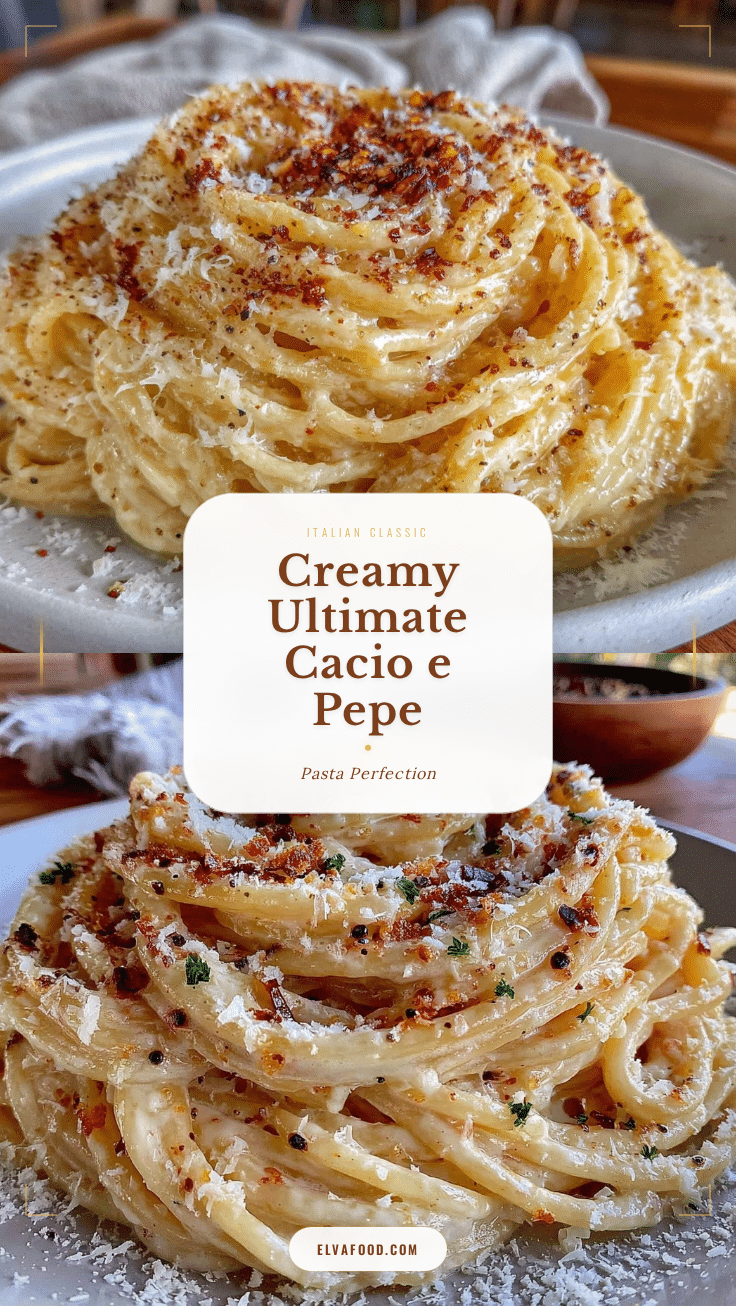
Creamy Cacio e Pepe Pasta Recipe – Perfect Pecorino Romano Dinner
This creamy Cacio e Pepe pasta features a velvety, cheese-forward sauce made with Pecorino Romano and freshly cracked black pepper. It’s a quick, comforting Italian classic that’s perfect for weeknights or special occasions.
- Prep Time: 10 minutes
- Cook Time: 15 minutes
- Total Time: 25 minutes
- Yield: 4 servings 1x
- Category: Main Course
- Cuisine: Italian
Ingredients
- 12 oz spaghetti or tonnarelli (bucatini or linguine also work)
- 1 1/2 cups Pecorino Romano cheese, finely grated (about 4 oz)
- 2–3 teaspoons freshly cracked black pepper, coarsely ground
- 2 tablespoons unsalted butter, cut into pieces (optional)
- Salt, for pasta water
- At least 1 cup reserved pasta cooking water
Instructions
- Bring a large pot of water to a boil. Add 1-2 tablespoons salt.
- Add pasta and cook until just al dente (about 8-9 minutes). Stir in the first 2 minutes to prevent sticking.
- While pasta cooks, finely grate Pecorino Romano cheese and set aside.
- 1-2 minutes before draining, reserve at least 1 cup of pasta water. Drain pasta but do not rinse.
- In a large skillet over medium heat, toast black pepper for 1 minute until fragrant.
- Add butter and let it melt, swirling to combine with the pepper.
- Pour in 1/2 cup hot reserved pasta water. Add drained pasta and toss to coat in the peppery butter.
- Sprinkle half the grated Pecorino Romano over the pasta. Toss vigorously, adding more hot pasta water as needed (about 1/4 cup at a time).
- Repeat with the rest of the cheese, tossing until a creamy sauce forms and clings to each strand. Add water slowly to adjust consistency.
- If cheese clumps, add a splash more hot water and toss over low heat until smooth. If sauce is too thin, toss off heat for 1-2 minutes.
- Transfer to warm bowls, sprinkle with extra Pecorino and black pepper if desired. Serve immediately.
Notes
Use freshly grated Pecorino Romano for best results. Save extra pasta water to adjust sauce consistency. Toss cheese off the heat to prevent clumping. For gluten-free, use gluten-free pasta. For dairy-free, substitute vegan cheese and butter. Serve immediately for the creamiest texture.
Nutrition
- Serving Size: About 1/4 of recipe
- Calories: 430
- Sugar: 2
- Sodium: 650
- Fat: 15
- Saturated Fat: 8
- Carbohydrates: 52
- Fiber: 3
- Protein: 17
Keywords: cacio e pepe, creamy pasta, Pecorino Romano, Italian dinner, easy pasta, weeknight meal, vegetarian, comfort food, classic pasta, quick recipe