Let me tell you, the smell of garlic mingling with fresh ginger and soy sauce sizzling in a hot pan is enough to make anyone’s mouth water—and that’s exactly what happens when I whip up this easy vegetable lo mein with tangy soy ginger sauce. The first time I made this dish, I was instantly hooked; the kind of moment where you pause, take a deep breath, and just smile because you know you’re onto something truly special. I remember when I was knee-high to a grasshopper, my mom would make a stir-fry with noodles, but it never had that perfect balance of tangy and savory I craved. Years ago, I stumbled upon this recipe while trying to recreate a favorite takeout meal on a rainy weekend, and honestly, I wish I’d discovered it sooner.
My family couldn’t stop sneaking bites off the stove and the serving bowl (and I can’t really blame them). It’s dangerously easy to make, yet the flavors pack a nostalgic punch that feels like a warm hug on a busy weeknight. You know what? This easy vegetable lo mein with tangy soy ginger sauce is perfect for potlucks, a sweet treat for your kids after school, or just to brighten up your Pinterest dinner board with something colorful and satisfying. I’ve tested this recipe more times than I can count—in the name of research, of course—and it’s become a staple for family gatherings and casual dinners alike. Trust me, you’re going to want to bookmark this one.
Why You’ll Love This Recipe
After cooking this easy vegetable lo mein with tangy soy ginger sauce over and over, I’ve learned a few things that make it stand out from the crowd. Here’s why it’s become a personal favorite and why you might love it too:
- Quick & Easy: Comes together in under 30 minutes, perfect for busy weeknights or last-minute cravings.
- Simple Ingredients: No fancy grocery trips needed; you likely already have everything in your kitchen pantry.
- Perfect for Weeknight Dinners: A wholesome, veggie-packed meal that satisfies without the fuss.
- Crowd-Pleaser: Always gets rave reviews from kids and adults alike, even the picky eaters.
- Unbelievably Delicious: The tangy soy ginger sauce hits just the right balance of savory and zingy, making every bite crave-worthy.
What makes this recipe different? It’s all about the sauce—blending fresh ginger with quality soy sauce and a touch of sweetness creates a perfectly balanced tang that’s not too salty or overpowering. Plus, stir-frying the vegetables just right keeps them crisp-tender, which I swear makes all the difference. Honestly, this is comfort food reimagined: healthier, faster, but with that same soul-soothing satisfaction you expect from takeout. Whether you’re impressing guests or just treating yourself after a long day, this easy vegetable lo mein with tangy soy ginger sauce is a winner every time.
What Ingredients You Will Need
This recipe uses simple, wholesome ingredients to deliver bold flavor and satisfying texture without the fuss. Most are pantry staples or fresh veggies you can swap out depending on what’s in season or what you have on hand.
- Lo Mein Noodles – about 8 ounces (225 grams), fresh or dried (I prefer fresh egg noodles for that perfect chew, but spaghetti works fine in a pinch)
- Vegetable Oil – 2 tablespoons (neutral oil like canola or grapeseed works great for stir-frying)
- Garlic – 3 cloves, minced (adds savory depth)
- Fresh Ginger – 1 tablespoon, grated or finely minced (gives that signature zing)
- Carrots – 1 cup, julienned or thinly sliced (adds color and crunch)
- Bell Peppers – 1 cup, thinly sliced (red or yellow for sweetness)
- Snow Peas – 1 cup, trimmed (for crisp freshness)
- Green Onions – 3 stalks, sliced on the diagonal (for a mild onion flavor)
- Soy Sauce – ¼ cup (60 ml), low sodium recommended (I like Kikkoman for consistency)
- Rice Vinegar – 1 tablespoon (adds tanginess)
- Brown Sugar – 1 teaspoon (balances the savory with a hint of sweetness)
- Sesame Oil – 1 teaspoon (for that toasty, nutty finish)
- Crushed Red Pepper Flakes – Optional, pinch or two (for a little heat, if you’re feeling spicy)
- Sesame Seeds – Optional, for garnish (adds texture and visual appeal)
If you want to swap veggies, try broccoli florets, baby corn, or mushrooms. For a gluten-free version, use tamari instead of soy sauce and rice noodles instead of egg noodles. It’s flexible without losing that signature tangy soy ginger flavor.
Equipment Needed
- Large Pot – to boil the noodles (a good, sturdy pot makes this step easier)
- Large Skillet or Wok – for stir-frying the veggies and tossing everything together (I personally swear by my cast iron wok for even heat)
- Cutting Board and Sharp Knife – prepping the veggies thinly is key
- Mixing Bowls – for the sauce and for holding chopped veggies before cooking
- Colander or Strainer – to drain the noodles well (don’t want soggy lo mein!)
- Measuring Spoons and Cups – for precise sauce measurements
If you don’t have a wok, a large nonstick skillet works just fine. For budget-friendly options, many kitchen supply stores offer basic sets that cover all these tools without breaking the bank. Keep your knives sharp—trust me, it makes a world of difference when slicing veggies quickly and safely.
Preparation Method
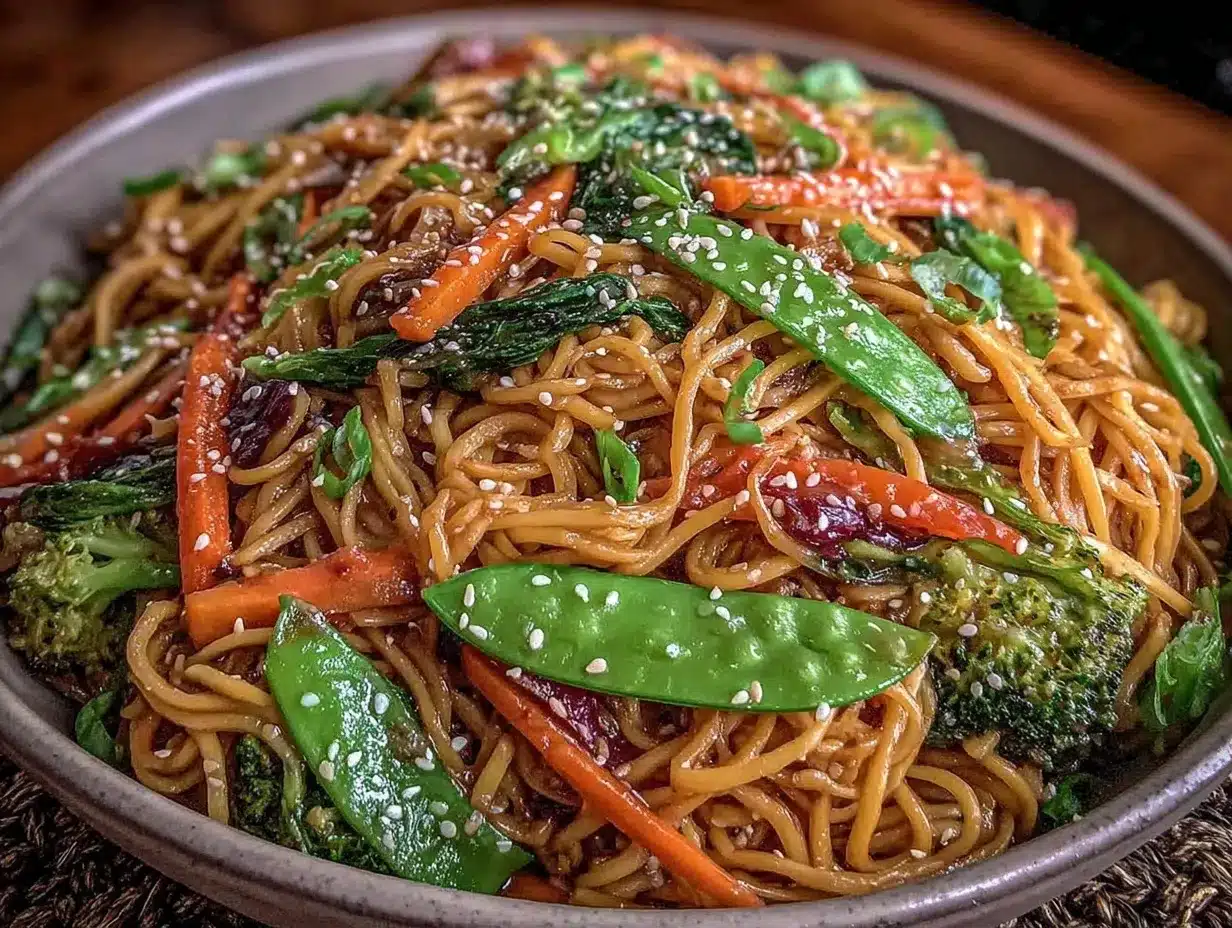
- Cook the noodles: Bring a large pot of salted water to a boil. Add 8 ounces (225 grams) of lo mein noodles and cook according to package instructions, usually 3-4 minutes for fresh noodles or 7-8 minutes for dried. They should be al dente—firm but not hard. Drain well in a colander and rinse with cold water to stop cooking. Set aside. (Tip: Toss with a drizzle of oil so they don’t stick.)
- Prepare the sauce: In a small bowl, whisk together ¼ cup (60 ml) soy sauce, 1 tablespoon rice vinegar, 1 teaspoon brown sugar, and 1 teaspoon toasted sesame oil. Give it a taste—sweet, tangy, and savory all at once. Set aside.
- Prep the veggies: While noodles cook, mince 3 cloves of garlic and grate 1 tablespoon fresh ginger. Julienne 1 cup of carrots, thinly slice 1 cup of bell peppers, trim 1 cup of snow peas, and slice 3 green onions diagonally. Having everything ready makes stir-frying a breeze.
- Stir-fry aromatics: Heat 2 tablespoons vegetable oil in a wok or large skillet over medium-high heat until shimmering. Add garlic and ginger, stirring constantly for 30 seconds until fragrant but not burned. (If you smell bitterness, lower the heat.)
- Add the veggies: Toss in the carrots, bell peppers, and snow peas. Stir-fry for 3-4 minutes until veggies are crisp-tender but still vibrant. You want that fresh snap when you bite. Add green onions last and cook for another minute.
- Combine noodles and sauce: Add the drained noodles to the skillet with the veggies. Pour the sauce over the top. Using tongs or chopsticks, toss everything together well, making sure noodles are coated evenly. Cook for 2 more minutes, letting the sauce thicken slightly and cling to the noodles. (If it seems dry, splash a little water or broth.)
- Final touches: Sprinkle a pinch of crushed red pepper flakes if you like heat. Taste and adjust seasoning—maybe a little more soy or a squeeze of lime if you want brightness. Remove from heat and garnish with toasted sesame seeds.
This whole process takes about 25-30 minutes from start to finish. If you’re short on time, prep the sauce and chop veggies ahead. The colors and aromas at the end are worth every minute.
Cooking Tips & Techniques
Here’s what I’ve learned after making this easy vegetable lo mein with tangy soy ginger sauce countless times:
- Don’t overcook the noodles: They should be slightly underdone when you drain them, since they’ll finish cooking in the wok with the sauce.
- High heat is your friend: Stir-frying on high heat sears the veggies quickly, locking in crunch and color. Just keep things moving so nothing burns.
- Prep everything first: This is classic stir-fry technique—once you start cooking, it goes fast. Having all ingredients ready prevents scrambling and uneven cooking.
- Use fresh ginger and garlic: They give the sauce that authentic zing. Powder won’t cut it here.
- Adjust sauce to taste: Sometimes soy sauce brands vary in saltiness; taste and tweak with a splash of water, vinegar, or sugar before adding to noodles.
- Multitask smartly: Boil noodles while chopping veggies to save time. I often start the sauce mix early so it’s waiting when I need it.
- Don’t crowd the pan: If your skillet is small, cook veggies in batches to keep the heat high and avoid steaming.
Trust me, these little pointers make a huge difference in getting that perfect balance of texture and flavor.
Variations & Adaptations
Want to switch things up? Here are some fun ways I’ve tweaked this easy vegetable lo mein with tangy soy ginger sauce to keep it interesting:
- Protein Boost: Add tofu, shrimp, or shredded chicken for a heartier meal. Just cook the protein first, then set aside while you stir-fry veggies.
- Seasonal Veggies: Swap in broccoli, snap peas, baby corn, or shiitake mushrooms depending on what’s fresh. I love adding crunchy water chestnuts for texture.
- Gluten-Free: Use tamari in place of soy sauce and rice noodles instead of egg noodles. The sauce still packs that tangy punch.
- Spice it Up: Add sliced fresh chili peppers or a drizzle of chili oil for heat. I sometimes add Sriracha on top for an extra kick.
- Nutty Twist: Toss in chopped roasted peanuts or cashews at the end for crunch and richness.
One personal favorite variation is swapping half the soy sauce for hoisin sauce to get a sweeter, deeper flavor profile. Give it a try when you want something a little different!
Serving & Storage Suggestions
This easy vegetable lo mein with tangy soy ginger sauce is best served hot, right off the stove, so the noodles are tender but not mushy and the veggies stay crisp. I like to garnish with extra green onions and sprinkle sesame seeds for a pretty finish.
It pairs beautifully with a light cucumber salad or steamed dumplings for a complete meal. For drinks, green tea or a crisp lager balances the tangy flavors nicely.
If you have leftovers (which might be rare), store them in an airtight container in the refrigerator for up to 3 days. Reheat gently in a skillet over medium heat with a splash of water or broth to loosen the noodles—microwaving tends to dry them out.
Flavors actually develop a bit over time, so leftovers taste even better the next day, just make sure to refresh the noodles’ moisture during reheating.
Nutritional Information & Benefits
This vegetable lo mein recipe is a lighter take on traditional lo mein, packed with fresh vegetables and a tangy sauce that’s low in fat but big on flavor. Per serving (serves 4), it roughly contains:
| Calories | Protein | Carbohydrates | Fat | Fiber |
|---|---|---|---|---|
| 350-400 kcal | 10-12 g | 60 g | 8 g | 5 g |
The fresh ginger and garlic bring anti-inflammatory benefits, while the variety of vegetables supplies fiber, vitamins, and antioxidants. Using low sodium soy sauce helps keep salt intake in check. This meal is vegetarian and can be made vegan by choosing egg-free noodles.
From a wellness perspective, it’s a balanced dish that satisfies cravings for takeout without the guilt—honestly, a win-win in my book.
Conclusion
This easy vegetable lo mein with tangy soy ginger sauce is more than just a quick dinner; it’s a recipe that brings flavor, color, and a little comfort to your kitchen table. Whether you’re new to stir-frying or a seasoned home cook, you’ll appreciate how fast and flexible this dish is—perfect for customizing with your favorite veggies or proteins.
I love this recipe because it reminds me of cozy family dinners and those simple moments when good food brings everyone together. Please try it out, tweak it to your taste, and then come back and tell me how it went! Share your twists, questions, or favorite add-ins—I’d love to hear from you.
So grab your wok, chop those veggies, and get ready to enjoy a satisfying bowl of this tangy, savory vegetable lo mein that’s sure to become a weeknight staple in your home.
Frequently Asked Questions
Can I use a different type of noodle for this lo mein?
Absolutely! While fresh egg noodles are ideal, you can use spaghetti, rice noodles, or even whole wheat noodles depending on your preference and dietary needs.
How do I keep the vegetables from getting soggy?
Cook on high heat and stir-fry quickly. Avoid overcrowding the pan, and add veggies in stages based on their cooking times. This keeps them crisp-tender.
Is this recipe gluten-free?
As written, it’s not, because of soy sauce and egg noodles. Use tamari or a gluten-free soy sauce and substitute rice noodles for a gluten-free version.
Can I make this recipe ahead of time?
You can prep the sauce and chop veggies in advance. Cook the noodles and stir-fry right before serving for best texture and flavor.
What can I use instead of brown sugar in the sauce?
Maple syrup, honey, or coconut sugar work well as natural sweeteners to balance the tanginess of the sauce.
Pin This Recipe!
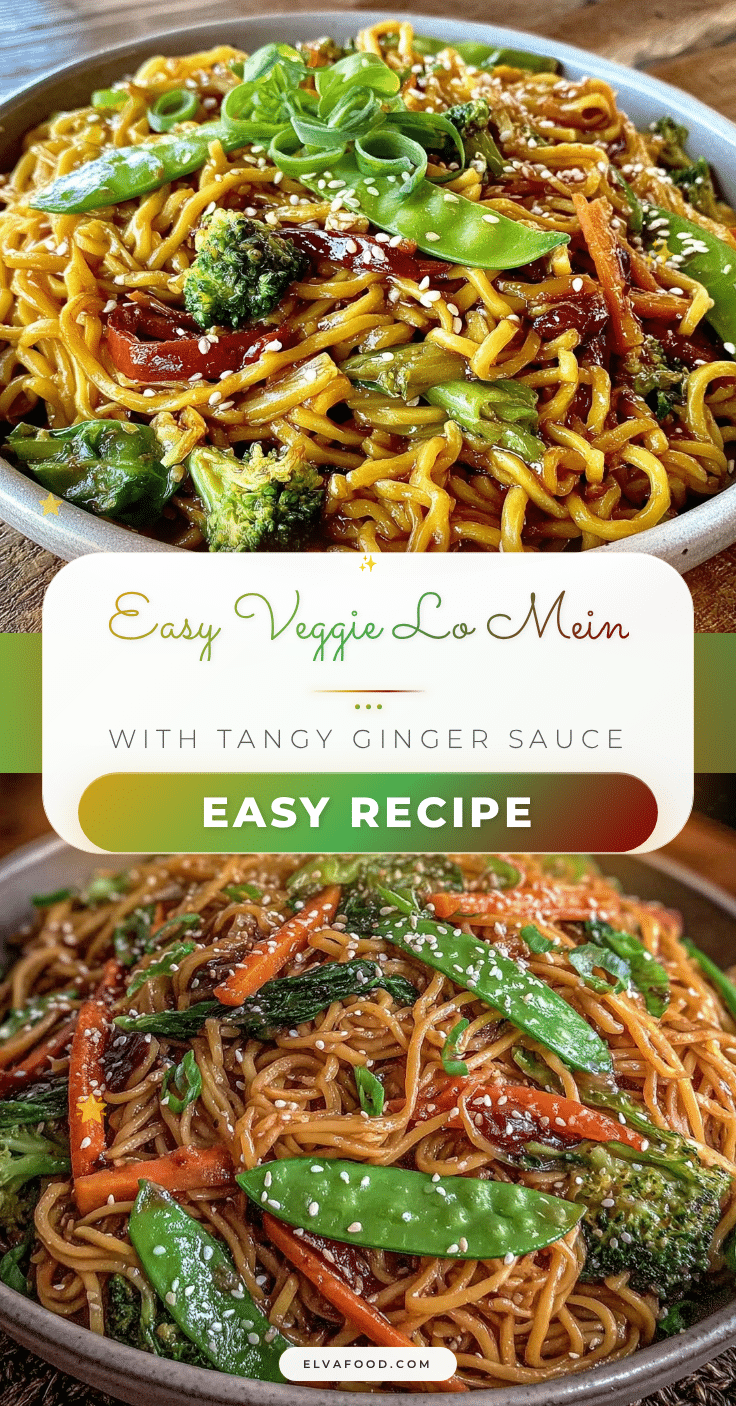
Easy Vegetable Lo Mein Recipe with Tangy Soy Ginger Sauce Perfect for Weeknight Dinners
A quick and easy vegetable lo mein with a tangy soy ginger sauce, perfect for busy weeknights and customizable with your favorite veggies or proteins.
- Prep Time: 10 minutes
- Cook Time: 15-20 minutes
- Total Time: 25-30 minutes
- Yield: 4 servings 1x
- Category: Main Course
- Cuisine: Chinese
Ingredients
- 8 ounces (225 grams) lo mein noodles, fresh or dried (spaghetti works as a substitute)
- 2 tablespoons vegetable oil (neutral oil like canola or grapeseed)
- 3 cloves garlic, minced
- 1 tablespoon fresh ginger, grated or finely minced
- 1 cup carrots, julienned or thinly sliced
- 1 cup bell peppers, thinly sliced (red or yellow)
- 1 cup snow peas, trimmed
- 3 stalks green onions, sliced on the diagonal
- 1/4 cup (60 ml) soy sauce, low sodium recommended
- 1 tablespoon rice vinegar
- 1 teaspoon brown sugar
- 1 teaspoon sesame oil
- Pinch or two crushed red pepper flakes (optional)
- Sesame seeds for garnish (optional)
Instructions
- Bring a large pot of salted water to a boil. Add 8 ounces (225 grams) of lo mein noodles and cook according to package instructions, usually 3-4 minutes for fresh noodles or 7-8 minutes for dried. Drain well in a colander and rinse with cold water to stop cooking. Toss with a drizzle of oil to prevent sticking and set aside.
- In a small bowl, whisk together 1/4 cup (60 ml) soy sauce, 1 tablespoon rice vinegar, 1 teaspoon brown sugar, and 1 teaspoon toasted sesame oil. Set aside.
- Mince 3 cloves of garlic and grate 1 tablespoon fresh ginger. Julienne 1 cup of carrots, thinly slice 1 cup of bell peppers, trim 1 cup of snow peas, and slice 3 green onions diagonally.
- Heat 2 tablespoons vegetable oil in a wok or large skillet over medium-high heat until shimmering. Add garlic and ginger, stirring constantly for 30 seconds until fragrant but not burned.
- Add carrots, bell peppers, and snow peas. Stir-fry for 3-4 minutes until veggies are crisp-tender but still vibrant. Add green onions last and cook for another minute.
- Add the drained noodles to the skillet with the veggies. Pour the sauce over the top. Toss everything together well, making sure noodles are coated evenly. Cook for 2 more minutes, letting the sauce thicken slightly. If dry, splash a little water or broth.
- Sprinkle crushed red pepper flakes if desired. Taste and adjust seasoning with more soy sauce or a squeeze of lime if needed. Remove from heat and garnish with toasted sesame seeds.
Notes
Do not overcook noodles; they should be slightly underdone before stir-frying. Use high heat to keep vegetables crisp-tender. Prep all ingredients before cooking for best results. Adjust sauce seasoning to taste. Cook veggies in batches if pan is small to avoid steaming.
Nutrition
- Serving Size: 1 serving (about 1/4
- Calories: 375
- Sugar: 5
- Sodium: 600
- Fat: 8
- Saturated Fat: 1
- Carbohydrates: 60
- Fiber: 5
- Protein: 11
Keywords: vegetable lo mein, easy lo mein, soy ginger sauce, stir-fry noodles, weeknight dinner, vegetarian lo mein, quick dinner, healthy lo mein