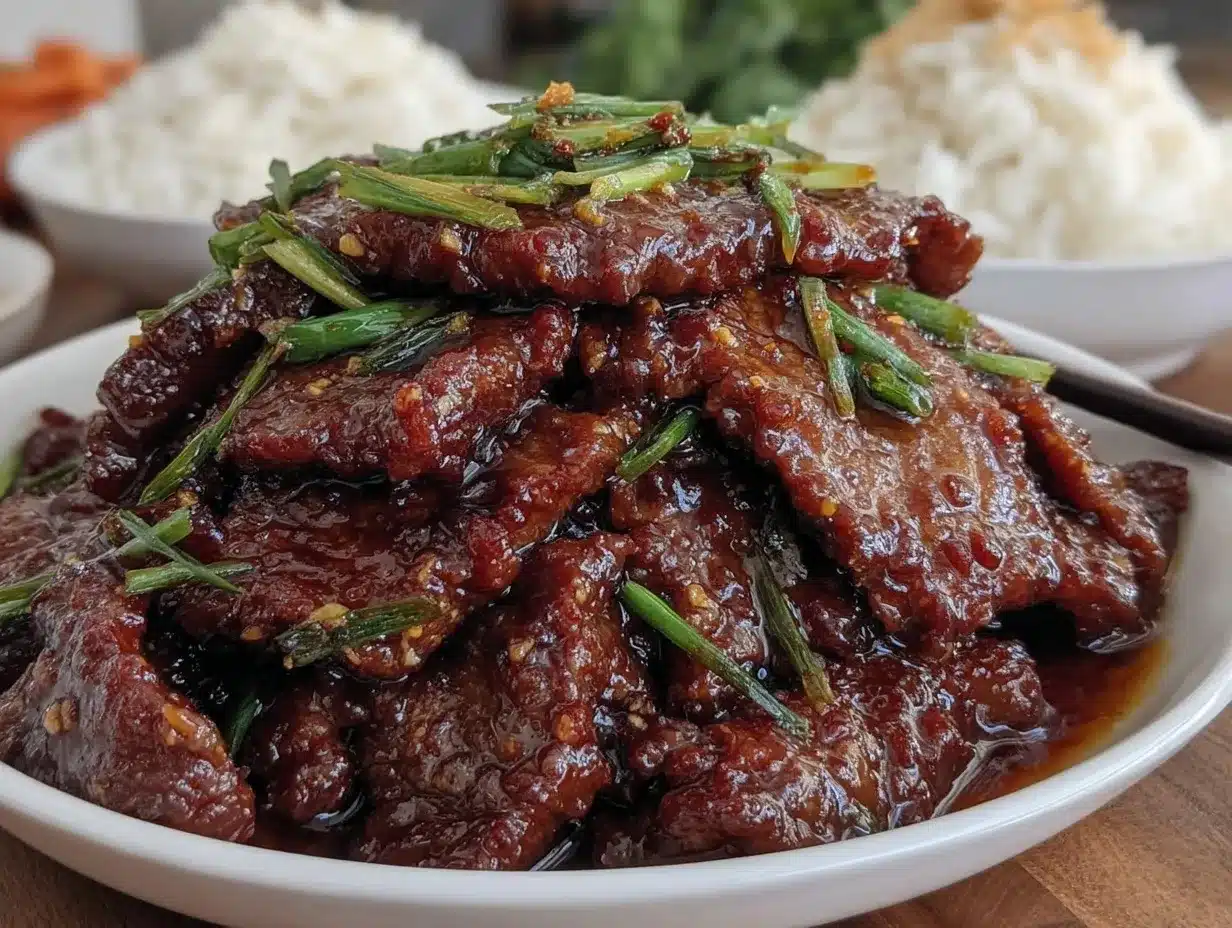
Let me tell you, the sizzle and rich aroma of thinly sliced beef hitting a hot skillet—mingling with the caramel sweetness of brown sugar, sharp ginger, and garlic—will make your kitchen smell just like PF Chang’s (and maybe even better). The glossy, sticky sweet Mongolian beef sauce bubbles up and clings to every piece, turning simple steak into something that tastes like a night out. Honestly, the first time I made this copycat Mongolian Beef recipe, I hovered over the pan, spoon in hand, just inhaling the scent and plotting how not to burn my tongue when I finally dug in.
My introduction to Mongolian Beef happened years ago, on a rainy Saturday. My dad took me to PF Chang’s after a Little League game. I was knee-high to a grasshopper, and I’ll never forget that first saucy, tender bite. It was the kind of moment where you pause, take a deep breath, and just grin because you know you’ve found something special. Fast forward to today—I’ve spent countless evenings chasing that nostalgic flavor, and after many rounds of “taste testing” (in the name of research, of course), this homemade Mongolian Beef recipe is the closest I’ve ever come.
Let’s face it: anytime I make this, my family can’t stop sneaking pieces straight from the pan. It’s dangerously easy, packed with pure, comforting flavors, and honestly, it feels like a little weeknight celebration. Whether you’re looking to brighten up your Pinterest feed with a new dinner idea, need a quick fix for a takeout craving, or want a crowd-pleaser for Sunday supper, this copycat Mongolian Beef with sticky sweet sauce is a winner. If you’re anything like me, you’ll want to bookmark this one—it’s a staple for gatherings, gifting meals to friends, or just when you want that restaurant magic without leaving home.
Why You’ll Love This Mongolian Beef PF Chang’s Copycat Recipe
When it comes to copycat restaurant recipes, I’ve taken plenty of “close-but-not-quite” detours. But this Mongolian Beef recipe stands out for so many reasons, and I’m excited for you to try it! Here’s why it’s become a kitchen favorite, and why I think you’ll love it too:
- Quick & Easy: You can have this entire dish on the table in just about 30 minutes. Perfect for busy weeknights, last-minute company, or those nights when you just can’t handle another soggy takeout box.
- Simple Ingredients: No hard-to-find Asian pantry items or specialty sauces—most of what you need is probably already in your kitchen, fridge, or spice rack.
- Perfect for Any Occasion: This Mongolian Beef recipe will impress for cozy family dinners, potlucks, or even a make-ahead meal for meal prep lovers. It’s just as good for a Netflix night as it is for a dinner party.
- Crowd-Pleaser: I’ve never had leftovers last more than a day. Kids, teens, and adults all rave about the sweet, sticky sauce and the super tender beef.
- Unbelievably Delicious: The flavor and texture combo—the juicy steak, caramelized sauce, and pop of green onions—tastes just like the restaurant version, only fresher.
What sets this recipe apart? I use a special trick: tossing the sliced beef in cornstarch before flash-frying. It gives every piece that signature crispy edge and helps the sticky Mongolian beef sauce cling perfectly. My seasoning blend is balanced, not too sweet or salty, and I always add a dash more fresh ginger for the best bite.
This isn’t just “fakeout takeout”—it’s comfort food for when you need something fast, easy, and soul-satisfying. You get all the restaurant flavor, but with healthier oil, less sugar, and zero mystery ingredients. If you love the idea of wowing your family (or just yourself) with minimal stress, this is the one. Each bite is a little celebration, and honestly, it’s the kind of recipe that makes you close your eyes and just savor.
What Ingredients You Will Need for Mongolian Beef (PF Chang’s Copycat)
This Mongolian Beef recipe uses straightforward, wholesome ingredients that create bold flavor and the signature sticky sweet sauce—without a single weird additive. Most are pantry staples, and there’s plenty of room to swap if you need.
-
For the Beef:
- Flank steak (1 lb / 450g), thinly sliced against the grain (for tenderness and that classic texture)
- Cornstarch (1/4 cup / 30g) (adds crispiness to the beef and thickens the sauce)
- Salt and black pepper (a pinch each, to season the beef before frying)
- Vegetable oil (for frying; can use canola or peanut oil too)
-
For the Sticky Mongolian Sauce:
- Low sodium soy sauce (1/2 cup / 120ml) (for umami and saltiness; use tamari or coconut aminos for gluten-free)
- Dark brown sugar (1/2 cup, packed / 100g) (creates that caramelized, glossy finish)
- Water (1/3 cup / 80ml) (for thinning the sauce without diluting flavor)
- Fresh garlic (4 cloves, minced) (the more, the merrier—seriously, don’t skimp)
- Fresh ginger (1 tablespoon, minced or grated) (adds bite and warmth)
- Red pepper flakes (1/2 teaspoon, optional) (for a gentle heat, adjust to taste)
- Sesame oil (1 teaspoon) (for that nutty, restaurant-style finish)
-
For Garnish:
- Green onions (2 stalks, sliced on the diagonal) (for color and a fresh pop)
- Sesame seeds (a sprinkle, optional)
Ingredient Tips and Swaps:
- Beef: Flank steak is classic, but you can use sirloin or even skirt steak. Just slice thinly against the grain.
- Soy Sauce: For gluten-free, I recommend San-J Tamari. Coconut aminos work for soy-free diets.
- Brown Sugar: Light brown sugar works if that’s what you have, but dark gives a richer, stickier sauce.
- Vegetable Oil: Avocado oil is a great, neutral alternative.
- Ginger & Garlic: Fresh is best, but in a pinch, 1 teaspoon each of ground ginger and garlic powder can do.
- Spice Level: Add or skip red pepper flakes as you like.
- Extra Veggies: Stir in steamed broccoli, snap peas, or bell peppers for a full meal.
Honestly, this Mongolian Beef recipe is super forgiving—just make sure to use fresh aromatics and good quality steak for the best “takeout at home” results!
Equipment Needed
- Large skillet or wok: A wok is classic for high heat, but a heavy-bottomed skillet (like cast iron or stainless steel) works just as well. I’ve used both—cast iron gives a great sear!
- Tongs: For flipping and removing the beef quickly.
- Mixing bowls: For coating the beef in cornstarch and tossing with seasonings.
- Measuring cups and spoons: For accuracy, especially with the sauce.
- Sharp knife and cutting board: To slice the beef thinly and prep aromatics.
- Wooden spoon or spatula: For stirring the sauce and beef together.
- Paper towels: For blotting excess oil from cooked beef.
If you don’t have a wok, don’t worry—a regular nonstick skillet will do the job (just watch the heat). For budget-friendly options, I’ve made this Mongolian beef in a cheap aluminum pan and it still turned out delicious. Just avoid overcrowding the pan so you get that nice sear. And if you use a wooden spoon, keep it in good shape by hand-washing and oiling occasionally—mine’s lasted me years!
How to Make Mongolian Beef PF Chang’s Copycat (Step-By-Step)
-
Prep the Beef:
Pat 1 lb (450g) of flank steak dry with paper towels. Slice thinly against the grain (about 1/4 inch / 0.5cm thick). Place in a mixing bowl, season lightly with salt and pepper, and toss with 1/4 cup (30g) cornstarch until well coated. Shake off any excess.
Tip: Thin slices cook quickly and stay tender. If your steak is cold, it’s easier to slice! -
Preheat the Pan:
Heat 1/3 cup (80ml) vegetable oil in a large skillet or wok over medium-high heat. Wait for the oil to shimmer—if you drop in a piece of beef, it should sizzle instantly. -
Cook the Beef:
Add beef slices in a single layer (work in batches if needed). Fry for 1-2 minutes per side until browned and crispy at the edges—don’t crowd the pan! Transfer cooked beef to a plate lined with paper towels. Repeat with remaining slices.
Troubleshooting: If beef starts steaming instead of frying, your pan is too crowded or not hot enough. Let oil reheat between batches. -
Drain Excess Oil:
Carefully pour out excess oil from the pan, leaving about 1 tablespoon. (I usually just tip and wipe with a paper towel—be careful!) -
Make the Sauce:
Add 1 teaspoon sesame oil, 4 minced garlic cloves, and 1 tablespoon grated ginger to the pan. Stir-fry for 30 seconds until fragrant—don’t let the garlic burn.
Pour in 1/2 cup (120ml) low sodium soy sauce, 1/2 cup (100g) packed dark brown sugar, 1/3 cup (80ml) water, and 1/2 teaspoon red pepper flakes (if using). Bring to a simmer, stirring to dissolve the sugar.
Sensory cue: The sauce should smell sweet and garlicky, with a glossy look as it thickens. -
Combine Beef and Sauce:
Return all the crispy beef to the pan. Toss well to coat every piece. Let simmer for 2-3 minutes until sauce is thick and sticky, and beef is heated through.
Note: If sauce seems too thin, keep simmering; if too thick, add a splash of water. -
Finish and Garnish:
Stir in 2 sliced green onions and a sprinkle of sesame seeds if you like. Remove from heat. -
Serve:
Serve immediately over steamed rice, noodles, or sautéed veggies.
Personal Tip: I always taste and adjust the sauce at the end—sometimes a dash more soy sauce or a squeeze of lime brightens things up. Don’t skip the cornstarch step for the beef; that’s the “secret” to getting restaurant-style sticky Mongolian beef at home!
Cooking Tips & Techniques for Perfect Mongolian Beef
- High Heat is Key: Use a hot skillet or wok for searing. If the pan’s not hot enough, the beef gets soggy instead of crisp.
- Slicing the Beef: Always cut against the grain for tenderness. If you’re not sure, look for the lines in the meat and slice perpendicular to them. For extra precision, pop the steak in the freezer for 20 minutes—it’s much easier to slice!
- Don’t Overcrowd the Pan: Too much beef at once and you’ll end up steaming instead of frying. Work in batches, and be patient. I learned this the hard way during a big family dinner—everyone still ate it, but the texture was off.
- Cornstarch Coating: This step gives that signature crispy edge and helps the sauce stick. Make sure to shake off excess cornstarch so it doesn’t gum up the oil.
- Sauce Consistency: The sauce thickens as it cools, so don’t reduce it too much. If it gets gloopy, add a splash of water and stir.
- Multitasking: While the beef cooks, you can prep rice or steam veggies. The sauce comes together quickly, so have everything ready before you start cooking.
- Taste and Adjust: Every soy sauce and sugar brand is different. If the sauce is too salty, add more sugar or a dash of water. Too sweet? A splash more soy sauce or a squeeze of lime helps balance things out.
If you ever burn the garlic (been there!), just wipe the pan and start the sauce over. It’s a small price for perfect Mongolian Beef. And remember, the best part is licking the sticky sauce from the spoon—no judgment!
Variations & Adaptations
- Gluten-Free Mongolian Beef: Swap the soy sauce for gluten-free tamari or coconut aminos. Double-check your cornstarch is certified gluten-free.
- Low-Sugar Version: Replace half the brown sugar with monk fruit sweetener or coconut sugar. The sauce stays sticky, but with a lighter sweetness.
- Vegetarian/Vegan Option: Use extra-firm tofu (pressed and cubed) instead of beef. Dredge in cornstarch and pan-fry as you would the steak. The sauce clings beautifully!
- Different Proteins: Chicken breast or shrimp both work great. Just adjust cooking time—shrimp only needs about 1-2 minutes per side.
- Veggie-Loaded: Stir-fry broccoli, carrots, or snap peas along with the sauce for a colorful, nutrient-packed version.
Allergen swaps? If you’re avoiding soy, coconut aminos are a solid choice. For corn allergies, potato starch can replace cornstarch. Personally, I love adding a handful of roasted cashews or peanuts for crunch—my kids call it “Mongolian Beef Surprise.”
Serving & Storage Suggestions
This Mongolian Beef PF Chang’s Copycat is best served hot, right from the pan, when the sauce is sticky and glossy. Spoon it over fluffy white rice, brown rice, or even cauliflower rice for a lighter touch. I love adding extra green onions and a sprinkle of sesame seeds for a little crunch and color.
Pair with simple sides—steamed broccoli, garlic snow peas, or a crisp Asian slaw balance the richness. For an extra treat, serve with spring rolls or egg drop soup.
Storage: Leftovers keep well in an airtight container in the fridge for up to 3 days. The sauce thickens as it sits, but a splash of water when reheating brings it back to life. For reheating, a quick toss in a skillet over medium heat works best (microwave is fine too, just cover loosely). I don’t recommend freezing—beef texture changes—but if you must, keep it in a freezer-safe bag for up to 1 month.
Honestly, the flavors deepen overnight—so don’t be surprised if tomorrow’s lunch tastes even better!
Nutritional Information & Benefits
Each serving (about 1/4 of the recipe) of this Mongolian Beef PF Chang’s copycat is approximately: 350 calories, 18g protein, 16g fat, 30g carbs (with sticky sweet sauce and without rice).
Health Perks: Using lean flank steak gives you a good protein boost. You control the oil and sugar, making it lighter than takeout. Fresh ginger and garlic bring anti-inflammatory and immune-supporting properties.
Dietary Notes: Easily adapted for gluten-free, dairy-free, or lower-carb diets. Contains soy (unless using coconut aminos) and may contain sesame; always check your brands.
From a wellness view, homemade means you choose what goes in—so there’s less sodium and zero preservatives compared to ordering out. Not bad for a “treat yourself” dinner!
Conclusion
To sum it up, this Mongolian Beef PF Chang’s Copycat with sticky sweet sauce is the kind of recipe you’ll want to keep handy for every occasion—quick weeknights, special family dinners, or just a craving for something saucy and satisfying. It’s easy, reliable, and always delivers big flavor.
Feel free to tweak as you like—different proteins, extra veggies, or dialing up the heat. That’s the beauty of cooking at home. Personally, this dish brings back great memories and always gets smiles around my table.
If you try this recipe, I’d love to hear how it turned out! Leave a comment with your twists, rate the recipe, or share your Mongolian Beef on Pinterest. Let’s keep swapping kitchen wins and making simple food magic together. Happy cooking!
Frequently Asked Questions
Can I use a different cut of beef if I don’t have flank steak?
Absolutely! Sirloin or skirt steak work well too. Just make sure to slice thinly against the grain for the most tender results.
Is this Mongolian Beef recipe gluten-free?
It can be! Swap the soy sauce for certified gluten-free tamari or coconut aminos, and double-check your cornstarch label.
Can I make this recipe ahead of time?
Yes, you can cook everything ahead and reheat in a skillet with a splash of water to loosen the sauce. It’s even tastier the next day!
What’s the best way to make this recipe spicier?
Add more red pepper flakes or a dash of Sriracha to the sauce. You can also stir in sliced fresh chili for extra heat.
Can I freeze Mongolian Beef leftovers?
You can, but the beef texture changes a bit. For best quality, store in the fridge for up to 3 days and reheat gently. If freezing, use a freezer bag and thaw overnight before reheating.
Pin This Recipe!
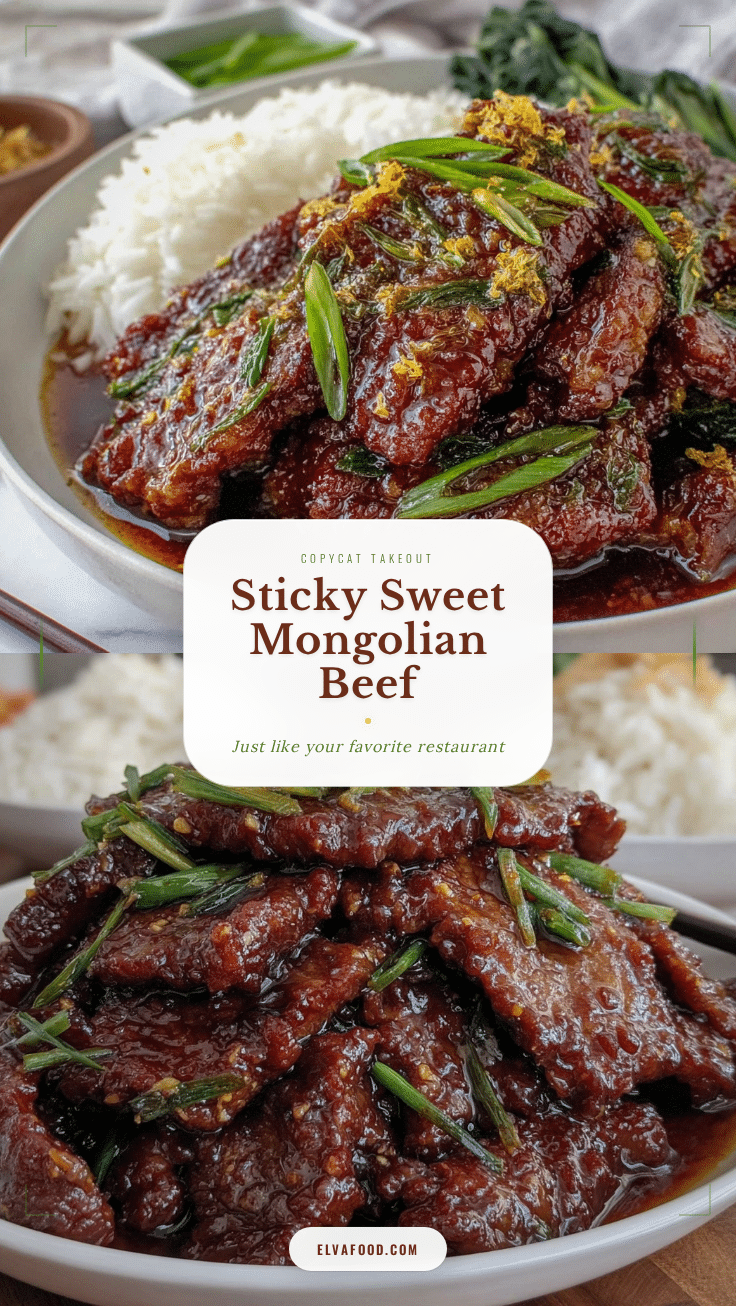
Mongolian Beef PF Chang’s Copycat Recipe Easy Sticky Sauce
This homemade Mongolian Beef recipe features tender, crispy steak tossed in a sticky, sweet, and savory sauce inspired by PF Chang’s. Quick to make and packed with bold flavors, it’s perfect for weeknight dinners or special occasions.
- Prep Time: 15 minutes
- Cook Time: 15 minutes
- Total Time: 30 minutes
- Yield: 4 servings 1x
- Category: Main Course
- Cuisine: Chinese-American
Ingredients
- 1 lb flank steak, thinly sliced against the grain
- 1/4 cup cornstarch
- Salt and black pepper, to taste
- 1/3 cup vegetable oil (or canola, peanut, or avocado oil)
- 1/2 cup low sodium soy sauce (or tamari/coconut aminos for gluten-free)
- 1/2 cup packed dark brown sugar
- 1/3 cup water
- 4 cloves fresh garlic, minced
- 1 tablespoon fresh ginger, minced or grated
- 1/2 teaspoon red pepper flakes (optional)
- 1 teaspoon sesame oil
- 2 stalks green onions, sliced on the diagonal
- Sesame seeds, for garnish (optional)
Instructions
- Pat flank steak dry with paper towels. Slice thinly against the grain (about 1/4 inch thick). Place in a mixing bowl, season lightly with salt and pepper, and toss with cornstarch until well coated. Shake off any excess.
- Heat vegetable oil in a large skillet or wok over medium-high heat until shimmering.
- Add beef slices in a single layer (work in batches if needed). Fry for 1-2 minutes per side until browned and crispy at the edges. Transfer cooked beef to a plate lined with paper towels. Repeat with remaining slices.
- Carefully pour out excess oil from the pan, leaving about 1 tablespoon.
- Add sesame oil, minced garlic, and grated ginger to the pan. Stir-fry for 30 seconds until fragrant.
- Pour in soy sauce, dark brown sugar, water, and red pepper flakes (if using). Bring to a simmer, stirring to dissolve the sugar. Simmer until the sauce is glossy and slightly thickened.
- Return all the crispy beef to the pan. Toss well to coat every piece. Let simmer for 2-3 minutes until sauce is thick and sticky, and beef is heated through.
- Stir in sliced green onions and sprinkle with sesame seeds if desired. Remove from heat.
- Serve immediately over steamed rice, noodles, or sautéed veggies.
Notes
For best results, slice beef thinly against the grain and coat with cornstarch for crispiness. Adjust sauce sweetness or saltiness to taste. Add extra veggies like broccoli or snap peas for a full meal. Use tamari or coconut aminos for gluten-free. Leftovers keep well in the fridge for up to 3 days; reheat with a splash of water to loosen the sauce.
Nutrition
- Serving Size: About 1/4 of the rec
- Calories: 350
- Sugar: 18
- Sodium: 900
- Fat: 16
- Saturated Fat: 3
- Carbohydrates: 30
- Fiber: 1
- Protein: 18
Keywords: Mongolian beef, PF Chang’s copycat, sticky sauce, Chinese takeout, easy dinner, beef stir fry, gluten-free option, weeknight meal, Asian recipe