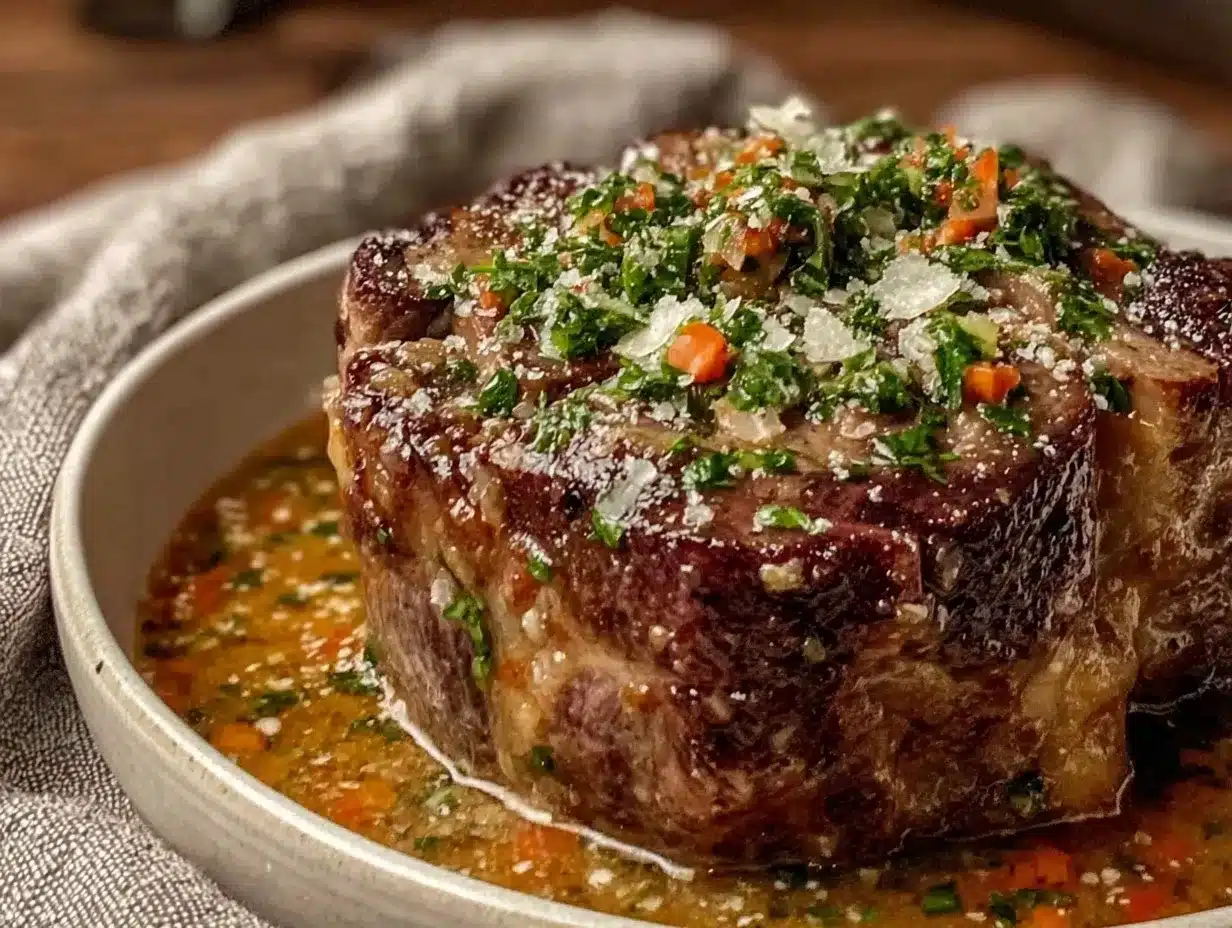
Picture this: the mouthwatering aroma of slow-braised veal shanks, wine, and vegetables swirling through your kitchen, the kind that makes you want to hover over the Dutch oven just to catch a whiff. The first time I pulled a bubbling pot of Osso Buco from my oven, I nearly swooned. The sauce was glossy, the meat practically falling off the bone, and the marrow—oh, the marrow—was like a hidden treasure waiting to be scooped out with a tiny spoon. I was instantly hooked, and honestly, it was one of those moments where you pause, take a deep breath, and just smile because you know you’re onto something truly special.
Growing up, Osso Buco was the dish my granddad would whisper about at family gatherings, always with a glint in his eye. He’d say, “Nothing brings folks together like Osso Buco,” and I didn’t really get it until years later, when I tried to recreate that magic for a special anniversary dinner. Let’s face it, I wish I’d discovered just how approachable and rewarding this recipe could be long before I ever tried it myself. It’s the kind of dish that always earns a chorus of “oohs” and “aahs”—my family couldn’t stop sneaking tastes straight from the pot, and honestly, I can’t blame them.
This Osso Buco recipe isn’t just for fancy dinners—it’s pure, nostalgic comfort that works just as well for Sunday suppers as it does for impressing your boss (or your in-laws). It’s dangerously easy, too. I’ve tested and tweaked this recipe more times than I can count, all in the name of research, of course. Now, it’s a staple for birthdays, holidays, and those “just because” gatherings. Trust me—make this once, and you’ll want to bookmark it for every special occasion. It’s a recipe that feels like a warm hug and tastes like celebration. Ready to make your own food memory? Let’s get into it.
Why You’ll Love This Osso Buco Recipe
When it comes to Osso Buco, I’ve tried just about every trick in the book—low and slow, high heat, stovetop, oven, you name it. After plenty of trial and error (and a few “well, that’s dinner ruined” moments), I can promise you this version is a keeper. Here’s why:
- Quick & Easy (for braised beef!): The prep is straightforward, and the oven does most of the work. It’s perfect for busy weeknights when you crave something special, or for those last-minute “impress the guests” moments.
- Simple Ingredients: You probably have most of what you need—no hunting for rare spices or fancy cuts.
- Perfect for Special Occasions: Whether it’s a birthday, anniversary, holiday, or just a cozy family dinner, this Osso Buco recipe brings a sense of occasion to your table.
- Crowd-Pleaser: Even picky eaters can’t resist the tender meat and rich sauce. Plus, the bright gremolata on top makes everyone feel like a gourmet chef.
- Unbelievably Delicious: The combination of fall-apart veal, aromatics, and zesty gremolata is pure magic. The sauce is velvety, the marrow is decadent, and every bite is comfort food at its best.
What sets this Osso Buco apart? For starters, I use a mix of beef and veal shanks for depth of flavor (but you can stick to one if you prefer). The secret is in browning the meat just right and building layers of flavor with good-quality wine and fresh aromatics. Plus, the gremolata—a zippy mix of lemon zest, garlic, and parsley—cuts through the richness and brightens everything up. It’s not just another Osso Buco; it’s my tried-and-true, foolproof version.
This isn’t just comfort food—it’s the kind of meal that brings everyone together. The slow-cooked sauce soaks into creamy risotto or buttery polenta, turning a simple dinner into a feast. Whether you’re hosting friends, treating your family, or just craving something special, this Osso Buco recipe brings restaurant-quality results to your own kitchen, minus the stress. I promise, you’ll find yourself closing your eyes after the first bite, wondering why you didn’t make it sooner.
What Ingredients You Will Need for Tender Osso Buco with Gremolata
This Osso Buco recipe uses straightforward ingredients that work together to create bold, classic Italian flavors without any fuss. Most are pantry staples, and there’s plenty of room for swaps if you’re short on something. Here’s what you’ll need:
- For the Osso Buco:
- 4-6 pieces veal or beef shanks (about 2.5 lbs/1.2 kg, cut 1½–2 inches thick, bone-in for marrow magic)
- Salt and freshly ground black pepper
- ½ cup (65 g) all-purpose flour (for dredging; use gluten-free if needed)
- 2–3 tablespoons olive oil (for browning)
- 2 tablespoons unsalted butter (adds richness; can use more oil if dairy-free)
- 1 large onion, diced (yellow or white; adds sweetness)
- 2 medium carrots, diced
- 2 celery stalks, diced
- 4 garlic cloves, minced
- ¾ cup (180 ml) dry white wine (Sauvignon Blanc or Pinot Grigio works well)
- 1 cup (240 g) crushed tomatoes or canned diced tomatoes (San Marzano is my favorite!)
- 1½ cups (360 ml) low-sodium beef or veal broth (or chicken broth in a pinch)
- 2 sprigs fresh thyme (or 1 teaspoon dried)
- 2 bay leaves
- Zest of 1 lemon (save the rest for gremolata)
- Chopped parsley for garnish (optional, but adds freshness)
- For the Gremolata:
- ¼ cup (15 g) fresh flat-leaf parsley, finely chopped
- 2 garlic cloves, minced
- Zest of 1 lemon (or orange for a twist)
- Pinch of salt
Ingredient Tips: When picking shanks, ask your butcher for pieces with a generous bone marrow center—that’s where the magic happens. I’m a fan of King Arthur flour, but any reliable all-purpose works. If you need a gluten-free version, Bob’s Red Mill 1-to-1 Baking Flour is a solid substitute. For tomatoes, I swear by San Marzano for their sweetness. Don’t worry if you only have dried herbs—just use a bit less, since they’re stronger.
Substitutions: Swap white wine for red if you prefer a deeper sauce (but it’ll be richer). You can use beef shanks if veal is hard to find. For a dairy-free version, skip the butter and use extra olive oil. Gremolata is flexible—add a pinch of chili flakes for heat or swap parsley for basil if you like.
Equipment Needed
- Large Dutch oven or heavy oven-safe pot (5–6 quart): This is my go-to for even heat and perfect braising. If you don’t have one, a heavy stockpot with a tight lid works too.
- Sharp chef’s knife and cutting board: For prepping your veggies and shanks. A good, sharp knife makes all the difference—trust me, I learned that the hard way.
- Tongs: For flipping and browning the shanks without tearing the meat.
- Mixing bowls: One for dredging the shanks in flour and another for tossing together the gremolata.
- Microplane or fine grater: For zesting lemons and garlic (you can use the smallest side of a box grater in a pinch).
- Measuring cups and spoons: Precision counts, especially for liquid and flour measurements.
- Wooden spoon or spatula: For stirring up all those tasty bits from the bottom of the pot.
- Optional: Small spoon for scooping marrow (the best part!).
If you don’t own a Dutch oven, you can start this Osso Buco on the stovetop in a large skillet, then transfer everything to a deep baking dish and tightly cover with foil for the oven phase. For zesting, I’ve even used a vegetable peeler and finely chopped the peel—works in a pinch. Just don’t skip the gremolata; it’s the finishing touch that makes the dish pop. For cleaning, soak your Dutch oven after use—no scraping needed, just a gentle scrub. And if you’re just starting out, you can find affordable, sturdy Dutch ovens at most big-box stores or online for under $50. It’s worth the investment!
How to Make Tender Osso Buco with Gremolata (Easy Step-by-Step)
-
Prep the veal shanks:
Pat the shanks dry with paper towels (this helps them brown). Season generously on all sides with salt and pepper. Dredge each shank in flour, shaking off excess. This step creates a golden crust and thickens your sauce later. -
Brown the shanks (10–15 minutes):
Heat olive oil and butter in your Dutch oven over medium-high heat. When the fat shimmers, add shanks in a single layer (work in batches if needed). Sear for 3–4 minutes per side, until deeply golden. Transfer browned shanks to a plate—don’t rush this step! Browning builds flavor. -
Sauté the veggies (5–7 minutes):
Lower heat to medium. Add onion, carrots, and celery to the pot. Sauté, scraping up browned bits with a wooden spoon. Cook until veggies are soft and fragrant. Add garlic and cook 1 more minute—don’t let it burn. -
Deglaze and build your sauce (3–5 minutes):
Pour in the wine. Let it bubble, scraping up any fond from the bottom (fond = flavor!). Simmer until wine reduces by half, about 3 minutes. Stir in tomatoes, broth, thyme, bay leaves, and lemon zest. Bring to a gentle simmer. -
Braise in the oven (2–2½ hours):
Return shanks (and any juices) to the pot, nestling them in the sauce. Cover tightly and transfer to a 325°F (165°C) oven. Cook 2–2½ hours, turning shanks once halfway, until meat is fork-tender and almost falling off the bone. If sauce thickens too much, add a splash more broth. -
Make the gremolata (5 minutes):
While shanks finish, mix parsley, garlic, lemon zest, and a pinch of salt in a small bowl. Set aside. The gremolata should be zippy and fresh—taste, and add more zest if you like. -
Finish and serve:
Remove shanks and tent with foil to keep warm. Skim any excess fat from the sauce, then simmer on the stovetop if you want to reduce it further (totally optional). Spoon sauce over shanks, sprinkle with gremolata, and garnish with extra parsley. Serve hot!
Notes & Troubleshooting:
If your sauce seems thin, uncover the pot and simmer on the stovetop for 10–15 minutes. If shanks aren’t tender, give them a bit more oven time. The meat should be almost spoon-tender but still hold together. If you’re rushed, you can prep shanks and veggies a day ahead—just assemble and braise when ready.
Efficiency tip: While shanks braise, whip up your gremolata, set the table, and maybe sneak a taste of the sauce. The hardest part is waiting for that aroma to fill your kitchen!
Cooking Tips & Techniques for Osso Buco Success
Over the years, I’ve learned (sometimes the hard way) that a few little tweaks make Osso Buco turn out just right every time. Here’s what I wish someone had told me sooner:
- Brown the shanks well: Don’t rush this—deep color equals deep flavor. If the pot gets crowded, brown in batches. I once tried to speed things up and ended up with gray, blah shanks. Never again!
- Use good wine: If you wouldn’t drink it, don’t cook with it. Cheap wine can make your sauce bitter. I usually grab a crisp Sauvignon Blanc (and maybe pour myself a glass while I’m at it).
- Deglaze, always: Those browned bits (fond) are flavor gold. Scrape them up when you add the wine—if you skip this, you miss out on the best part of the sauce.
- Low and slow is key: The long, gentle braise breaks down collagen and makes the meat meltingly tender. Don’t crank up the heat to speed things up—it just dries out the shanks.
- Check for doneness: If you poke the shank with a fork, it should slide in easily. If not, give it another 20–30 minutes. Sometimes, the cut needs a little extra TLC.
- Skim the fat: For a lighter, cleaner sauce, spoon off excess fat before slabbering the sauce over your shanks.
- Rest before serving: Let the shanks sit for 5–10 minutes out of the oven. The flavors settle, and everything stays juicy.
Common mistake? Forgetting the gremolata! I’ve done it, and while the Osso Buco was still tasty, that bright, lemony finish is what makes people go back for seconds. Timing-wise, I usually prep the gremolata and sides during the last half hour of braising. That way, everything comes together like a well-oiled machine.
If you’re feeling fancy, serve with a marrow spoon for scooping out the good stuff. And always, always taste the sauce one last time before serving—sometimes a pinch more salt or lemon zest is just what it needs. That’s chef’s intuition!
Variations & Adaptations for Every Occasion
One of the best things about Osso Buco is how easy it is to customize for your taste, dietary needs, or whatever’s in your fridge. Here are a few of my favorite variations:
- Beef Osso Buco: Can’t find veal? Use beef shanks—they’re just as delicious and a bit heartier. You may need an extra 30 minutes of braising time since beef is a little tougher.
- Gluten-Free: Swap all-purpose flour for a 1:1 gluten-free blend, or use cornstarch for dredging. The sauce will still thicken beautifully, and nobody will know the difference.
- Tomato-Free: For a lighter, Milanese-style Osso Buco, skip the tomatoes and add an extra cup of broth plus a splash of dry white wine. The sauce will be golden and delicate.
- Vegetarian Twist: Try thick-cut portobello mushroom “steaks” or eggplant slices in place of shanks. Braise as you would with meat, but reduce cooking time to about 45 minutes.
- Gremolata Variations: Add orange zest, a pinch of chili flakes, or switch parsley for basil or mint for a new twist. I once added toasted pine nuts for crunch—so good!
- Different Cooking Methods: Use a slow cooker: Brown shanks and veggies, then transfer to your slow cooker and cook on low for 7–8 hours. For pressure cookers, 45 minutes on high usually does the trick.
Allergen notes? For dairy-free, just use olive oil instead of butter. If you need to avoid garlic (I know, some folks do!), try shallots in the gremolata for a milder kick. I’m partial to the classic, but honestly, the tomato-free version with loads of extra lemon zest is a staple for spring gatherings in my house.
Serving & Storage Suggestions
Osso Buco is best served piping hot, straight from the Dutch oven to your prettiest platter (or, let’s be real, right onto shallow bowls for catching every drop of sauce). Spoon extra sauce over the shanks and shower with gremolata just before bringing to the table. For sides, you can’t go wrong with creamy risotto alla Milanese, buttery mashed potatoes, or soft polenta—each one soaks up the sauce perfectly. Crusty bread is a must if you ask me!
Pair with a hearty red wine (Barolo, Chianti, or a Pinot Noir), or for a lighter touch, a bright white like Pinot Grigio. Roasted root veggies or a crisp green salad with lemon vinaigrette make great companions.
To store leftovers, cool Osso Buco completely, then refrigerate in an airtight container for up to 3 days. The flavors get even better overnight! For freezing, portion into freezer-safe containers and store up to 2 months. Thaw overnight in the fridge, then gently reheat in a covered saucepan over low heat, adding a splash of broth if the sauce is too thick. The gremolata is best made fresh, but I’ve stashed a batch in the fridge for a couple of days—it still perks up leftovers.
And here’s a secret: The marrow stays luscious even after reheating. Scoop it onto toast for a next-day treat you won’t forget.
Nutritional Information & Benefits
Each serving of Osso Buco (with gremolata, not counting sides) contains roughly 450 calories, 25 grams protein, 15 grams carbohydrates, and 28 grams fat. Veal and beef shanks are rich in collagen and minerals, which break down into a wonderfully gelatinous sauce that’s as nourishing as it is tasty. The vegetables and tomatoes add fiber, vitamins, and a sweet-savory balance.
If you’re watching carbs, serve with cauliflower mash or roasted veggies instead of risotto. For gluten-free diners, just swap the flour as noted above. Potential allergens include wheat (from flour) and dairy (in the butter), but both are easily substituted. The gremolata packs antioxidant-rich parsley, lemon zest for vitamin C, and garlic for immune support. I love how this dish feels hearty but not heavy—a perfect “special occasion” meal that also fits a mindful approach to eating. And, hey, a little marrow now and then is good for the soul!
Conclusion
There’s a reason this Osso Buco recipe is my go-to for special occasions—it’s the kind of meal that brings everyone to the table with a smile. The slow-braised shanks, rich sauce, and vibrant gremolata make every bite feel like a celebration. I hope you’ll give this a try, whether you’re looking to impress or just treat yourself to something comforting and truly memorable.
Don’t be afraid to put your own spin on it—swap out ingredients, adjust the garnish, or make it in a slow cooker. The best recipes are the ones that fit your life and your taste buds! Personally, I love this dish because it’s as forgiving as it is delicious, and it never fails to draw out a chorus of “wow, this is amazing!”
If you make this Osso Buco, I’d love to hear how it goes. Drop a comment below, share your photos, or let me know your favorite twist! Bookmark this one for your next special dinner—you won’t regret it. Happy cooking, and here’s to creating new food memories together!
Frequently Asked Questions About Osso Buco
What kind of meat is best for Osso Buco?
Traditionally, Osso Buco uses veal shanks, but beef shanks work just as well and are sometimes easier to find. Look for cuts with a good amount of marrow in the bone for the best flavor and texture.
Can I make Osso Buco ahead of time?
Absolutely! In fact, the flavors deepen overnight. Cool completely, refrigerate, and gently reheat before serving. The gremolata is best added fresh just before eating.
Is Osso Buco gluten-free?
It can be! Swap the all-purpose flour for a 1:1 gluten-free blend or cornstarch for dredging. The rest of the recipe is naturally gluten-free.
What can I serve with Osso Buco?
Classic sides include risotto alla Milanese, creamy polenta, mashed potatoes, or even wide egg noodles. Don’t forget crusty bread for soaking up the sauce!
Can I freeze leftover Osso Buco?
Yes, Osso Buco freezes beautifully. Store cooled portions in airtight containers for up to 2 months. Thaw and reheat gently on the stove, adding a splash of broth if needed.
Pin This Recipe!
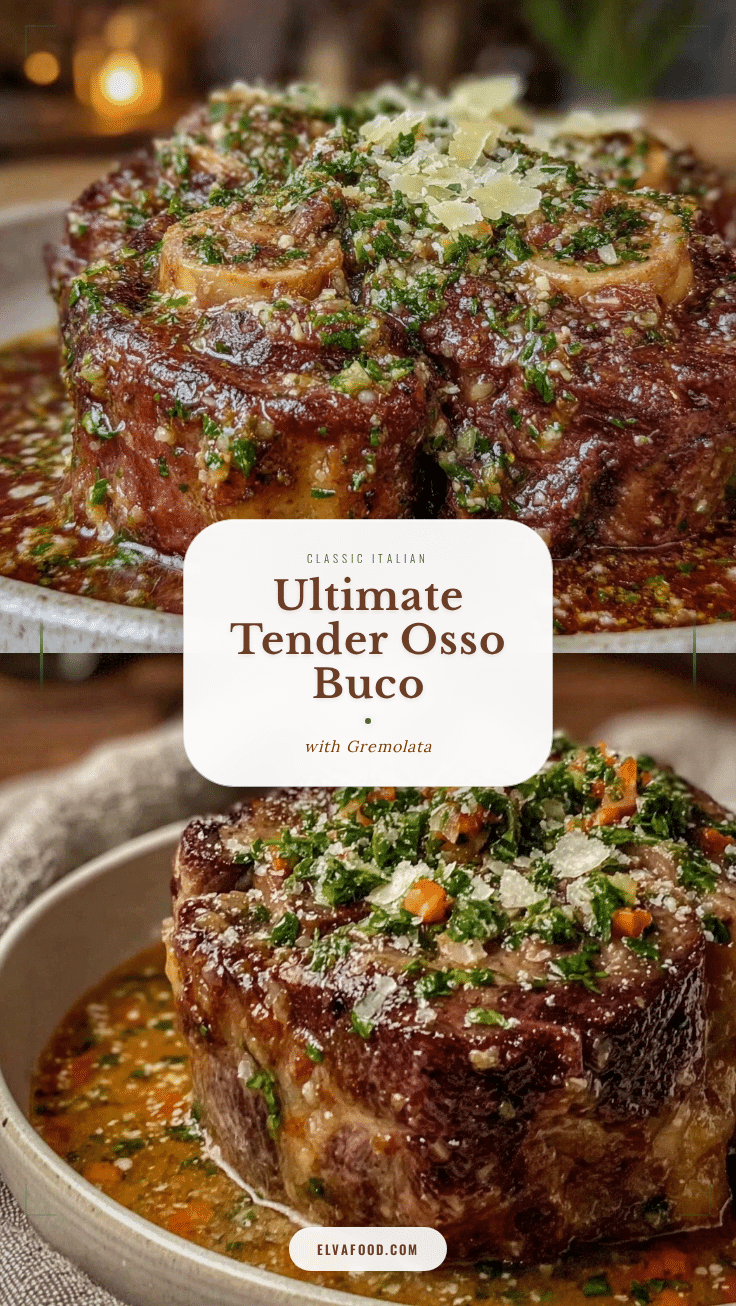
Osso Buco Recipe Easy Step-by-Step for Perfect Special Dinner

This classic Osso Buco features slow-braised veal or beef shanks in a rich wine and tomato sauce, finished with a zesty gremolata. It’s a comforting, restaurant-quality dish perfect for special occasions or cozy family dinners.
- Prep Time: 25 minutes
- Cook Time: 2 hours 30 minutes
- Total Time: 2 hours 55 minutes
- Yield: 4-6 servings 1x
- Category: Main Course
- Cuisine: Italian
Ingredients
- 4–6 pieces veal or beef shanks (about 2.5 lbs, cut 1½–2 inches thick, bone-in)
- Salt and freshly ground black pepper
- 1/2 cup all-purpose flour (for dredging; use gluten-free if needed)
- 2–3 tablespoons olive oil
- 2 tablespoons unsalted butter (or more olive oil for dairy-free)
- 1 large onion, diced
- 2 medium carrots, diced
- 2 celery stalks, diced
- 4 garlic cloves, minced
- 3/4 cup dry white wine (Sauvignon Blanc or Pinot Grigio)
- 1 cup crushed tomatoes or canned diced tomatoes
- 1 1/2 cups low-sodium beef or veal broth (or chicken broth)
- 2 sprigs fresh thyme (or 1 teaspoon dried thyme)
- 2 bay leaves
- Zest of 1 lemon
- Chopped parsley for garnish (optional)
- For the gremolata:
- 1/4 cup fresh flat-leaf parsley, finely chopped
- 2 garlic cloves, minced
- Zest of 1 lemon (or orange)
- Pinch of salt
Instructions
- Pat the shanks dry with paper towels. Season generously with salt and pepper. Dredge each shank in flour, shaking off excess.
- Heat olive oil and butter in a large Dutch oven over medium-high heat. Sear shanks in batches for 3–4 minutes per side until deeply golden. Transfer browned shanks to a plate.
- Lower heat to medium. Add onion, carrots, and celery. Sauté, scraping up browned bits, until veggies are soft and fragrant. Add garlic and cook 1 more minute.
- Pour in wine and deglaze, scraping up any fond. Simmer until wine reduces by half, about 3 minutes. Stir in tomatoes, broth, thyme, bay leaves, and lemon zest. Bring to a gentle simmer.
- Return shanks and any juices to the pot, nestling them in the sauce. Cover tightly and transfer to a 325°F oven. Cook 2–2½ hours, turning shanks once halfway, until meat is fork-tender.
- While shanks finish, mix parsley, garlic, lemon zest, and a pinch of salt in a small bowl for the gremolata. Set aside.
- Remove shanks and tent with foil. Skim excess fat from the sauce, then simmer on the stovetop to reduce if desired. Spoon sauce over shanks, sprinkle with gremolata, and garnish with extra parsley. Serve hot.
Notes
Brown the shanks well for maximum flavor. Use good-quality wine for the sauce. If sauce is thin, simmer uncovered to reduce. For gluten-free, use a 1:1 blend or cornstarch for dredging. Gremolata adds a bright finish—don’t skip it! Can be made ahead; flavors deepen overnight. Serve with risotto, polenta, or mashed potatoes.
Nutrition
- Serving Size: 1 shank with sauce a
- Calories: 450
- Sugar: 6
- Sodium: 650
- Fat: 28
- Saturated Fat: 10
- Carbohydrates: 15
- Fiber: 3
- Protein: 25
Keywords: Osso Buco, veal shanks, beef shanks, braised, Italian, special occasion, gremolata, comfort food, gluten-free option, dinner party