There’s something absolutely magical about the aroma of sizzling butter, earthy sage, and paper-thin prosciutto as it mingles with tender veal in the skillet. Honestly, when I first made Saltimbocca, the kitchen filled with this mouthwatering scent that made my stomach rumble and my heart skip a beat. The first bite was pure bliss—juicy veal, salty prosciutto, and a whisper of sage, all wrapped in a silky, buttery sauce. I paused, fork in hand, and just grinned because, you know what, I’d found a dish that felt like a love letter to my taste buds.
The first time I tasted Saltimbocca was years ago at a tiny trattoria tucked away on a cobbled Roman street. The waiter placed a simple plate in front of me, and I was instantly hooked. It was the kind of meal that makes you close your eyes and savor every nuance. Back home, I was determined to recreate that magic, experimenting (and maybe making a few messes along the way) until I landed on this perfect Saltimbocca recipe—Veal with Prosciutto, just right for an elegant dinner that doesn’t take all day.
This dish quickly became a family favorite. My partner couldn’t resist sneaking slices straight from the pan, and even my picky uncle asked for seconds (a rare feat, let me tell you). Saltimbocca now makes regular appearances at our dinner parties, holiday gatherings, and those weeknights when I want to treat myself to something special without a ton of fuss. It’s the kind of recipe you wish you’d stumbled on years ago—dangerously easy, but impressive enough to make guests think you spent hours in the kitchen.
Perfect for dinner parties, romantic evenings, or adding a little Italian flair to your Sunday supper, this Saltimbocca is a staple in my kitchen. I’ve tested and tweaked it more times than I care to admit (all in the name of delicious research, of course). If you crave a meal that feels like a warm hug but looks like five-star dining, you’re going to want to bookmark this one.
Why You’ll Love This Perfect Saltimbocca Recipe (Veal with Prosciutto)
Let’s face it—there are plenty of Saltimbocca recipes floating around, but this one stands out for a few solid reasons. After countless rounds of testing, kitchen flops, and triumphant dinners, I can say this version hits all the right notes for both beginner cooks and seasoned pros.
- Quick & Easy: Ready in under 30 minutes, so you won’t be chained to the stove all evening (yes, even on a busy Wednesday!).
- Simple Ingredients: No need to hunt for exotic items—a few quality staples are all you need for restaurant-worthy results.
- Perfect for Elegant Entertaining: Saltimbocca always looks fancy on the plate, making it a go-to for impressing guests at dinner parties or special occasions.
- Crowd-Pleaser: The pairing of tender veal, savory prosciutto, and fragrant sage is a flavor combination that wins over picky eaters and foodies alike.
- Unbelievably Delicious: Each bite delivers a punch of salty, buttery goodness with just enough herbal lift to keep things interesting. It’s comfort food with a tuxedo on.
What makes this Saltimbocca different? I use a little flour dusting for a golden crust, and deglaze the pan with a splash of white wine for a silky, flavorful sauce—just like the best trattorias in Rome. The prosciutto crisps up perfectly, adding a texture contrast to the tender veal beneath. I’ve tried using chicken and pork too (just for kicks), but veal really is the classic, and it’s worth seeking out for that melt-in-your-mouth experience.
This isn’t just another Saltimbocca; it’s the one that makes you sigh with happiness after the first forkful. It’s a dish that brings everyone to the table, sparks conversation, and turns any meal into a celebration. Whether you’re cooking “just because,” or hosting your in-laws, this recipe brings a little Italian joy to your kitchen every single time.
What Ingredients You Will Need for Perfect Saltimbocca
This perfect Saltimbocca recipe (Veal with Prosciutto) uses a handful of classic, quality ingredients that work together to create bold flavor and that signature elegant texture. Most are easy to find at your local grocery store or Italian market, and I’ll share a few tips for making the best choices (and how to swap if you need).
- Veal scallopini (8 thin slices, about 1 lb/450g total) – Look for veal cutlets sliced evenly, about 1/4-inch (6mm) thick. If you can’t find veal, thinly sliced chicken or pork tenderloin works in a pinch, but veal is classic for a reason.
- Prosciutto (8 slices, paper-thin) – I prefer imported Italian prosciutto di Parma for the best flavor, but any high-quality prosciutto will do. The salty, delicate flavor makes the dish shine.
- Fresh sage leaves (8 large, or 16 smaller) – Fragrant, earthy sage is absolutely essential. Fresh is a must here (dried just won’t cut it, trust me).
- All-purpose flour (1/4 cup/30g, for dredging) – Gives the veal a light golden crust and helps the sauce cling. Gluten-free all-purpose flour blends work fine, too.
- Salt and freshly ground black pepper – Just a pinch of each, since prosciutto brings plenty of saltiness.
- Olive oil (2 tablespoons/30ml) – Use a good-quality extra-virgin olive oil for sautéing. I love Colavita or Lucini brands.
- Unsalted butter (2 tablespoons/28g) – Adds richness to the sauce and helps brown the veal. If you’re dairy-free, Earth Balance works okay.
- Dry white wine (1/2 cup/120ml) – Pinot Grigio or Sauvignon Blanc are my go-tos. If you don’t do wine, use chicken stock and a squeeze of lemon juice for brightness.
- Chicken or veal stock (1/3 cup/80ml) – For a silky sauce that coats each piece perfectly. Low-sodium is best so you can control the salt level.
- Lemon wedges (for serving) – A little squeeze right at the table adds freshness and cuts through the richness.
Ingredient Tips & Shortcuts:
- Ask your butcher to pound the veal thin for you—it’s a lifesaver.
- If you can’t find veal, boneless chicken breast sliced thin is a solid stand-in.
- Fresh sage is non-negotiable. If you grow it in your garden, now’s the time to use it!
- For a gluten-free Saltimbocca, swap flour for a 1:1 gluten-free blend or even fine rice flour.
- Want to go extra fancy? Try a drizzle of aged balsamic before serving. It’s not traditional, but it’s pretty dang tasty.
Equipment Needed
- Large skillet or sauté pan – A 12-inch (30cm) pan gives you enough space to cook all the veal without crowding. Stainless steel or nonstick both work, but stainless gives the best browning.
- Meat mallet or rolling pin – For pounding the veal to an insert-uniform thickness (ask the butcher to do this if you don’t have one).
- Small sharp knife and cutting board – For prepping the sage and trimming the veal if needed.
- Toothpicks – Used to secure the prosciutto and sage to each veal slice. Bamboo skewers or uncooked spaghetti strands work if you’re in a pinch.
- Shallow bowl or plate – For dredging the veal in flour.
- Tongs – Makes flipping the veal easy without tearing the prosciutto.
- Measuring cups and spoons – For accuracy, especially with the sauce ingredients.
- Serving platter – To show off your handiwork (I use a white ceramic platter for a classic Italian look).
If you don’t have a meat mallet, try sandwiching the veal between two pieces of parchment and using a heavy skillet. Toothpicks are easiest for securing, but I’ve definitely used spaghetti sticks in a pinch (just remember to remove before serving!). Stainless pans give the best pan sauce, but nonstick is fine for easy cleanup. Whatever you use, just keep it hot enough to get a good sear.
How to Prepare Perfect Saltimbocca (Step-by-Step)
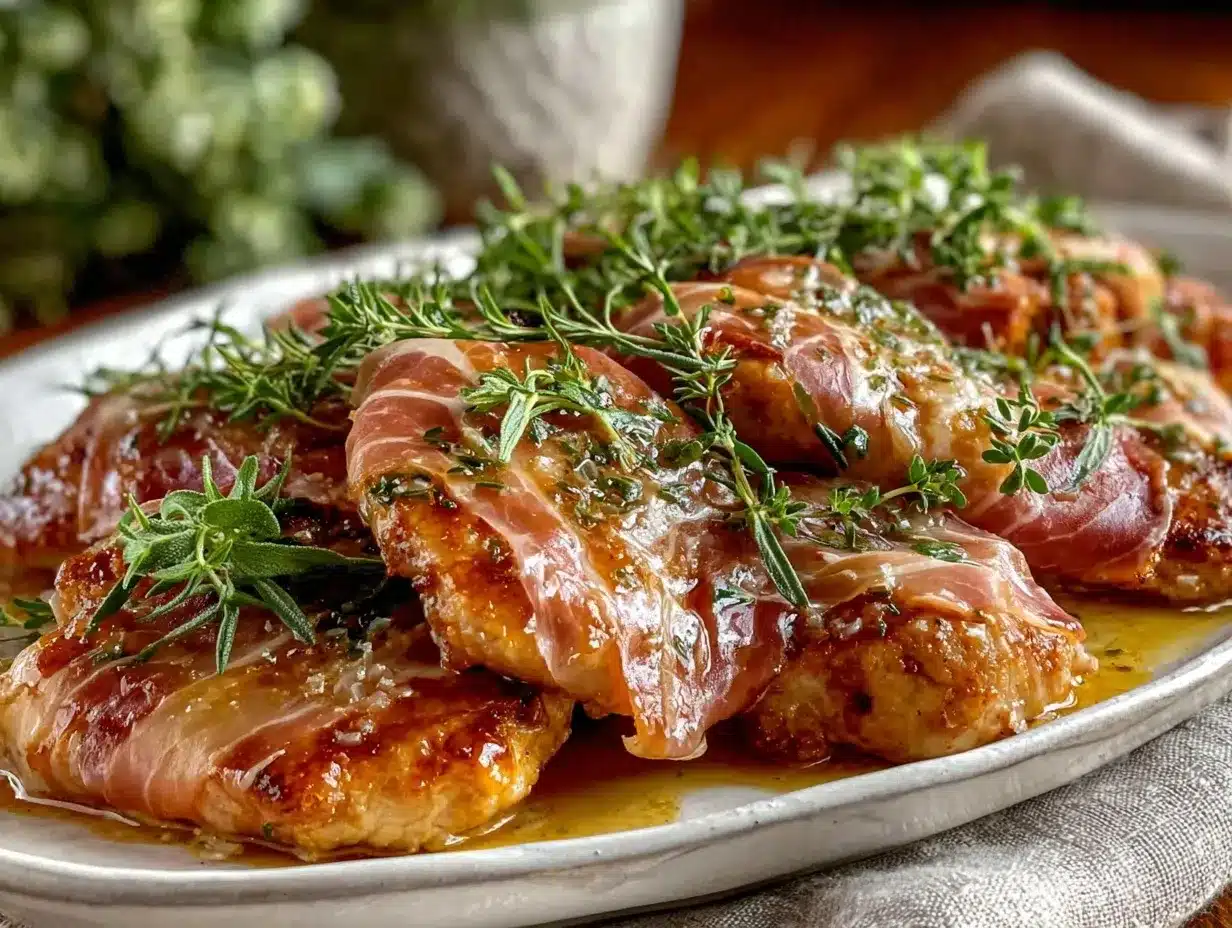
- Pound the veal: Place each veal scallopini between two sheets of parchment or plastic wrap. Use a meat mallet (or rolling pin) to gently pound them to about 1/4-inch (6mm) thickness. This helps them cook evenly and stay tender. (Takes about 5 minutes.)
- Assemble the Saltimbocca: Lay the veal slices flat. Top each with a sage leaf (or two if they’re small), then a slice of prosciutto. Press gently so the prosciutto sticks, then secure with a toothpick. (2-3 minutes.)
- Season and dredge: Sprinkle each piece lightly with black pepper (go easy on salt—the prosciutto is salty enough). Dredge the veal lightly in flour, shaking off the excess. This creates a thin crust and helps the sauce stick later. (2-3 minutes.)
-
Brown the veal: Heat 1 tablespoon each of olive oil and butter in your skillet over medium-high heat until sizzling but not smoking. Add the veal, prosciutto-side down, in a single layer (cook in batches if needed). Sear for 1-2 minutes until the prosciutto crisps up, then flip and cook the other side for another 1-2 minutes until golden. Work quickly—you don’t want to overcook the veal. Transfer to a warm plate and cover loosely with foil. (8-10 minutes total.)
Tip: If the pan gets dry, add another splash of oil/butter between batches. -
Make the pan sauce: Pour off any excess fat from the pan, leaving the browned bits. Add white wine and scrape up any flavorful bits stuck to the bottom. Simmer for 2-3 minutes to reduce slightly, then add the stock. Simmer another 2 minutes until the sauce thickens just enough to coat a spoon. Swirl in the remaining tablespoon of butter for extra silkiness. (5 minutes.)
Warning: Don’t boil the sauce too hard or it’ll reduce too quickly and get salty. - Finish and serve: Return the veal to the pan, spoon the sauce over, and heat gently for 30 seconds—just long enough to rewarm the meat. Arrange on a platter, remove toothpicks, and serve with lemon wedges for squeezing over the top. (2 minutes.)
Notes: If your veal looks dry, your pan was probably too hot. If the prosciutto falls off, try pressing it onto the veal before dredging in flour next time. Keep a close eye—veal cooks lightning fast!
Cooking Tips & Techniques for the Best Saltimbocca
- Don’t overcook the veal: Thin veal cooks in a flash. As soon as the edges look opaque and the prosciutto is crisp, flip it. Overcooking dries it out (been there, eaten that—never again!).
- Use fresh sage: Dried sage just doesn’t give that lovely herbal lift. If you only have dried, save it for another recipe.
- Sear, don’t steam: Make sure your pan is hot before adding the veal. If you crowd the pan, moisture builds up and you’ll end up with pale, sad Saltimbocca. Cook in batches, wiping the pan if needed.
- Wine matters: Use a dry white you’d actually drink. Cheap cooking wine can make the sauce taste flat.
- Deglaze like a pro: Scrape up every browned bit after adding the wine—those little pieces are flavor gold. A silicone spatula or wooden spoon works best.
- Butter for silkiness: Swirling in cold butter at the end makes the sauce velvety and rich. Don’t skip it (unless you’re dairy-free, then just use olive oil).
- Timing is everything: Have all your ingredients prepped and ready before you start. Saltimbocca comes together so fast, you don’t want to be searching for the wine while the veal gets rubbery.
Honestly, I’ve made every mistake in the book with Saltimbocca—overcooked veal, soggy prosciutto, broken sauce. But once you get the rhythm, it’s a breeze. My biggest tip? Don’t rush the sauce. Let it simmer gently, taste, and adjust as you go. And always finish with a squeeze of lemon for that restaurant-worthy zing.
Variations & Adaptations
Saltimbocca is a classic, but I love tweaking it to fit different moods, needs, and seasons. Here are some favorite spins on the perfect Saltimbocca recipe (Veal with Prosciutto):
- Chicken Saltimbocca: Swap veal for thinly pounded chicken breast. It’s more affordable and still delicious—plus, it’s a great option for anyone who doesn’t eat veal.
- Pork Tenderloin Saltimbocca: Slice pork tenderloin into medallions, pound thin, and proceed as directed. The mild pork pairs beautifully with prosciutto and sage.
- Gluten-Free Version: Use a gluten-free flour blend or even fine rice flour for dredging. You’ll still get a golden crust and luscious sauce.
- Dairy-Free Option: Use olive oil instead of butter for both searing and the sauce. The result is a little lighter but still packed with flavor.
- Vegetarian “Saltimbocca”: Try large portobello mushroom caps or eggplant slices instead of veal. Top with sage and a plant-based prosciutto substitute, if you can find one. It’s not traditional, but it’s fun for a change!
- Wine-Free Sauce: Replace the wine with extra stock and a splash of lemon juice for brightness. I’ve done this for friends who avoid alcohol, and it’s still tasty.
- Seasonal Flavors: In summer, serve with fresh tomato salad and crusty bread. In fall, try adding a splash of Marsala wine to the pan sauce for extra depth.
Personally, my favorite twist is using chicken and adding a sprinkle of fresh thyme along with the sage. It’s a subtle change, but it gives a whole new layer of flavor. Don’t be afraid to experiment—Saltimbocca is forgiving and adapts to your taste and pantry.
Serving & Storage Suggestions
Saltimbocca is best served hot, right off the skillet, with the pan sauce spooned over and a wedge of lemon on the side. For a classic presentation, arrange the veal slices on a white platter, sprinkle with extra sage leaves, and let the sauce pool around the edges—it always gets oohs and aahs.
Pair it with simple sides like creamy mashed potatoes, sautéed spinach, or buttered noodles. A crisp green salad and a glass of Pinot Grigio (or your favorite dry white wine) round out the meal. If you want to go all out, serve with roasted asparagus or a rustic Italian bread to soak up the sauce.
Leftovers will keep in the fridge for up to 2 days, though the texture is best fresh. Store in an airtight container with a little extra sauce to keep the veal moist. To reheat, gently warm in a covered skillet over low heat, adding a splash of water or stock if needed. Avoid the microwave—it’ll dry out the veal and prosciutto.
Honestly, Saltimbocca rarely makes it to leftovers in my house, but if you have extras, they’re fantastic sliced thin and tucked into a crusty sandwich for lunch the next day. The flavors deepen overnight, and that pan sauce…well, you’ll want to lick the plate.
Nutritional Information & Benefits
Saltimbocca is a protein-rich dish that feels indulgent but isn’t over-the-top heavy. Here’s a quick look at the estimated nutritional values per serving (based on 4 servings):
- Calories: About 340 kcal
- Protein: 29g
- Fat: 16g (mostly from olive oil and butter)
- Carbohydrates: 8g
- Sugar: 1g
Veal is a lean source of protein and provides important nutrients like iron, zinc, and B vitamins. Prosciutto adds flavor with minimal carbs, while sage is full of antioxidants and natural compounds that support digestion. If you’re gluten-free or dairy-free, simple swaps make this recipe fit your needs.
Keep in mind, prosciutto does add sodium, so go easy on the added salt. All in all, it’s a satisfying meal that doesn’t weigh you down—perfect for a special occasion or a treat-yourself Tuesday.
Conclusion
Saltimbocca—Veal with Prosciutto—is the kind of recipe that makes any dinner feel special, whether you’re celebrating something big or just craving a taste of Italy at home. It’s quick enough for weeknights but impressive enough for your fanciest dinner party. I love how each bite brings back memories of that first Roman trattoria and how it’s become a signature dish in my kitchen.
Don’t be afraid to tweak it to suit your tastes or pantry. Cooking should be fun and a little creative, right? Whether you stick with classic veal or try a chicken version, this Saltimbocca is sure to win hearts (and maybe a few recipe requests) every time.
I’d love to hear how your Saltimbocca turns out—leave a comment below, share your favorite twist, or tag your kitchen triumph on Pinterest or Instagram. Here’s to more elegant, delicious dinners—and plenty of happy memories around the table!
FAQs About Perfect Saltimbocca (Veal with Super-Thin Prosciutto)
What does “Saltimbocca” mean?
Saltimbocca is an Italian word that means “jumps in the mouth”—a nod to how flavorful and irresistible this dish is. It’s a classic Roman specialty featuring veal, prosciutto, and sage.
Can I make Saltimbocca ahead of time?
You can assemble the veal with prosciutto and sage a few hours ahead, refrigerate, and cook just before serving. The sauce is best made fresh for the silkiest texture.
What can I use instead of veal?
Thinly sliced chicken breast or pork tenderloin medallions work well as substitutes. Just be sure to pound them to an even thickness for fast, even cooking.
Is Saltimbocca gluten-free?
Traditionally, it’s not, but you can use a gluten-free flour blend or rice flour for dredging the veal. All other ingredients are naturally gluten-free.
What side dishes go well with Saltimbocca?
Try simple sides like mashed potatoes, sautéed spinach, buttered noodles, or a crisp green salad. Anything that can soak up the delicious pan sauce is a winner!
Pin This Recipe!
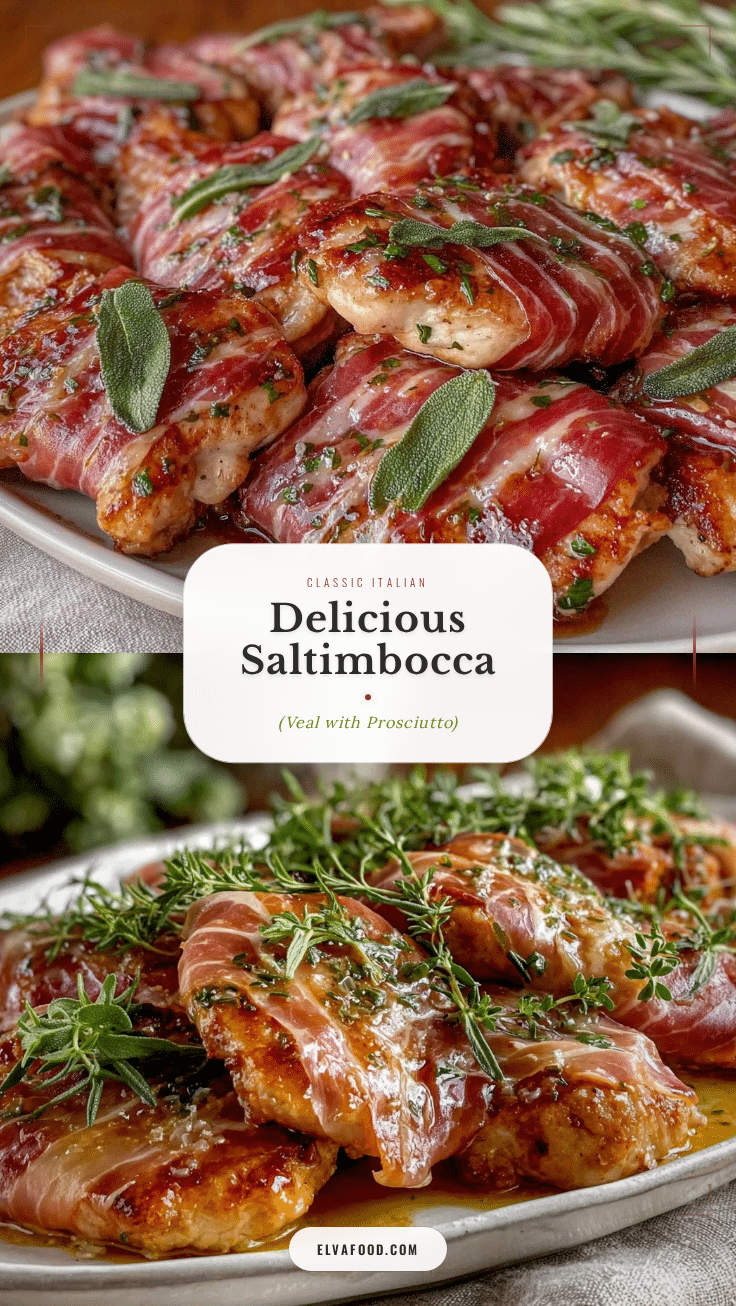
Perfect Saltimbocca Recipe: Veal with Prosciutto for Elegant Dinner
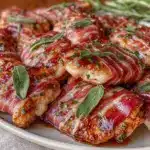
This classic Roman Saltimbocca features tender veal scallopini topped with savory prosciutto and fresh sage, quickly sautéed and finished with a silky white wine pan sauce. It’s an elegant, restaurant-worthy dish that’s surprisingly quick and easy to make at home.
- Prep Time: 10 minutes
- Cook Time: 15 minutes
- Total Time: 25 minutes
- Yield: 4 servings 1x
- Category: Main Course
- Cuisine: Italian
Ingredients
- 8 thin slices veal scallopini (about 1 lb)
- 8 slices prosciutto, paper-thin
- 8 large fresh sage leaves (or 16 smaller leaves)
- 1/4 cup all-purpose flour (for dredging)
- Salt and freshly ground black pepper, to taste
- 2 tablespoons olive oil
- 2 tablespoons unsalted butter
- 1/2 cup dry white wine (such as Pinot Grigio or Sauvignon Blanc)
- 1/3 cup chicken or veal stock (low-sodium preferred)
- Lemon wedges, for serving
Instructions
- Place each veal scallopini between two sheets of parchment or plastic wrap. Gently pound to about 1/4-inch thickness.
- Lay veal slices flat. Top each with a sage leaf (or two if small), then a slice of prosciutto. Press gently and secure with a toothpick.
- Sprinkle each piece lightly with black pepper (go easy on salt). Dredge veal lightly in flour, shaking off excess.
- Heat 1 tablespoon olive oil and 1 tablespoon butter in a large skillet over medium-high heat. Add veal, prosciutto-side down, in a single layer. Sear for 1-2 minutes until prosciutto crisps, then flip and cook another 1-2 minutes until golden. Transfer to a warm plate and cover loosely with foil.
- Pour off excess fat from the pan, leaving browned bits. Add white wine and scrape up any bits. Simmer for 2-3 minutes to reduce slightly, then add stock. Simmer another 2 minutes until sauce thickens. Swirl in remaining tablespoon of butter.
- Return veal to pan, spoon sauce over, and heat gently for 30 seconds to rewarm. Arrange on a platter, remove toothpicks, and serve with lemon wedges.
Notes
For gluten-free, use a 1:1 gluten-free flour blend or fine rice flour. Chicken or pork can substitute for veal. Use fresh sage for best flavor. Don’t overcook veal; it cooks quickly. Deglaze pan thoroughly for a flavorful sauce. Serve immediately for best texture.
Nutrition
- Serving Size: 2 veal slices with s
- Calories: 340
- Sugar: 1
- Sodium: 650
- Fat: 16
- Saturated Fat: 6
- Carbohydrates: 8
- Protein: 29
Keywords: Saltimbocca, veal, prosciutto, Italian dinner, elegant, quick, easy, classic, Roman, white wine sauce