“Hey, you won’t believe what I found at the farmer’s market,” my neighbor called out as I was unpacking groceries, holding up a bundle of curly green garlic scapes like they were treasure. I’d never cooked with garlic scapes before—honestly, I thought they were just quirky garden leftovers. But that day, curiosity got the best of me, and I decided to whip up fresh garlic scape pesto pasta with Parmesan. What started as a tentative experiment quickly turned into one of those meals where you close your eyes after the first bite and just savor the moment.
There’s something about the crisp, slightly grassy notes of garlic scapes that make this pesto unlike any other. I remember the kitchen filling with an herbaceous aroma that felt both familiar and new—kind of like springtime in a bowl. The bright green pesto paired with al dente pasta and a generous dusting of Parmesan brought a fresh, vibrant energy to an otherwise hectic weeknight. It wasn’t fancy or complicated—just honest, simple ingredients coming together in a way that felt like a small celebration of the season.
That night, as I twirled the pasta and tasted that perfect balance of sharp Parmesan and mellow garlic scape, I realized this recipe wasn’t going anywhere. It became a go-to for when I needed a quick but satisfying dinner that’s anything but boring. It’s the kind of dish friends ask about and neighbors want to swap recipes for (and yes, I’m now a regular at the market’s garlic scape stand). If you’re looking for a fresh twist on pesto pasta that’s easy, flavorful, and just downright comforting, this is the one I trust to deliver.
So, let’s get into why fresh garlic scape pesto pasta with Parmesan might just become your new favorite, too.
Why You’ll Love This Recipe
This recipe has been tested in my kitchen more times than I can count, and each time it hits the mark perfectly. Here’s why it’s a real winner:
- Quick & Easy: Ready in about 25 minutes, it’s perfect for those nights when you want a homemade meal fast without stress.
- Simple Ingredients: Mostly pantry staples plus fresh garlic scapes, which are surprisingly easy to find in spring or can be swapped for mild green garlic.
- Perfect for Seasonal Dinners: This is a springtime classic, capturing the fleeting flavor of garlic scapes for a light but satisfying pasta dish.
- Crowd-Pleaser: The creamy Parmesan and fresh herbaceous pesto always impress guests, making it ideal for casual dinner parties or family meals.
- Unbelievably Delicious: The unique garlic scape flavor combines with toasted pine nuts and bright lemon juice to create a pesto that’s fresh, nutty, and just the right amount of tangy.
What makes this recipe stand apart is how it embraces garlic scapes in their prime without overpowering the pasta. The texture is silky thanks to the olive oil and Parmesan, and the fresh lemon juice adds a subtle zing that keeps every bite lively. Unlike typical basil pesto, this one feels a little earthier and brighter—perfect for anyone who loves a fresh take on classic pasta recipes like the creamy cacio e pepe pasta but wants to switch things up.
Honestly, this recipe is that kind of dish that makes you want to linger at the table a little longer. It’s simple, fresh, and satisfying—not to mention a fun way to celebrate seasonal ingredients with minimal fuss.
What Ingredients You Will Need
This recipe uses simple, wholesome ingredients to deliver bold flavor and satisfying texture without the fuss. Most are pantry staples, and the star, garlic scapes, can be found fresh at farmers’ markets or specialty grocery stores in late spring.
- Garlic Scapes: About 1 cup chopped (roughly 10-12 scapes). Look for firm, bright green scapes without spots. If unavailable, mild green garlic or young garlic tops can be a substitute.
- Olive Oil: ½ cup extra virgin olive oil (I prefer Colavita for its smooth, fruity flavor).
- Pine Nuts: ¼ cup toasted (adds a creamy, nutty depth). You can swap for walnuts if preferred.
- Parmesan Cheese: ½ cup freshly grated (Parmigiano-Reggiano works best for authentic flavor).
- Lemon Juice: 1 tablespoon fresh squeezed (brightens the pesto).
- Salt: To taste (start with ½ teaspoon and adjust).
- Black Pepper: Freshly ground, to taste.
- Pasta: 12 ounces (340 g) spaghetti, linguine, or your favorite long pasta. I like to use durum wheat spaghetti for that perfect bite.
Optional additions you might consider:
- Red pepper flakes for a subtle kick
- A handful of fresh basil or parsley for extra herbaceous notes
- Substitute Parmesan with Pecorino Romano for a sharper taste
For a gluten-free version, use your favorite gluten-free pasta—this pesto pairs beautifully without any compromise on flavor.
Equipment Needed
Here’s what you’ll want to have on hand for making fresh garlic scape pesto pasta with Parmesan:
- Food Processor or Blender: Essential for turning garlic scapes, pine nuts, and cheese into a smooth pesto. I’ve tried hand-chopping before, but nothing beats the silky texture from a processor.
- Large Pot: For boiling pasta. Make sure it’s roomy enough so pasta can cook evenly without sticking.
- Colander: To drain pasta efficiently without losing all that starchy water.
- Measuring Cups and Spoons: Accuracy helps balance flavors, especially with lemon juice and salt.
- Wooden Spoon or Tongs: For mixing pesto into pasta gently without breaking the noodles.
If you don’t have a food processor, a strong blender works fine, but you might need to scrape down the sides a few times. For toasting pine nuts, a small dry skillet does the trick—just watch closely to avoid burning.
Preparation Method
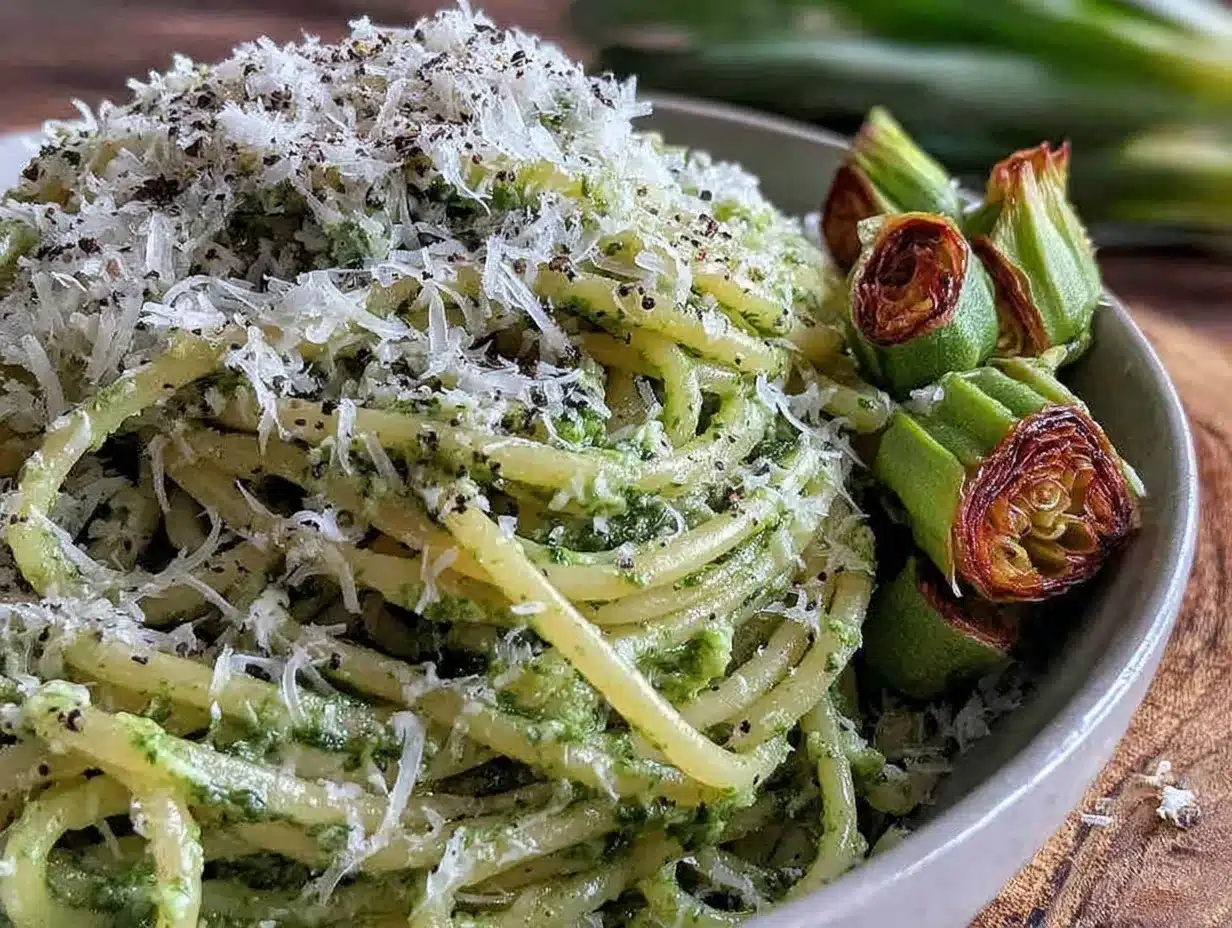
- Prep garlic scapes: Rinse them well and chop into 1-inch pieces. This makes them easier to blend and releases their garlicky aroma. (About 5 minutes)
- Toast pine nuts: In a dry skillet over medium heat, toast the pine nuts until golden and fragrant, about 3-4 minutes. Stir frequently to prevent burning. Remove from heat and let cool slightly.
- Make the pesto: In your food processor, combine chopped garlic scapes, toasted pine nuts, grated Parmesan, and lemon juice. Pulse a few times to start blending.
- Add olive oil: With the processor running, slowly drizzle in the olive oil until the mixture reaches a smooth, creamy consistency. Season with salt and freshly ground black pepper. Taste and adjust seasoning as needed. (About 5 minutes)
- Cook pasta: Bring a large pot of salted water to a rolling boil. Add 12 ounces (340 g) pasta and cook according to package instructions (usually 8-10 minutes) until al dente.
- Reserve pasta water: Before draining, scoop out ½ cup (120 ml) of the starchy cooking water. This will help loosen the pesto for a glossy finish.
- Combine pasta and pesto: Drain pasta and return to the pot (off heat). Add the pesto and reserved pasta water a little at a time, tossing gently to coat every strand evenly. The sauce should cling beautifully and not feel dry or overly oily.
- Serve immediately: Plate the pasta and sprinkle a bit more grated Parmesan on top. Optional drizzle of olive oil adds a lovely shine and richness.
Pro tip: If pesto seems too thick, add more pasta water, a tablespoon at a time. It’s easier to thin out than fix if too watery. Also, freshness matters—making pesto just before serving ensures the bright flavors don’t dull.
Cooking Tips & Techniques
Here are some insights I’ve picked up while perfecting this recipe over multiple seasons:
- Don’t over-process the pesto. You want a smooth but slightly textured sauce, not a puree. Stop pulsing once ingredients are finely chopped but still have some bite.
- Toast your pine nuts carefully. They burn fast! I learned the hard way that even a few extra seconds can turn that lovely nutty flavor bitter.
- Use reserved pasta water wisely. It’s your secret weapon for silky, clingy pesto pasta. The starch helps the sauce stick without adding extra oil.
- Salt the pasta water generously. This is your chance to flavor the noodles themselves. It makes a big difference in the overall taste.
- Make the pesto just before serving. Garlic scapes lose their bright green color and fresh flavor quickly once chopped, so keep timing tight.
- Multitasking tip: Toast pine nuts and prep pesto ingredients while pasta water comes to a boil—saves precious minutes.
Once, I tried making the pesto a day ahead, and though it was still tasty, the vibrant color and fresh punch of garlic scapes definitely mellowed. So if you want that wow factor, fresh is best.
Variations & Adaptations
This recipe is flexible, so you can tweak it to fit your taste or dietary needs:
- Nut-free version: Swap pine nuts for toasted pumpkin seeds or sunflower seeds to keep that crunch and earthiness without nuts.
- Herb boost: Add handfuls of fresh basil or parsley to the food processor for a more complex herbal flavor.
- Spicy kick: Stir in red pepper flakes or a small fresh chili for a touch of heat that contrasts beautifully with the creamy cheese.
- Vegan option: Replace Parmesan with nutritional yeast and use a vegan pasta to keep it plant-based but still rich.
- Different pasta shapes: Try this pesto tossed with farfalle or penne for more bite and sauce catchment, or even zucchini noodles if you want something lighter.
I once made this pesto with walnuts because I ran out of pine nuts, and the resulting flavor was a little earthier but still delicious—a handy substitution when shopping is limited. For a meal with a similar fresh vibe but heartier texture, pairing this pasta with a classic like Irish lamb stew brings an interesting contrast of richness and brightness to the table.
Serving & Storage Suggestions
This pasta is best served warm right after tossing with pesto. The flavors are brightest and the texture is perfectly silky. Garnishing with a little extra Parmesan or a drizzle of good olive oil never hurts.
Pair it with a crisp green salad or steamed spring vegetables to keep the meal light and seasonal. For beverages, a chilled white wine or sparkling water with lemon complements the fresh garlic and cheese nicely.
If you have leftovers, store them in an airtight container in the refrigerator for up to 2 days. The pesto will thicken and the pasta may absorb some sauce, so add a splash of warm water or olive oil when reheating to loosen it back up. Reheat gently in a skillet or microwave to avoid overcooking.
Interestingly, letting the pasta rest with the pesto for a little while actually deepens the flavor, so it can be a nice make-ahead option for lunches or next-day dinners.
Nutritional Information & Benefits
This dish offers a balanced source of healthy fats from olive oil and pine nuts plus protein and calcium from Parmesan cheese. Garlic scapes bring antioxidants and add a fresh garlic flavor without the intensity of mature garlic cloves.
Estimated per serving (based on 4 servings):
| Calories | 450 kcal |
|---|---|
| Protein | 15 g |
| Carbohydrates | 50 g |
| Fat | 18 g |
| Fiber | 3 g |
This recipe is naturally gluten-free if you choose gluten-free pasta and can be made vegan as mentioned. Be mindful of nut allergies when using pine nuts; alternatives are easy and just as tasty.
From a wellness perspective, this pasta feels nourishing without heaviness, making it a great option for a light dinner that still satisfies.
Conclusion
Fresh garlic scape pesto pasta with Parmesan is one of those rare recipes that brings fresh seasonal flavor, simplicity, and comfort all in one bowl. It’s perfect for weeknights when you want something quick but still special enough to feel like a treat. I love how this dish reminds me that sometimes the best meals come from a bit of curiosity and a handful of fresh ingredients.
Give it a try and feel free to tweak it to your liking—you’ll find it’s forgiving and versatile. When I serve this, I always get questions about the bright green pesto, and it’s fun to share the story behind those quirky garlic scapes. If you want to take your pasta game further, you might also enjoy the creamy, peppery twist of creamy cacio e pepe pasta or the comforting texture of Italian wedding soup for a cozy dinner companion.
Feel free to share your own pesto variations or tips in the comments—I love hearing how you make this recipe your own!
Frequently Asked Questions
What are garlic scapes, and where can I find them?
Garlic scapes are the curly, green flower stalks of garlic plants, harvested before they bloom. You can find them at farmers’ markets or specialty grocery stores during late spring.
Can I substitute basil or regular garlic for garlic scapes?
You can use basil for a more traditional pesto flavor, but it won’t have the same garlicky brightness. Regular garlic cloves are stronger and may overpower—use sparingly if substituting.
How do I store leftover pesto?
Store leftover pesto in an airtight container in the fridge for up to 3 days. Pour a thin layer of olive oil on top to prevent browning.
Is this recipe suitable for vegans?
Yes, simply swap Parmesan for nutritional yeast or a vegan cheese alternative and use vegan pasta.
Can I make pesto ahead of time?
While you can make pesto a day ahead, it’s best fresh for the brightest color and flavor. If made early, store it tightly covered with olive oil and refrigerate.
Pin This Recipe!
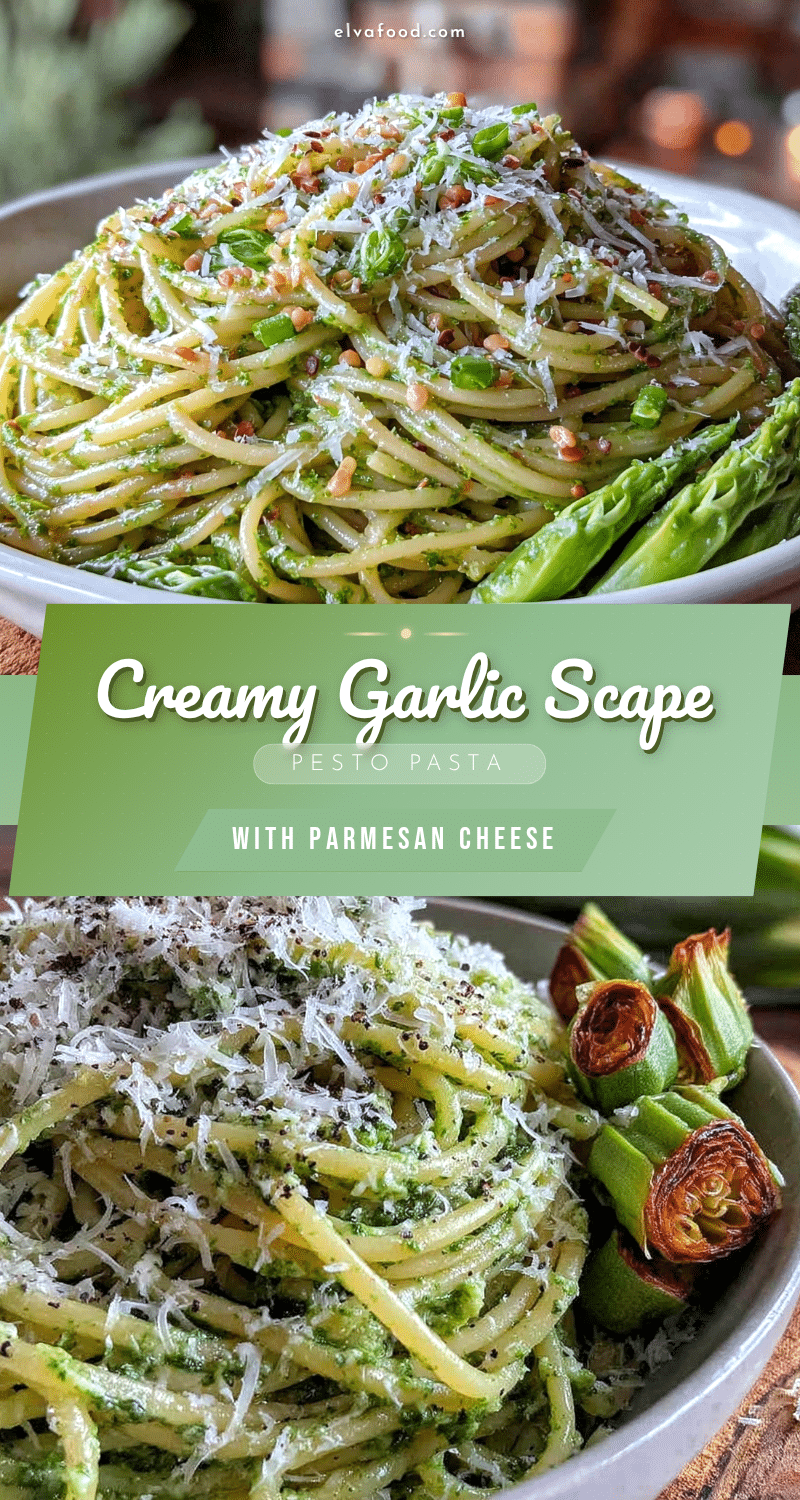
Fresh Garlic Scape Pesto Pasta with Parmesan
A quick and easy pasta dish featuring a fresh, vibrant pesto made from garlic scapes, Parmesan, and toasted pine nuts. Perfect for a light, seasonal dinner that’s flavorful and comforting.
- Prep Time: 10 minutes
- Cook Time: 15 minutes
- Total Time: 25 minutes
- Yield: 4 servings 1x
- Category: Main Course
- Cuisine: Italian
Ingredients
- 1 cup chopped garlic scapes (about 10–12 scapes)
- 1/2 cup extra virgin olive oil
- 1/4 cup toasted pine nuts
- 1/2 cup freshly grated Parmesan cheese (Parmigiano-Reggiano preferred)
- 1 tablespoon fresh lemon juice
- 1/2 teaspoon salt, or to taste
- Freshly ground black pepper, to taste
- 12 ounces spaghetti, linguine, or preferred long pasta
Instructions
- Rinse garlic scapes well and chop into 1-inch pieces.
- Toast pine nuts in a dry skillet over medium heat until golden and fragrant, about 3-4 minutes. Stir frequently to prevent burning. Remove from heat and let cool slightly.
- In a food processor, combine chopped garlic scapes, toasted pine nuts, grated Parmesan, and lemon juice. Pulse a few times to start blending.
- With the processor running, slowly drizzle in olive oil until the mixture reaches a smooth, creamy consistency. Season with salt and freshly ground black pepper. Taste and adjust seasoning as needed.
- Bring a large pot of salted water to a rolling boil. Add pasta and cook according to package instructions (usually 8-10 minutes) until al dente.
- Before draining, reserve 1/2 cup of the starchy pasta cooking water.
- Drain pasta and return to the pot off heat. Add pesto and reserved pasta water a little at a time, tossing gently to coat evenly.
- Serve immediately, garnished with extra grated Parmesan and an optional drizzle of olive oil.
Notes
Do not over-process the pesto; keep some texture. Toast pine nuts carefully to avoid bitterness. Use reserved pasta water to loosen pesto sauce for a silky finish. Make pesto just before serving for best flavor and color. For gluten-free, use gluten-free pasta. Vegan option available by substituting Parmesan with nutritional yeast and using vegan pasta.
Nutrition
- Serving Size: 1 serving (about 1/4
- Calories: 450
- Fat: 18
- Carbohydrates: 50
- Fiber: 3
- Protein: 15
Keywords: garlic scape pesto, pesto pasta, Parmesan pasta, spring pasta recipe, easy dinner, quick pasta, seasonal recipe