“You’re just tossing cheese and pepper on pasta?” my friend joked over text, utterly skeptical. Honestly, I had my doubts too the first time I tried making this creamy homemade cacio e pepe bucatini at home. It wasn’t some fancy sauce or hours of simmering but a quick, almost accidental discovery when I was rushing to pull together dinner. The night was chaotic — dishes piled up, and I barely had time to think, let alone cook. But that vibrant aroma of freshly cracked black pepper filling the kitchen, mingling with the sharp tang of pecorino romano, changed everything.
I remember stirring the pasta water, thinking this might be just another “simple” pasta recipe that falls flat, but the moment the cheese melted into that silky sauce coating every bucatini strand, I paused. It was creamy, peppery, and surprisingly comforting in the best possible way — no heavy cream, no fuss. Just pure, honest flavor with a twist that only fresh black pepper can bring.
Since then, I’ve found myself craving it more often than I expected, making it multiple times in a week. It’s become my go-to when I want a quick meal that feels special but doesn’t demand much brainpower. There’s something quietly satisfying about mastering the balance of heat and creaminess, and the way bucatini’s hollow shape traps just the right amount of sauce is honestly genius.
It’s not just a recipe but a little reminder that sometimes the simplest things, done well, can comfort you on the busiest, messiest nights. That peppery bite paired with the creamy pecorino is a kind of magic, and it’s why this recipe has stuck around in my kitchen rotation — a little quiet joy in a bowl.
Why You’ll Love This Creamy Homemade Cacio e Pepe Bucatini Recipe
I’ve tested this recipe more times than I can count, tweaking the pepper grind and cheese ratio until it felt just right. This isn’t your run-of-the-mill pasta dish; it’s got a personality and depth that’s easy to achieve at home. Here’s why it stands out:
- Quick & Easy: Ready in under 30 minutes, perfect for those hectic weeknights or whenever hunger strikes suddenly.
- Simple Ingredients: No need for specialty groceries — pecorino romano, black pepper, bucatini, and pantry staples is all you need.
- Perfect for Casual Dinners: Whether it’s a solo meal or feeding a small group, it feels both elevated and effortless.
- Crowd-Pleaser: The creamy, peppery sauce always impresses — I’ve had friends ask for the recipe after just one bite.
- Unbelievably Delicious: The fresh black pepper is the secret weapon — its aroma and flavor really bring the dish alive.
What makes this version different? It’s all about using fresh cracked black pepper and bucatini’s unique hollow shape that captures the sauce perfectly. Plus, I skip the usual heavy cream, relying instead on pasta water and cheese emulsification to get that smooth, silky texture. That technique, honestly, took a few tries to nail down, but it’s worth every bit of effort.
This recipe isn’t just dinner; it’s a little comfort ritual, a reminder that simple can still be soulful. It’s the kind of dish that makes you close your eyes after the first bite and savor the moment.
What Ingredients You Will Need for Creamy Homemade Cacio e Pepe Bucatini
This recipe uses simple, wholesome ingredients to deliver bold flavor and satisfying texture without the fuss. Most are pantry staples you probably already have, and substitutions are easy if needed.
- Bucatini Pasta – 12 ounces (340 grams); I recommend De Cecco for its perfect bite and firm texture.
- Pecorino Romano Cheese – 1 ½ cups finely grated (about 150 grams); look for a good-quality aged cheese for sharpness.
- Fresh Black Pepper – 2 teaspoons freshly cracked; don’t skimp here, the freshness makes all the difference.
- Salt – for pasta water; use sea salt or kosher salt for best flavor.
- Olive Oil – 1 tablespoon (optional, adds a touch of richness but not necessary).
For those looking to adapt, you can swap bucatini for spaghetti or tonnarelli if needed. If you want a dairy-free option, try nutritional yeast instead of pecorino for a cheesy flavor, though it won’t be quite the same texture. For a gluten-free version, use gluten-free pasta, but keep in mind the texture might vary.
Equipment Needed
- Large pot for boiling pasta – a wide pot helps pasta cook evenly.
- Large skillet or sauté pan – for mixing and coating pasta with the sauce.
- Fine grater or microplane – to grate pecorino romano finely, which helps it melt smoothly.
- Wooden spoon or tongs – for stirring and tossing the pasta.
- Measuring spoons and cups – precise measurements matter for balance.
- Optional: Pepper mill or mortar and pestle – for cracking fresh black pepper.
If you don’t have a pepper mill, crushing peppercorns with a heavy pan works just fine. I usually prefer a wooden spoon over metal to stir the sauce, as it feels gentler on the pasta and helps avoid clumping.
Preparation Method for Creamy Homemade Cacio e Pepe Bucatini
- Bring a large pot of salted water to a boil. Use about 4 quarts (3.8 liters) of water and 1 tablespoon of salt. The water should taste like the sea.
- Add the bucatini pasta and cook until just shy of al dente. Usually 9-10 minutes for bucatini; check package instructions. Reserve 1 ½ cups (360 ml) of pasta water before draining. This starchy water is the secret to a creamy sauce.
- Toast the black pepper in a large skillet over medium heat for 1-2 minutes. This step wakes up the pepper’s oils and deepens the flavor. You’ll smell that warm, spicy aroma almost immediately.
- Add about ½ cup (120 ml) of reserved pasta water to the skillet with the toasted pepper. Bring to a simmer; this will help create the sauce base.
- Gradually add the grated pecorino romano to the skillet, stirring constantly. Use a wooden spoon or tongs to mix and keep the cheese from clumping. Add more pasta water as needed, a few tablespoons at a time, until the sauce becomes silky and coats the back of a spoon. This step requires patience — rushing causes clumps.
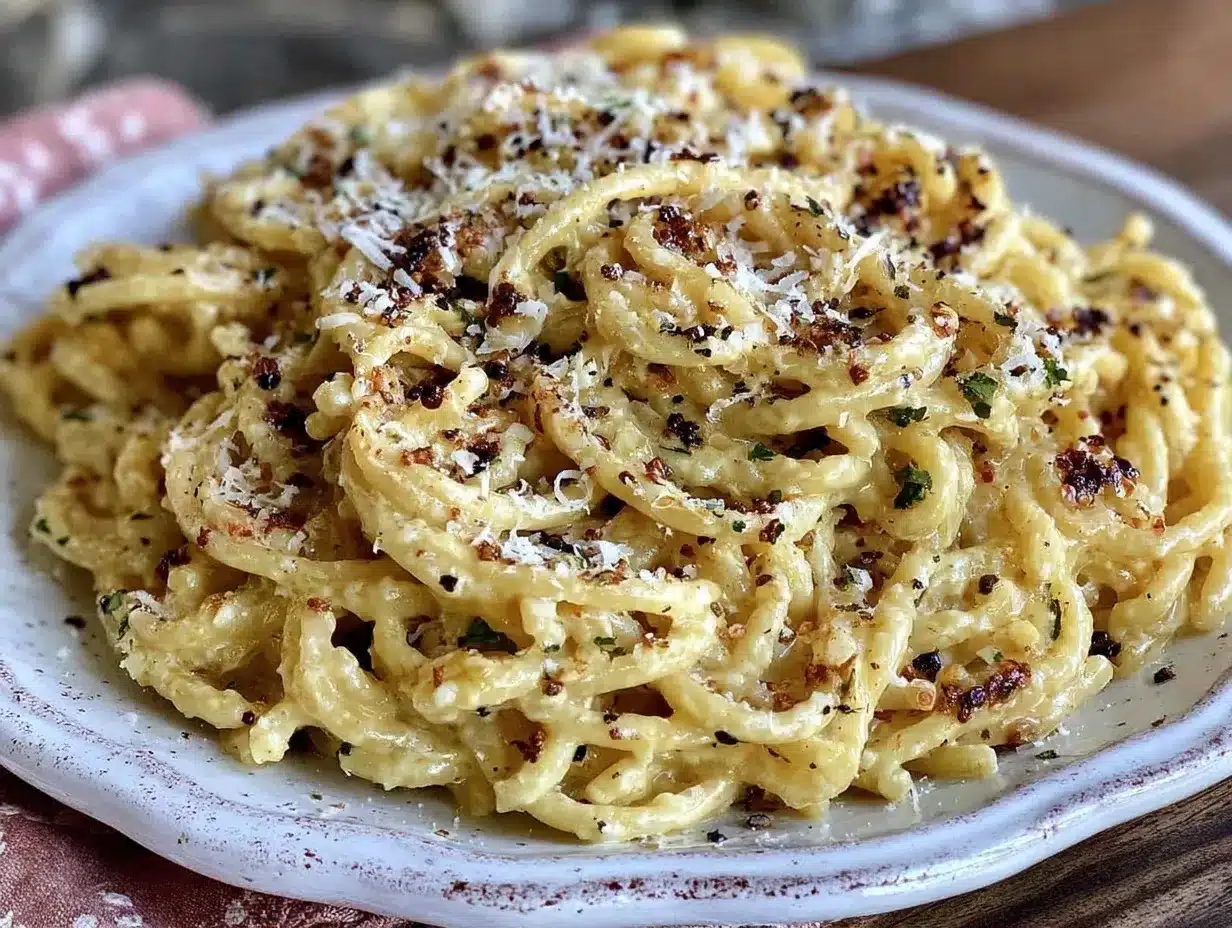
- Add the drained bucatini to the skillet, tossing it well in the sauce. The hollow center of bucatini traps the sauce, delivering flavor in every bite.
- If desired, drizzle in 1 tablespoon of olive oil to add extra silkiness and richness. Toss again.
- Adjust seasoning with salt if needed and serve immediately. The sauce thickens as it cools, so timing is key here.
Tip: If the sauce gets too thick or clumpy, add a splash of warm pasta water and stir vigorously. The sauce should be creamy and cling to the pasta, not watery or dry. The key is constant stirring and adding water gradually.
Cooking Tips & Techniques for Perfect Cacio e Pepe Every Time
Getting the sauce right can be tricky, but a few tricks make it easier. First, always grate pecorino romano finely; coarse cheese won’t melt as smoothly. Toasting freshly cracked black pepper before adding liquid unlocks those aromatics — don’t skip it.
Many people make the mistake of adding cheese directly to hot pasta without enough liquid, which leads to clumping. That starchy pasta water is your best friend for creating that creamy emulsion.
When mixing cheese into the pasta water and pepper, patience is key — stir gently but continuously to prevent lumps. If you rush or add cheese too fast, you’ll end up with a grainy texture.
For timing, start toasting pepper as pasta cooks, so everything comes together quickly once pasta is done. Multitasking here keeps the process smooth and stress-free.
Once plated, a final sprinkle of cracked black pepper on top adds a fresh punch. I’ve learned that serving immediately is crucial; the sauce thickens quickly and loses that silky charm if it sits too long.
Variations & Adaptations
While this recipe shines in its classic form, here are some ways I’ve switched it up:
- Vegetarian boost: Stir in sautéed mushrooms or spinach for extra depth and texture without overpowering the peppery sauce.
- Spicy kick: Add a pinch of red pepper flakes during the pepper-toasting step for some heat.
- Low-carb option: Substitute bucatini with zucchini noodles or shirataki noodles and adjust cooking time accordingly.
- Cheese swap: Mixing pecorino romano with freshly grated parmesan mellows the flavor if pecorino feels too sharp.
- Gluten-free: Use high-quality gluten-free pasta — just be mindful that the sauce consistency might differ slightly.
One variation I tried recently was adding a touch of lemon zest right at the end — the brightness cut through the richness nicely. It’s a little twist that feels fresh without stealing the spotlight.
Serving & Storage Suggestions
Serve this creamy cacio e pepe bucatini piping hot, ideally right off the stove to enjoy that luscious sauce at its best. Garnish with a sprinkle of extra cracked black pepper and, if you like, a few shavings of pecorino romano for presentation.
This dish pairs beautifully with a simple green salad or some roasted seasonal vegetables to balance the richness. For a drink, a crisp white wine like Pinot Grigio or a light sparkling water with lemon really complements the flavors.
Leftovers can be stored in an airtight container in the refrigerator for up to 2 days. Reheat gently in a skillet with a splash of water to loosen the sauce. Avoid microwaving as it tends to dry out the pasta and thicken the sauce too much.
Interestingly, the flavors deepen slightly after resting, so if you have time, letting the leftovers sit overnight can enhance the peppery, cheesy notes.
Nutritional Information & Benefits
This creamy homemade cacio e pepe bucatini delivers a comforting dose of protein and calcium from the pecorino romano cheese, along with complex carbs from the pasta. Fresh black pepper isn’t just for flavor — it can aid digestion and has antioxidant properties.
Per serving (based on 4 servings): approximately 480 calories, 18g protein, 65g carbohydrates, and 15g fat. This recipe is naturally vegetarian and can be adapted for gluten-free or low-carb diets.
While it’s not a low-calorie dish, the absence of heavy cream keeps it lighter than many creamy pastas. It’s a balanced treat that fits well within a realistic eating plan for those who enjoy traditional Italian flavors.
Conclusion
This creamy homemade cacio e pepe bucatini recipe is proof that simple ingredients, when treated right, create something truly satisfying. It’s quick enough for weeknights yet special enough to impress guests without stress. I love how the fresh black pepper adds its own character — a little spicy warmth that lifts every bite.
Feel free to adjust the pepper level or cheese ratio to suit your taste. Cooking is personal, and this dish welcomes your tweaks. I hope it brings as much quiet joy and comfort to your kitchen as it has to mine, especially on those hectic evenings.
Give it a go, and if you’re curious about other cozy, satisfying dinners, you might enjoy the hearty Irish lamb stew with Guinness or the rich flavors of another creamy cacio e pepe pasta variation I’ve shared. Cooking is all about finding those flavors that make you smile.
FAQs About Creamy Homemade Cacio e Pepe Bucatini
Can I use a different type of pasta for cacio e pepe?
Absolutely! While bucatini is great for trapping the sauce, spaghetti, tonnarelli, or even linguine work well. Just adjust cooking times accordingly.
Why does my cacio e pepe sauce sometimes get clumpy?
Clumping usually happens if the cheese is added too quickly or without enough starchy pasta water. Gradually add cheese and stir constantly to create a smooth sauce.
Is fresh black pepper necessary?
Yes, fresh cracked black pepper has essential oils and aroma that pre-ground pepper lacks. Toasting it releases even more flavor, making a big difference.
Can I make this recipe vegan?
You can substitute the cheese with nutritional yeast or vegan cheese alternatives, but the texture and flavor will differ from the classic version.
How do I store leftovers and reheat without drying out the sauce?
Store leftovers in an airtight container in the fridge for up to 2 days. Reheat gently in a pan with a splash of water to loosen the sauce, avoiding the microwave if possible.
Pin This Recipe!
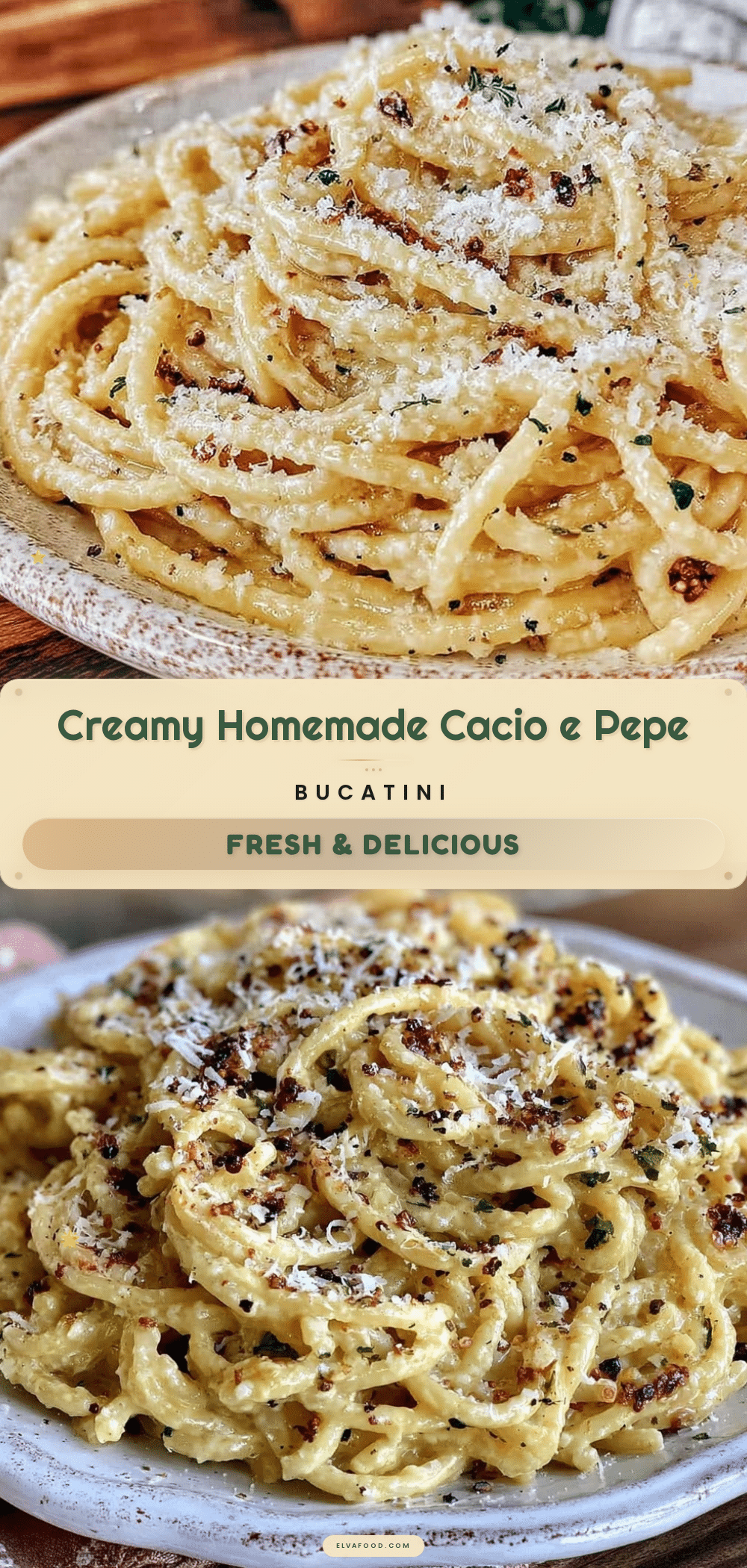
Creamy Homemade Cacio e Pepe Bucatini Recipe with Fresh Black Pepper Made Easy

A quick and easy creamy cacio e pepe bucatini pasta featuring fresh cracked black pepper and pecorino romano cheese, delivering a silky, peppery sauce without heavy cream.
- Prep Time: 5 minutes
- Cook Time: 15 minutes
- Total Time: 20 minutes
- Yield: 4 servings 1x
- Category: Main Course
- Cuisine: Italian
Ingredients
- 12 ounces bucatini pasta
- 1 ½ cups finely grated pecorino romano cheese (about 150 grams)
- 2 teaspoons freshly cracked black pepper
- Salt for pasta water (sea salt or kosher salt recommended)
- 1 tablespoon olive oil (optional)
Instructions
- Bring a large pot of salted water to a boil using about 4 quarts of water and 1 tablespoon of salt. The water should taste like the sea.
- Add the bucatini pasta and cook until just shy of al dente, usually 9-10 minutes; check package instructions. Reserve 1 ½ cups of pasta water before draining.
- Toast the black pepper in a large skillet over medium heat for 1-2 minutes until aromatic.
- Add about ½ cup of reserved pasta water to the skillet with the toasted pepper and bring to a simmer.
- Gradually add the grated pecorino romano to the skillet, stirring constantly with a wooden spoon or tongs to prevent clumping. Add more pasta water as needed until the sauce is silky and coats the back of a spoon.
- Add the drained bucatini to the skillet and toss well to coat the pasta with the sauce.
- If desired, drizzle in 1 tablespoon of olive oil and toss again for extra richness.
- Adjust seasoning with salt if needed and serve immediately.
Notes
Toast the black pepper to release its oils and deepen flavor. Gradually add cheese to the pasta water and pepper mixture to avoid clumping. Use reserved starchy pasta water to create a creamy sauce. Serve immediately as the sauce thickens upon cooling. Reheat leftovers gently with a splash of water to loosen sauce.
Nutrition
- Serving Size: 1 serving (about 1/4
- Calories: 480
- Fat: 15
- Carbohydrates: 65
- Protein: 18
Keywords: cacio e pepe, bucatini, creamy pasta, pecorino romano, black pepper, quick pasta recipe, Italian pasta, easy dinner