“You’ve got to try this—it’s like a party in your mouth with every bite,” my friend insisted one chilly evening over dinner. Honestly, I was skeptical. Ethiopian food had always seemed a bit mysterious to me, the kind of cuisine that felt like it needed a special occasion or a fancy restaurant visit. But that night, with a pot of Doro Wat simmering away, that all changed. The rich aroma of berbere spices, slow-cooked chicken, and tangy injera filled my small kitchen, wrapping me in warmth I didn’t know I needed.
I remember watching the deep red stew bubble gently, the scent pulling me back to a quiet night of comfort after a hectic day. The layers of flavor unfolded slowly, surprising me with each spoonful. It wasn’t just food; it was a story told through spices, tradition, and a little bit of patience. That first night, I made this Flavorful Ethiopian Doro Wat Spiced Chicken Stew on Injera with no grand plan—just a craving for something different. Now, it’s become one of those recipes I return to when I want to feel grounded, nourished, and a little adventurous without leaving my kitchen.
What stuck with me most is how this isn’t just a stew. It’s a celebration of bold flavors and community, best enjoyed by tearing off pieces of injera to scoop up that spicy, tender chicken. If you’ve ever wondered how to bring a taste of Ethiopia home, this recipe might just be your new favorite.
Why You’ll Love This Recipe
After making this Doro Wat spiced chicken stew several times, I can honestly say it’s a keeper for more than one reason. It balances tradition with accessibility, so you don’t need to hunt down rare ingredients or spend hours slaving over the stove. Here’s why it stands out:
- Quick & Easy: While traditional Doro Wat can be a labor of love, this version simplifies the process to come together in about 1 hour, making it doable for busy evenings.
- Simple Ingredients: It calls for everyday staples like chicken drumsticks, onions, garlic, and a few key spices like berbere powder, which you can find online or at international markets.
- Perfect for Cozy Dinners: There’s something about a hearty stew on a chilly night that just hits the spot—especially when paired with soft, spongy injera.
- Crowd-Pleaser: Friends and family always ask for seconds—and the injera makes it interactive and fun to eat.
- Unbelievably Delicious: The slow-cooked onion base and the complex spice blend create a flavorful depth that’s comforting without being overwhelming.
What makes this recipe different? Well, I’ve played with the spice balance to keep it authentic yet approachable, and I use a technique to caramelize the onions slowly, which gives the stew a natural sweetness that balances the heat perfectly. Plus, I serve it with fresh injera, which adds that signature tang and texture that you just can’t replace (yet, if you’re curious, you might like my Irish lamb stew recipe for another soulful, slow-cooked meal).
Honestly, this dish isn’t just about feeding your hunger—it’s about savoring a moment of warmth and tradition in every bite.
What Ingredients You Will Need
This recipe uses simple, wholesome ingredients to deliver bold flavor and satisfying texture without a fuss. Most are pantry staples or easy to find at your local grocery or international market. Here’s what you’ll need to make this Doro Wat spiced chicken stew with injera:
- Chicken: 2 pounds (900 g) chicken drumsticks or thighs, skin removed for best flavor absorption
- Onions: 3 large yellow onions, thinly sliced (the key base for the stew’s rich flavor)
- Garlic: 4 cloves, minced (adds pungency and depth)
- Ginger: 1 tablespoon, grated (fresh is best for brightness)
- Berbere spice blend: 3 tablespoons (this Ethiopian spice mix is the star—spicy, smoky, and aromatic; brands like Berbere by The Spice House work well)
- Tomato paste: 2 tablespoons (adds richness and color)
- Butter or niter kibbeh: 3 tablespoons (niter kibbeh is Ethiopian spiced clarified butter; if unavailable, use high-quality unsalted butter)
- Chicken broth or water: 1 cup (240 ml) to keep the stew moist
- Hard-boiled eggs: 4, peeled (traditional finishing touch for Doro Wat)
- Lemon juice: 1 tablespoon (balances the richness)
- Salt and pepper: To taste
- Injera: 1 large piece per person (traditional Ethiopian flatbread made from teff flour; store-bought or homemade if you’re feeling ambitious)
Tip: If you can’t find berbere, mix smoked paprika, cayenne, ground coriander, fenugreek, and a touch of cinnamon for a decent substitute. For a gluten-free option, injera made from 100% teff flour is naturally gluten-free, which is a nice bonus.
Equipment Needed
- Large heavy-bottomed pot or Dutch oven: For slow-cooking the stew evenly without burning the onions.
- Wooden spoon: Essential for stirring the thick onion mixture as it cooks.
- Sharp knife and cutting board: For prepping onions, garlic, and ginger.
- Measuring spoons and cups: For precise spice and liquid quantities.
- Colander: Handy for rinsing the chicken pieces.
If you don’t have a Dutch oven, a heavy pot with a tight-fitting lid works fine—just watch the heat carefully. I’ve tried this recipe using both cast iron and stainless steel pots; cast iron holds heat beautifully, which helps the onions caramelize nicely without scorching. For those on a budget, a sturdy non-stick pot will do, but keep stirring often.
Preparation Method
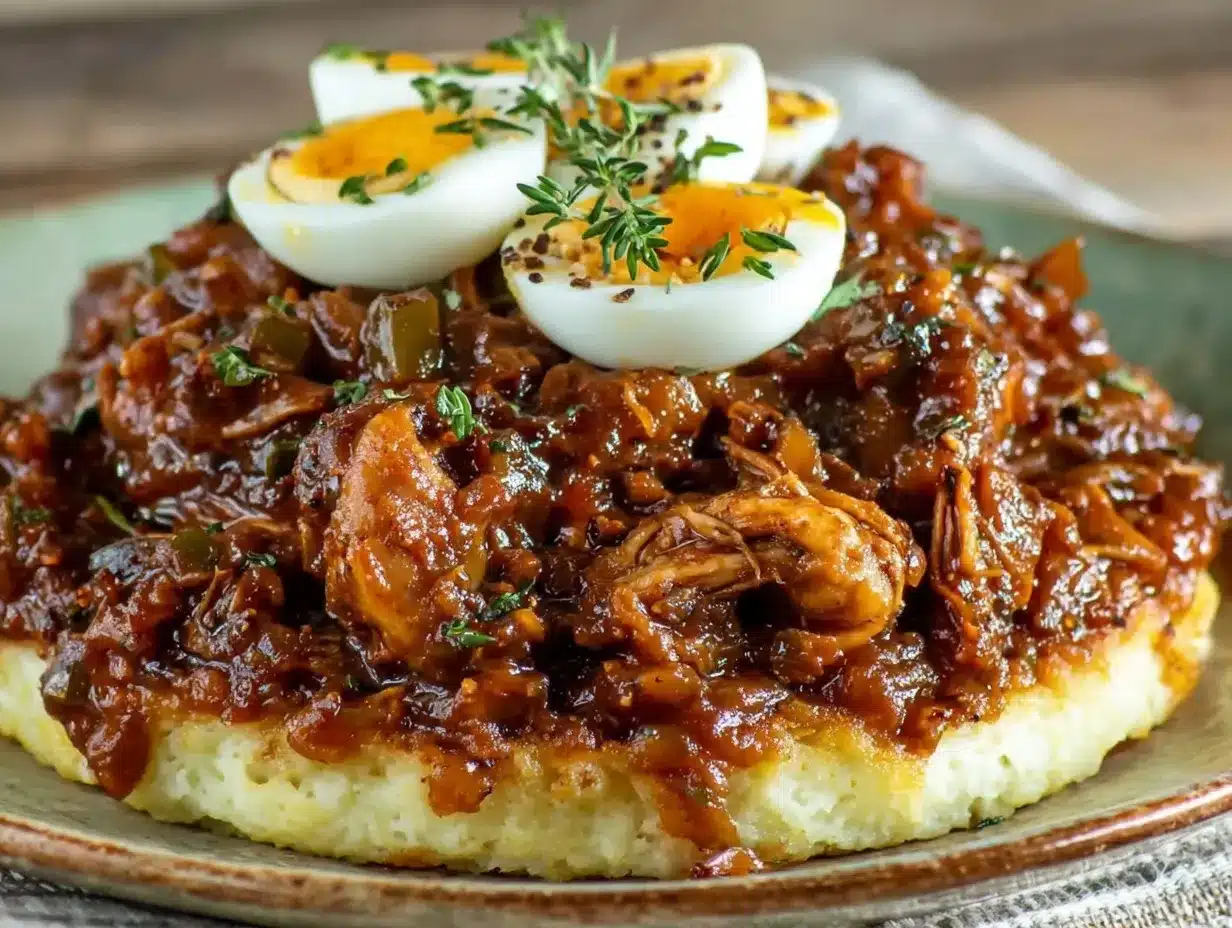
- Prep the chicken: Rinse 2 pounds (900 g) chicken drumsticks and remove skin. Pat dry and set aside. This helps the stew absorb flavors better.
- Cook the onions: In your large pot, melt 3 tablespoons butter or niter kibbeh over medium heat. Add the thinly sliced 3 large yellow onions. Stir frequently for about 25-30 minutes until deep golden and caramelized. Patience here is key—it’s the stew’s flavor foundation.
- Add garlic and ginger: Stir in 4 minced garlic cloves and 1 tablespoon grated ginger. Cook for 2 minutes until fragrant.
- Spice it up: Sprinkle in 3 tablespoons berbere spice blend and stir well to coat the onions. Cook for 3-4 minutes, allowing the spices to toast slightly and release aroma.
- Incorporate tomato paste: Mix in 2 tablespoons tomato paste. Cook for another 5 minutes, stirring occasionally.
- Add chicken: Nestle the chicken pieces into the pot, coating them with the onion-spice mixture.
- Simmer: Pour in 1 cup (240 ml) chicken broth or water, add salt to taste, then cover and reduce heat to low. Let it simmer gently for 35-40 minutes, turning the chicken halfway through. The sauce should thicken and the chicken become tender.
- Hard-boiled eggs: About 10 minutes before the stew finishes, add 4 peeled hard-boiled eggs into the pot to soak up flavors.
- Finish with lemon juice: Stir in 1 tablespoon fresh lemon juice just before serving to brighten the stew.
- Serve: Place the stew over a large piece of injera. Tear off pieces of injera to scoop up chicken, eggs, and sauce. Enjoy!
Note: If the stew is too thick, add a splash of water or broth while simmering. If it’s too thin, remove the lid and increase heat slightly to reduce. The sauce should cling nicely to the chicken.
Cooking Tips & Techniques
Caramelizing the onions slowly is the secret weapon here. Rushing this step means missing out on the natural sweetness that balances the heat of the berbere. Stir often to prevent burning and adjust the heat as needed—too hot, and the onions will scorch; too low, and it takes forever.
Using chicken with skin removed helps the spices penetrate better, but you can leave it on if you prefer more fat and richness. Just be sure to skim any excess fat that rises to the surface.
Berbere spice is a mix of chili peppers, garlic, ginger, coriander, and more. If your version is too spicy, use less or balance with a touch of honey or yogurt on the side.
Don’t skip the lemon juice at the end. It adds a subtle brightness that cuts through the stew’s richness. I’ve learned that little finishing touches like this make a big difference.
Multitasking tip: While the onions are caramelizing, you can boil the eggs and prep the chicken to save time. Just keep an eye on those onions—they demand attention!
Variations & Adaptations
- Vegetarian version: Swap chicken for hearty mushrooms or chickpeas. Use vegetable broth and skip the eggs for a satisfying plant-based stew.
- Spice level adjustment: Mild eaters can reduce berbere or mix half berbere, half smoked paprika. For heat lovers, add fresh chopped chilies.
- Different proteins: Try this with beef or lamb in place of chicken for a richer flavor. Lamb pairs especially well, much like in my Irish lamb stew recipe.
Personally, I once added a splash of red wine during the simmering stage, giving it a deeper complexity that reminded me of cozy European stews like Dublin coddle. It was an unexpected but delightful twist!
Serving & Storage Suggestions
Serve Doro Wat hot, ladled generously over fresh injera. Tearing off pieces of the spongy injera to scoop the stew is the authentic way to enjoy this dish—no forks needed! It pairs wonderfully with simple sides like steamed greens or lentils to balance the richness.
Leftovers keep well in an airtight container in the fridge for up to 3 days. The flavors actually deepen overnight, so reheating gently on the stove or in a microwave is perfect. Avoid reheating hard-boiled eggs too long or they may get rubbery.
For longer storage, freeze the stew (without injera) for up to 2 months. Thaw overnight in the fridge and warm gently. Injera is best enjoyed fresh but can be wrapped tightly and frozen for a couple of weeks.
Nutritional Information & Benefits
This stew is rich in protein from the chicken and eggs, providing essential amino acids. The berbere spice mix contains antioxidant-rich ingredients like chili peppers and garlic, which may support immune function. Onions and ginger add anti-inflammatory properties as well.
Traditional injera is made from teff flour, a gluten-free grain high in iron and fiber, which complements the stew nutritionally. This meal is naturally gluten-free and can be adapted for low-carb diets by serving over sautéed greens instead of injera.
Though hearty, this dish balances richness with fresh lemon juice and spices, making it a satisfying yet wholesome comfort food option.
Conclusion
This Flavorful Ethiopian Doro Wat Spiced Chicken Stew on Injera recipe is one of those dishes that invites you to slow down and savor something truly unique. It’s not just about the ingredients or the spices—it’s about the ritual of cooking and sharing. I love how it brings a bit of Ethiopian tradition right to my table, with a warmth that feels both exotic and familiar.
Feel free to tweak the spice level, swap proteins, or experiment with sides to make it your own. Whether you’re cooking for a crowd or just craving a comforting meal, this stew delivers on flavor and soul. If you’ve enjoyed dishes like the creamy cacio e pepe pasta, you’ll find this stew offers a whole new world of comforting, delicious possibilities.
Give it a try and let me know how it turns out! Sharing food stories is what makes cooking so special.
FAQs about Ethiopian Doro Wat
What is berbere spice, and can I make it at home?
Berbere is a blend of chili peppers, garlic, ginger, coriander, fenugreek, and other spices. You can buy it pre-made or mix your own using smoked paprika, cayenne, garlic powder, and a few other spices for a close version.
Can I use other cuts of chicken?
Yes! Thighs or drumsticks work best for tenderness, but you can use breasts if you prefer. Just adjust cooking time to avoid drying out.
What is injera, and can I substitute it?
Injera is a tangy Ethiopian flatbread made from fermented teff flour. If you can’t find it, try sourdough flatbread or even pita as a last resort, though the flavor won’t be quite the same.
How spicy is Doro Wat?
The heat depends on the amount of berbere used. It’s traditionally spicy but can be toned down for sensitive palates by using less spice or adding a cooling side like yogurt.
Can I prepare this stew ahead of time?
Absolutely! Doro Wat flavors deepen after resting overnight, making it perfect for make-ahead meals. Just reheat gently before serving.
Pin This Recipe!
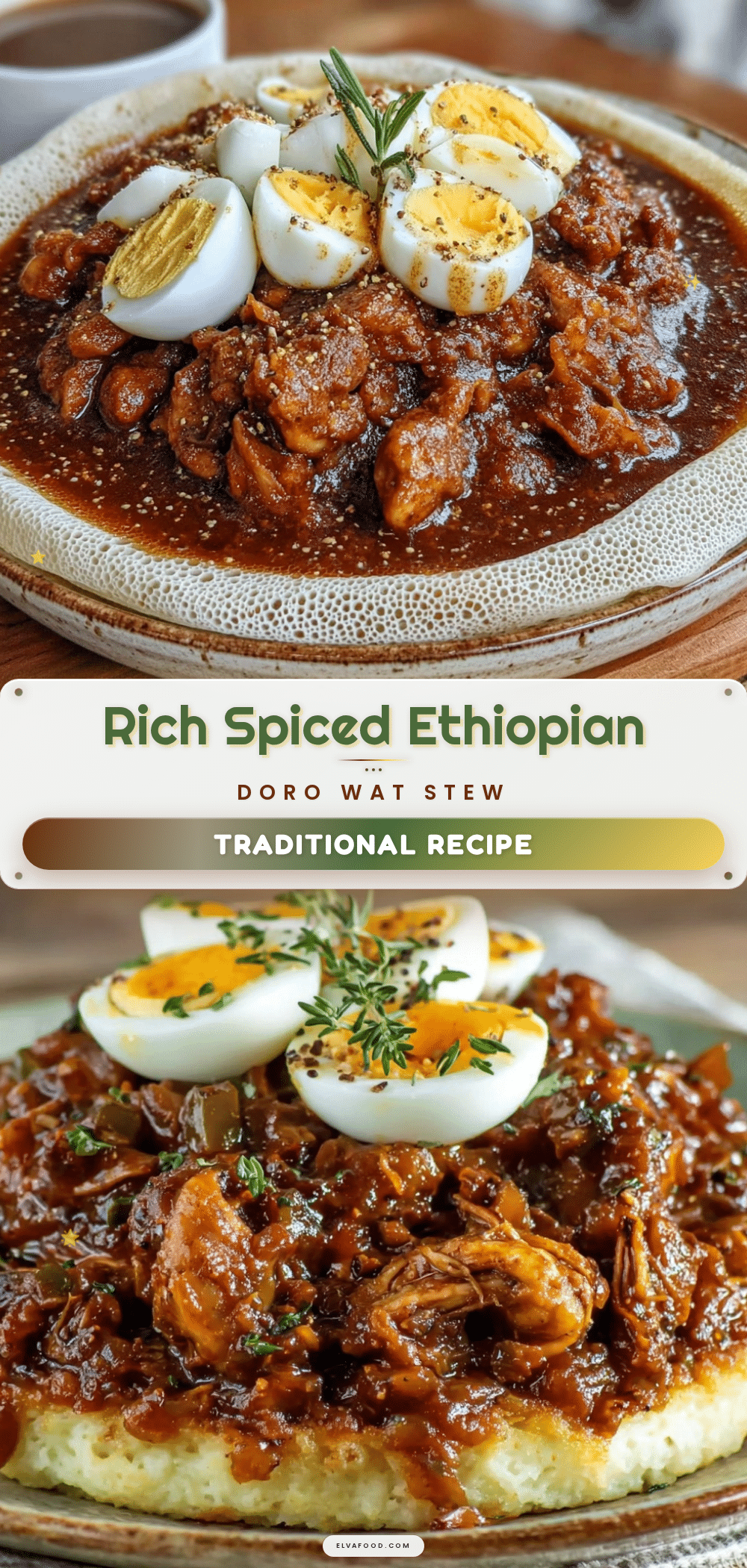
Flavorful Ethiopian Doro Wat Recipe Easy Spiced Chicken Stew on Injera
A rich and aromatic Ethiopian chicken stew simmered with berbere spices and caramelized onions, served traditionally on injera flatbread. This recipe balances bold flavors with accessibility for a cozy, comforting meal.
- Prep Time: 15 minutes
- Cook Time: 45 minutes
- Total Time: 1 hour
- Yield: 4 servings 1x
- Category: Main Course
- Cuisine: Ethiopian
Ingredients
- 2 pounds (900 g) chicken drumsticks or thighs, skin removed
- 3 large yellow onions, thinly sliced
- 4 cloves garlic, minced
- 1 tablespoon fresh grated ginger
- 3 tablespoons berbere spice blend
- 2 tablespoons tomato paste
- 3 tablespoons butter or niter kibbeh (Ethiopian spiced clarified butter)
- 1 cup (240 ml) chicken broth or water
- 4 hard-boiled eggs, peeled
- 1 tablespoon lemon juice
- Salt and pepper to taste
- 1 large piece of injera per person
Instructions
- Rinse chicken drumsticks and remove skin. Pat dry and set aside.
- In a large heavy-bottomed pot, melt butter or niter kibbeh over medium heat. Add thinly sliced onions and stir frequently for 25-30 minutes until deep golden and caramelized.
- Add minced garlic and grated ginger; cook for 2 minutes until fragrant.
- Sprinkle in berbere spice blend and stir well to coat onions. Cook for 3-4 minutes to toast spices.
- Mix in tomato paste and cook for another 5 minutes, stirring occasionally.
- Nestle chicken pieces into the pot, coating them with the onion-spice mixture.
- Pour in chicken broth or water, add salt to taste, cover, and reduce heat to low. Simmer gently for 35-40 minutes, turning chicken halfway through.
- About 10 minutes before the stew finishes, add peeled hard-boiled eggs to soak up flavors.
- Stir in fresh lemon juice just before serving to brighten the stew.
- Serve hot over injera, tearing pieces of injera to scoop up chicken, eggs, and sauce.
Notes
Caramelize onions slowly to develop natural sweetness and balance the heat of berbere. Adjust spice level by reducing berbere or mixing with smoked paprika. Use skinless chicken for better flavor absorption. If stew is too thick, add water or broth; if too thin, simmer uncovered to reduce. Serve with injera for authentic experience. Leftovers keep well refrigerated for 3 days or frozen for 2 months (without injera).
Nutrition
- Serving Size: 1 serving with injer
- Calories: 450
- Sugar: 7
- Sodium: 600
- Fat: 22
- Saturated Fat: 8
- Carbohydrates: 18
- Fiber: 3
- Protein: 38
Keywords: Ethiopian, Doro Wat, chicken stew, berbere, injera, spiced chicken, slow-cooked, traditional, comfort food