“You really think throwing everything in one pot will work?” my friend asked skeptically as I began tossing ingredients around the kitchen. Honestly, I wasn’t sure either — but after a long day juggling errands and the usual chaos, I needed something quick, light, and fuss-free. The lemony ricotta, bright green asparagus, and sweet peas all seemed like a gamble to combine in a single pot with pasta. But as the citrus aroma filled the air and the sauce thickened just right, I started to see why this fresh one-pot spring pasta with lemon ricotta, asparagus & peas had become my go-to.
It’s the kind of dish that sneaks up on you. The first time I made it, I was half-focused on emails and half-hoping it wouldn’t be a disaster. But that creamy, tangy ricotta sauce and those tender-crisp veggies made me pause and actually savor dinner for once. No heavy cream, no complicated steps—just fresh, seasonal ingredients and one pot to clean. It stuck with me because it’s a reminder that fuss-free can be flavorful, and spring produce deserves to shine on its own.
Some weeks, this pasta shows up on my table multiple times, especially when asparagus is at its peak and peas are sweet and fresh. It’s like a little celebration of the season in a bowl, one that’s easy enough for a solo night but pretty enough to share with friends. I suspect you’ll find that same quiet satisfaction in every bite.
Why You’ll Love This Recipe
This fresh one-pot spring pasta with lemon ricotta, asparagus & peas is honestly one of those recipes that feels like a win every time. Let me break down why it’s become such a staple in my kitchen:
- Quick & Easy: Ready in under 30 minutes, it fits perfectly into busy weeknights or when you’re craving something fresh without the hassle.
- Simple Ingredients: No need for fancy or hard-to-find items—most are pantry staples or seasonal veggies you can grab from the market.
- Perfect for Spring: It showcases the best of spring’s bounty, especially asparagus and peas, bringing a light, vibrant feel to your plate.
- Crowd-Pleaser: I’ve had this dish requested again and again at casual dinners; it’s creamy yet fresh, satisfying all ages.
- Unbelievably Delicious: The lemon ricotta sauce is silky with just the right tang, balancing perfectly with the sweetness of peas and snap of asparagus.
This recipe isn’t just another pasta tossed with veggies. The trick lies in the one-pot method that lets the pasta soak up all those bright flavors as it cooks, while the ricotta melts into a luscious sauce. No extra steps or heavy cream needed. And the subtle lemon zest? It’s my secret weapon for that fresh spring vibe. I’ve even swapped in whole wheat pasta for a heartier feel without losing any charm.
It’s a dish that feels both comforting and light—like a breath of fresh air after a long day. You might find yourself craving it even when asparagus isn’t in season, and honestly, that’s just fine with me.
What Ingredients You Will Need
This recipe uses simple, wholesome ingredients to deliver bold flavor and satisfying texture without the fuss. Most are pantry staples or seasonal finds, making it easy to whip up anytime.
- Pasta: 12 ounces (340 g) of linguine or spaghetti works best—choose a brand like Barilla for consistent texture.
- Asparagus: 1 bunch (about 1 pound or 450 g), trimmed and cut into 2-inch pieces (look for firm, bright green stalks).
- Peas: 1 cup (150 g) fresh or frozen peas (fresh if you can find them—it really adds to the spring feel).
- Lemon: Zest and juice of 1 large lemon (organic if possible, since you’ll be using the zest).
- Ricotta Cheese: 1 cup (240 g) whole-milk ricotta, for that creamy tang (I prefer Galbani for its smooth texture).
- Garlic: 3 cloves, minced (fresh garlic is a must here for punchy flavor).
- Olive Oil: 2 tablespoons extra virgin olive oil (adds richness and helps the veggies sauté nicely).
- Vegetable Broth: 4 cups (950 ml) low-sodium vegetable broth or water (to cook the pasta and infuse flavor).
- Parmesan Cheese: ½ cup (50 g) freshly grated for topping (optional but highly recommended).
- Salt & Pepper: To taste (season well to bring out the bright flavors).
- Red Pepper Flakes: A pinch for a subtle heat kick (optional but adds a nice contrast).
If you want a gluten-free option, brown rice or chickpea pasta works well here. For a dairy-free version, swap ricotta with a plant-based cream cheese or cashew cream. When summer rolls around, I sometimes swap peas with fresh fava beans or even fresh green beans, which adds a nice twist.
Equipment Needed
- Large Heavy-Bottomed Pot or Deep Skillet: A 12-inch sauté pan or a 5-quart pot works well for cooking pasta and veggies all together.
- Sharp Knife: For trimming asparagus and mincing garlic.
- Microplane or Zester: To zest that lemon finely (a good zester makes a huge difference).
- Wooden Spoon or Silicone Spatula: For stirring gently without scratching your pot.
- Measuring Cups and Spoons: For accurate liquid and seasoning measurements.
If you don’t have a heavy-bottomed pan, a regular large pot will do but watch the heat closely to avoid sticking. I’ve also used a non-stick skillet before; just be sure to stir frequently so the pasta doesn’t clump. For zesting, I once tried using a grater, but it was messier and less precise, so I recommend investing in a small zester if you don’t have one.
Preparation Method
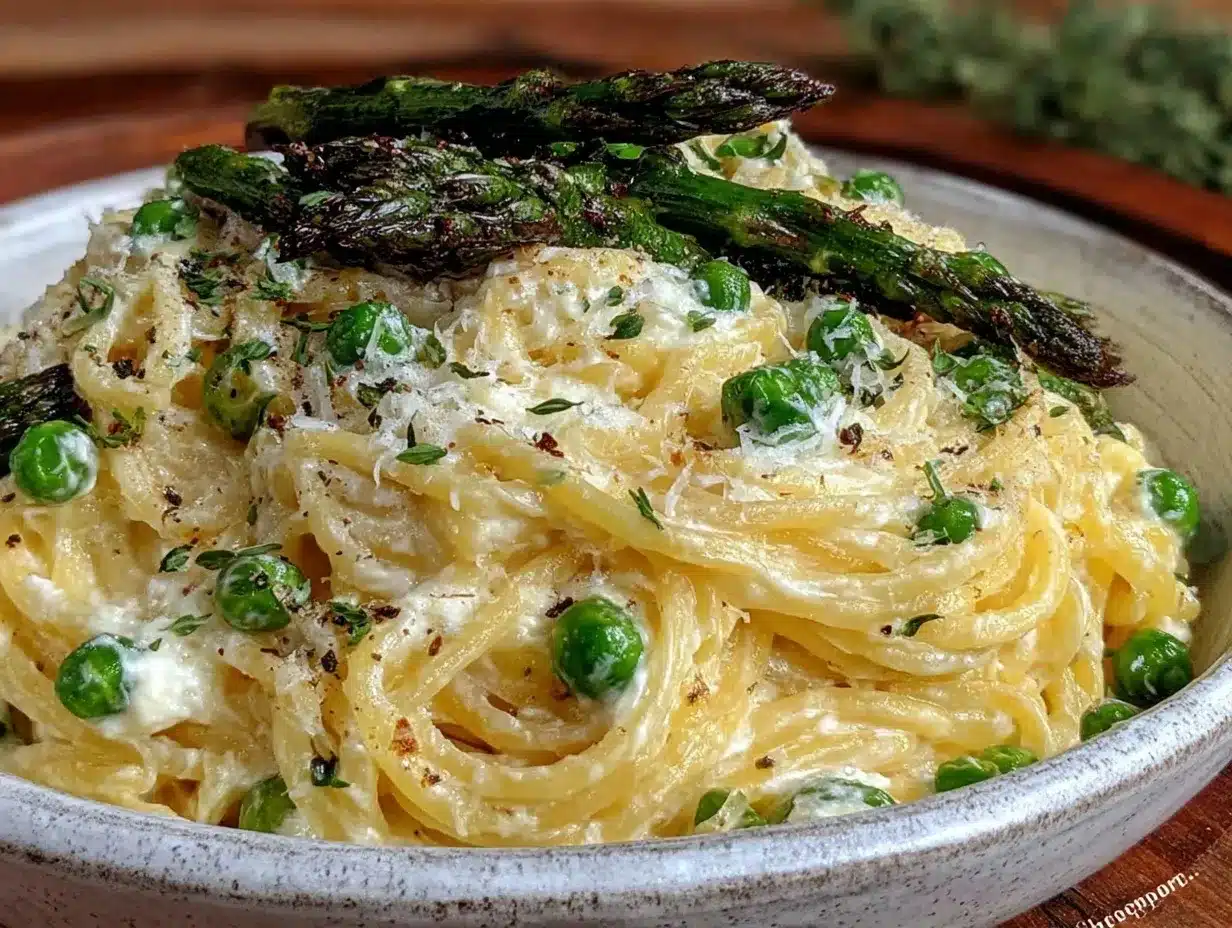
- Prep the Veggies and Lemon (5 minutes): Start by trimming the woody ends off the asparagus and cutting into 2-inch pieces. Mince the garlic finely and zest the lemon, then juice it separately. Having everything ready makes the cooking process smooth.
- Heat Olive Oil and Sauté Garlic (2-3 minutes): In your large pot or skillet, warm 2 tablespoons of olive oil over medium heat. Add the minced garlic and sauté until fragrant and just starting to turn golden—don’t let it burn (about 2 minutes). This step unlocks the garlic’s sweet aroma, which is crucial for the sauce base.
- Add Liquid and Pasta (1 minute): Pour in the vegetable broth and bring it to a gentle boil. Add the dry pasta, making sure it’s submerged as much as possible. You’ll be cooking the pasta right in the broth, so no need to pre-boil. This method lets the pasta absorb flavor directly.
- Cook and Stir Pasta (8-10 minutes): Reduce heat to medium-low and cook uncovered, stirring often to prevent sticking. About halfway through, stir in the asparagus pieces and peas. You want the asparagus to remain tender-crisp and the peas to stay bright and sweet. Keep an eye on the liquid level—add a splash more broth or water if it looks too dry before pasta is tender.
- Check Pasta Doneness (Taste Test): Pasta should be al dente—tender but still with a slight bite. If it’s not quite there, keep cooking and stirring gently. The sauce will start to thicken as the starches release.
- Turn Off Heat and Add Lemon Ricotta (2 minutes): Remove from heat and stir in the ricotta, lemon zest, and lemon juice. The residual heat will gently warm the ricotta without curdling it, creating a creamy, tangy sauce. Season with salt, pepper, and optional red pepper flakes to your taste.
- Plate and Finish with Parmesan (Optional): Serve immediately, topped with freshly grated Parmesan if you like. The cheese adds a salty, nutty finish that complements the lemon beautifully.
Pro tip: If the sauce feels too thick, add a splash of warm broth or pasta water to loosen it. And if you want a silkier texture, give the ricotta a quick whisk before folding it in. I’ve found that stirring gently but thoroughly makes all the difference in coating every strand perfectly.
Cooking Tips & Techniques
Getting this fresh one-pot spring pasta just right is all about timing and attention. Here are some things I’ve learned the hard way (and saved many dinners in the process):
- Don’t Overcook the Veggies: Asparagus and peas should be tender but still have a slight snap. Adding them halfway through the pasta cooking time keeps them vibrant and fresh.
- Stir Frequently: Pasta tends to stick when cooked in one pot with liquid, so frequent stirring prevents clumps and ensures even cooking.
- Use Room Temperature Ricotta: Cold ricotta can cause the sauce to seize or become lumpy; letting it sit out for a few minutes before adding helps it melt smoothly.
- Watch Your Heat: Boiling too hard evaporates liquid too fast, risking dry pasta; a gentle simmer is perfect for cooking evenly.
- Adjust Liquid as Needed: Depending on your pasta brand and pot size, you might need to add a little extra broth or water—better to add gradually than flood the pan at once.
- Lemon Zest vs. Juice Balance: The zest packs aromatic oils, so don’t skimp on it. The juice adds brightness but too much can overpower; start small and add more to taste.
I’ve made this dish with several different pasta shapes (linguine, spaghetti, and even penne) and the key is to choose one that cooks evenly in broth and can hold onto the sauce well. If you’re curious about creamy pasta sauces, you might enjoy the creamy cacio e pepe pasta recipe I shared before—it’s a bit more indulgent but shares the same love for simple, good ingredients.
Variations & Adaptations
This fresh one-pot spring pasta is a flexible canvas, perfect for tweaks depending on what you have or prefer:
- Protein Boost: Add cooked chicken, shrimp, or crispy pancetta for extra heartiness. I often toss in shredded rotisserie chicken for a quick weeknight meal.
- Vegan Version: Swap ricotta with a cashew cream or store-bought vegan ricotta alternative. Use nutritional yeast instead of Parmesan for that cheesy flavor.
- Seasonal Swaps: In early summer, replace peas with fresh fava beans or baby zucchini slices. In cooler months, try sautéed mushrooms or kale for a more earthy profile.
- Different Citrus: If you’re out of lemon, lime zest and juice work surprisingly well for a twist.
- Gluten-Free: Use chickpea or brown rice pasta to keep it gluten-free without losing texture.
One personal favorite variation is to add fresh mint or basil leaves at the end, which adds a refreshing herbal note that pairs beautifully with the lemon ricotta. If you’re interested in other fresh spring dishes, the fresh spring vegetable frittata is another recipe that celebrates seasonal greens and would make a lovely brunch companion.
Serving & Storage Suggestions
This pasta is best served warm, right off the stove, to enjoy the creamy texture and bright flavors at their peak. I like to garnish with a little extra lemon zest and a sprinkle of cracked black pepper for a simple but elegant presentation.
Pair it with a crisp white wine like Sauvignon Blanc or a light sparkling water with lemon for a refreshing complement. A light green salad or garlic-rubbed toasted bread also rounds out the meal nicely.
For leftovers, store in an airtight container in the refrigerator for up to 2 days. The sauce will thicken as it cools, so reheat gently over low heat, adding a splash of broth or water to loosen it back to creamy perfection. Flavors deepen overnight, so sometimes I make it a day ahead to let the lemon and ricotta meld fully.
Nutritional Information & Benefits
This fresh one-pot spring pasta with lemon ricotta, asparagus & peas offers a balanced mix of carbs, protein, and healthy fats. Here’s a rough estimate per serving (makes about 4 servings):
| Nutrient | Amount |
|---|---|
| Calories | 380-420 kcal |
| Protein | 15-18 g |
| Carbohydrates | 50-55 g |
| Fat | 10-12 g |
| Fiber | 5-7 g |
Asparagus and peas are rich in vitamins A, C, and K, plus folate and antioxidants, making them excellent for immune and bone health. Ricotta provides a good source of calcium and protein, while lemon adds vitamin C and a boost to digestion.
This dish is naturally vegetarian and can be adapted for gluten-free and vegan diets with simple ingredient swaps. Just be mindful of potential allergens like dairy and wheat in the pasta, but alternatives are easy to find these days.
Conclusion
This fresh one-pot spring pasta with lemon ricotta, asparagus & peas is a recipe that’s stayed close to my heart because it proves that simple ingredients, cooked thoughtfully, can create something truly satisfying. It’s easy to customize, quick to make, and perfect for those days when you want a fresh but comforting meal without a mountain of dishes.
Whether you’re new to one-pot cooking or looking for a vibrant spring lunch or dinner, this pasta has a way of making you feel like you’re treating yourself—even on the busiest nights. I hope you’ll give it a try and make it your own, maybe adding a twist or two based on what you love.
And if you find yourself craving more fresh pasta inspiration, you might enjoy the creamy cacio e pepe pasta or even the easy lo mein noodles with chicken and veggies for a change of pace.
Happy cooking, and may your kitchen always smell like fresh lemons and garlic!
FAQs
Can I make this pasta ahead of time?
Yes, you can prepare it a day ahead and store it in the refrigerator. Reheat gently with a splash of broth or water to loosen the sauce before serving.
What’s the best way to keep the asparagus crisp?
Add asparagus halfway through the pasta cooking time so it cooks just until tender but still has a slight bite.
Can I use frozen peas for this recipe?
Absolutely! Frozen peas work well and add sweetness. Just add them at the same time as the asparagus during cooking.
Is this recipe suitable for vegans?
You can easily make it vegan by substituting ricotta with a plant-based cream or cashew cream and using vegan Parmesan alternatives.
Can I use other pasta shapes?
Yes, linguine or spaghetti are ideal, but penne or farfalle can work too. Just adjust cooking time accordingly.
Pin This Recipe!
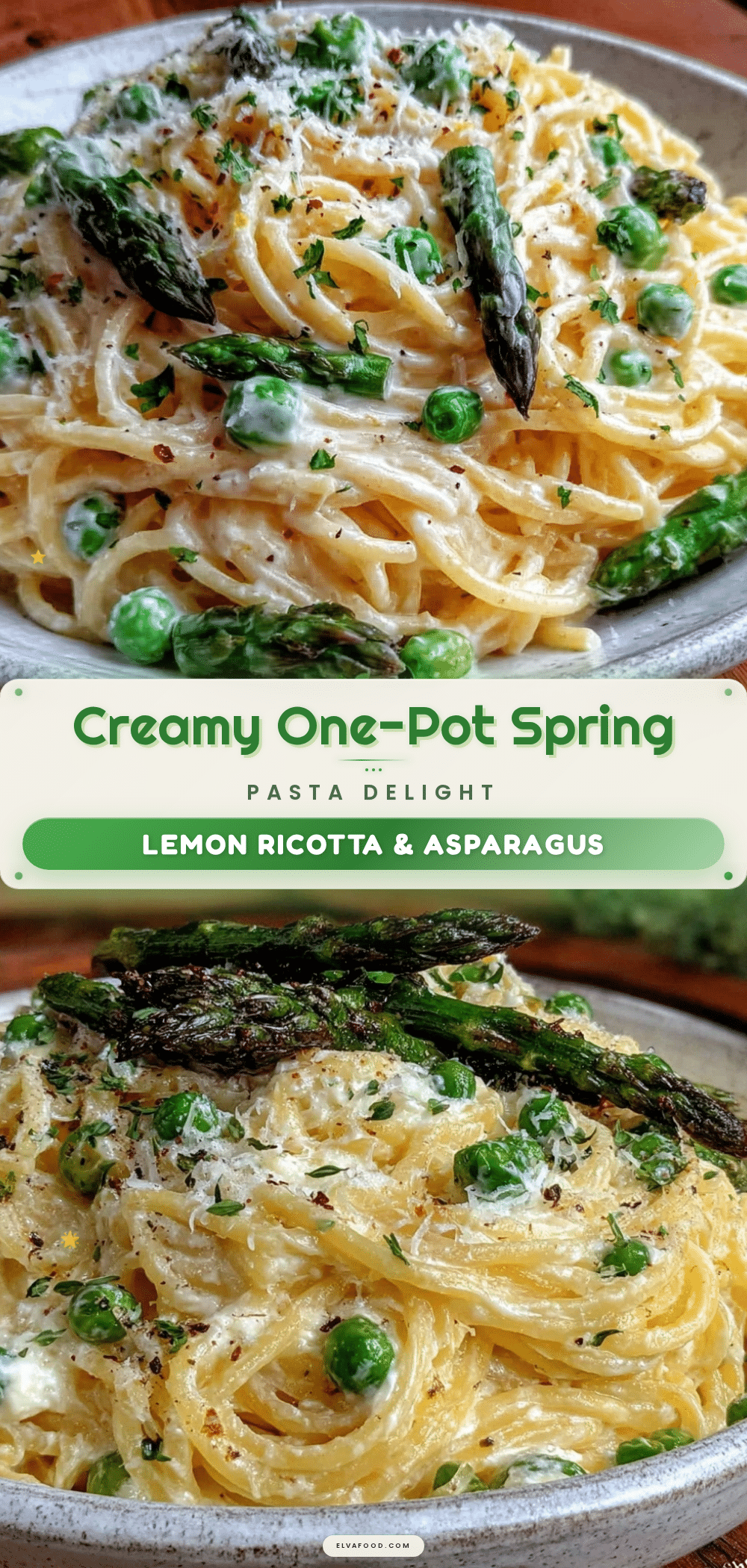
Fresh One-Pot Spring Pasta Recipe with Lemon Ricotta and Asparagus
A quick, light, and fuss-free one-pot pasta featuring lemony ricotta, bright asparagus, and sweet peas, perfect for celebrating spring produce with minimal cleanup.
- Prep Time: 7 minutes
- Cook Time: 15 minutes
- Total Time: 22 minutes
- Yield: 4 servings 1x
- Category: Main Course
- Cuisine: Italian
Ingredients
- 12 ounces linguine or spaghetti
- 1 bunch asparagus (about 1 pound), trimmed and cut into 2-inch pieces
- 1 cup fresh or frozen peas
- Zest and juice of 1 large lemon
- 1 cup whole-milk ricotta cheese
- 3 cloves garlic, minced
- 2 tablespoons extra virgin olive oil
- 4 cups low-sodium vegetable broth or water
- ½ cup freshly grated Parmesan cheese (optional)
- Salt and pepper to taste
- Pinch of red pepper flakes (optional)
Instructions
- Prep the veggies and lemon: trim asparagus ends and cut into 2-inch pieces; mince garlic; zest and juice the lemon.
- Heat olive oil in a large heavy-bottomed pot or deep skillet over medium heat. Add minced garlic and sauté until fragrant and golden, about 2 minutes.
- Pour in vegetable broth and bring to a gentle boil. Add dry pasta, ensuring it is submerged.
- Reduce heat to medium-low and cook uncovered, stirring often to prevent sticking. Halfway through cooking, stir in asparagus and peas. Add more broth or water if needed.
- Check pasta for al dente doneness; continue cooking and stirring if necessary until pasta is tender but firm.
- Remove from heat and stir in ricotta, lemon zest, and lemon juice. Season with salt, pepper, and red pepper flakes to taste.
- Serve immediately, topped with freshly grated Parmesan if desired.
Notes
Use room temperature ricotta to avoid curdling. Stir frequently to prevent pasta from sticking. Adjust liquid as needed during cooking. For gluten-free, use chickpea or brown rice pasta. For vegan, substitute ricotta with plant-based cream and Parmesan with nutritional yeast.
Nutrition
- Serving Size: 1 serving (about 1/4
- Calories: 400
- Sugar: 4
- Sodium: 300
- Fat: 11
- Saturated Fat: 4
- Carbohydrates: 53
- Fiber: 6
- Protein: 16
Keywords: one-pot pasta, spring pasta, lemon ricotta pasta, asparagus pasta, easy healthy meals, vegetarian pasta, quick dinner