“You really think this is going to work?” my sister asked, eyeing the sticky dough clinging stubbornly to my fingers. Honestly, I wasn’t sure either. It was late afternoon, and the kitchen was a mess of flour dust and half-empty egg cartons. I’d decided at the last minute to make this braided brioche Easter bread with rainbow dyed eggs for the family gathering—mainly because I wanted something festive but also because I needed a bit of calm after a hectic morning. The idea came from a stray memory of my grandmother’s Easter table, filled with braided breads and those vibrant dyed eggs that somehow always made the holiday feel special.
We laughed as we wrestled with the dough, the colorful eggs soaking nearby in their bowls of brightly hued vinegar baths. The braid wasn’t perfect, and the dough rose a little slower than expected, but when it finally emerged from the oven golden, glossy, and inviting, everything felt right. I couldn’t help but realize that this recipe wasn’t just about the bread or the eggs—it was about the quiet, joyful moments between chaos and celebration. It stuck with me because it’s simple enough to make, even when you’re juggling a million things, yet it creates this beautiful centerpiece that invites everyone to gather around.
That first batch of this perfect braided brioche Easter bread with rainbow dyed eggs became a little tradition, popping up again and again during the season. It’s the kind of recipe that makes you pause, take a breath, and enjoy something homemade that feels festive without fuss. So, if you’re looking for a way to add a bit of old-world charm and colorful cheer to your Easter baking, this recipe might just do the trick.
Why You’ll Love This Recipe
This braided brioche Easter bread recipe has been tested through several holiday seasons in my kitchen, and honestly, it’s become a favorite for good reason. It’s not just a pretty loaf; it’s a recipe that handles like a charm, even if you’re not an expert baker.
- Quick & Easy: Though it looks fancy, the dough comes together in under 30 minutes, and the whole process fits nicely into an afternoon baking session.
- Simple Ingredients: No need to hunt down exotic items—just pantry staples like flour, eggs, sugar, and butter.
- Perfect for Holiday Gatherings: Whether it’s Easter brunch or a festive dinner, this bread brings a warm, inviting touch to the table.
- Crowd-Pleaser: Kids love spotting the rainbow eggs nestled in the braid, and adults appreciate the tender, buttery crumb.
- Unbelievably Delicious: The brioche’s rich texture and subtle sweetness pair beautifully with the vibrant, tangy dyed eggs.
What sets this recipe apart? The method of braiding the brioche adds a lovely texture and visual appeal that’s a bit more special than your typical bread. Plus, the rainbow dyed eggs aren’t just decorative—they soak up a vinegar-based dye that gives them a delicate tang, balancing the sweet bread perfectly. It’s comfort food with a cheerful twist, making it a recipe that stays in your rotation year after year.
What Ingredients You Will Need
This recipe keeps things straightforward with wholesome ingredients that come together to create the perfect balance of richness and flavor. Most are probably already in your kitchen, making this an easy choice for spontaneous holiday baking.
- For the Brioche Dough:
- All-purpose flour – 4 cups (500 g), sifted (I prefer King Arthur for consistent results)
- Granulated sugar – 1/3 cup (65 g)
- Salt – 1 tsp (fine sea salt works best)
- Active dry yeast – 2 1/4 tsp (one packet)
- Whole milk – 1/2 cup (120 ml), warmed to about 110°F (43°C)
- Unsalted butter – 1 cup (227 g), softened to room temperature
- Large eggs – 4, room temperature (3 for the dough, 1 for egg wash)
- For the Rainbow Dyed Eggs:
- White eggs – 6 to 8, hard-boiled and peeled
- Vinegar – 1/4 cup (60 ml), white or apple cider
- Food coloring – assorted colors (liquid or gel works)
- Water – 4 cups (960 ml)
For the eggs, I like using fresh white eggs because the colors really pop. When dyeing, I’ve found that gel food coloring gives a richer hue, but liquid works just fine too. If you want to swap the milk for a dairy-free option, almond milk is a good stand-in, though it might slightly affect the dough’s richness. Butter quality matters here; I always go for unsalted European-style butter when I can—it adds a touch more creaminess.
Equipment Needed
- Large mixing bowl – for combining dough ingredients
- Stand mixer with dough hook (optional but recommended) – makes kneading much easier
- Measuring cups and spoons – for accurate ingredient portions
- Thermometer – to check milk temperature (helps yeast activate properly)
- Baking sheet lined with parchment paper or silicone mat
- Small bowls for dyeing eggs
- Whisk or fork – for egg wash
- Kitchen towel or plastic wrap – to cover dough while rising
If you don’t have a stand mixer, kneading by hand works perfectly fine (just be ready to get a bit of a workout!). For dyeing eggs, any shallow container will do; I often use glass bowls because they’re non-staining and easy to clean. I also recommend a good silicone baking mat for even baking and easy cleanup—it’s a kitchen staple in my house.
Preparation Method
- Activate the Yeast: In a small bowl, combine the warm milk (110°F / 43°C) with the yeast and 1 tablespoon of sugar. Stir gently and let it sit for 5 to 10 minutes until foamy. If it doesn’t foam, your yeast might be old or the milk too hot or cold—start over with fresh yeast.
- Mix Dry Ingredients: In a large bowl or the bowl of a stand mixer, whisk together the sifted flour, remaining sugar, and salt.
- Add Wet Ingredients: Beat 3 eggs lightly and add them to the flour mixture along with the yeast-milk mixture. Using the dough hook attachment (or a wooden spoon), combine until the dough starts to come together.
- Knead in Butter: Gradually add the softened butter in small pieces. Continue kneading for about 8-10 minutes until the dough is smooth, shiny, and elastic but still slightly sticky. This step is key for that tender brioche texture. If kneading by hand, expect to spend a bit more time—but it’s worth it!
- First Rise: Shape the dough into a ball and place it in a lightly greased bowl. Cover with a damp kitchen towel or plastic wrap. Let it rise in a warm, draft-free spot for about 1 to 1.5 hours or until doubled in size. Patience here pays off.
- Prepare Dyed Eggs: While the dough rises, prepare your dye baths. Mix vinegar, water, and food coloring in separate bowls. Submerge peeled hard-boiled eggs for 5-10 minutes depending on desired color intensity. Remove and let dry on a rack or paper towels.
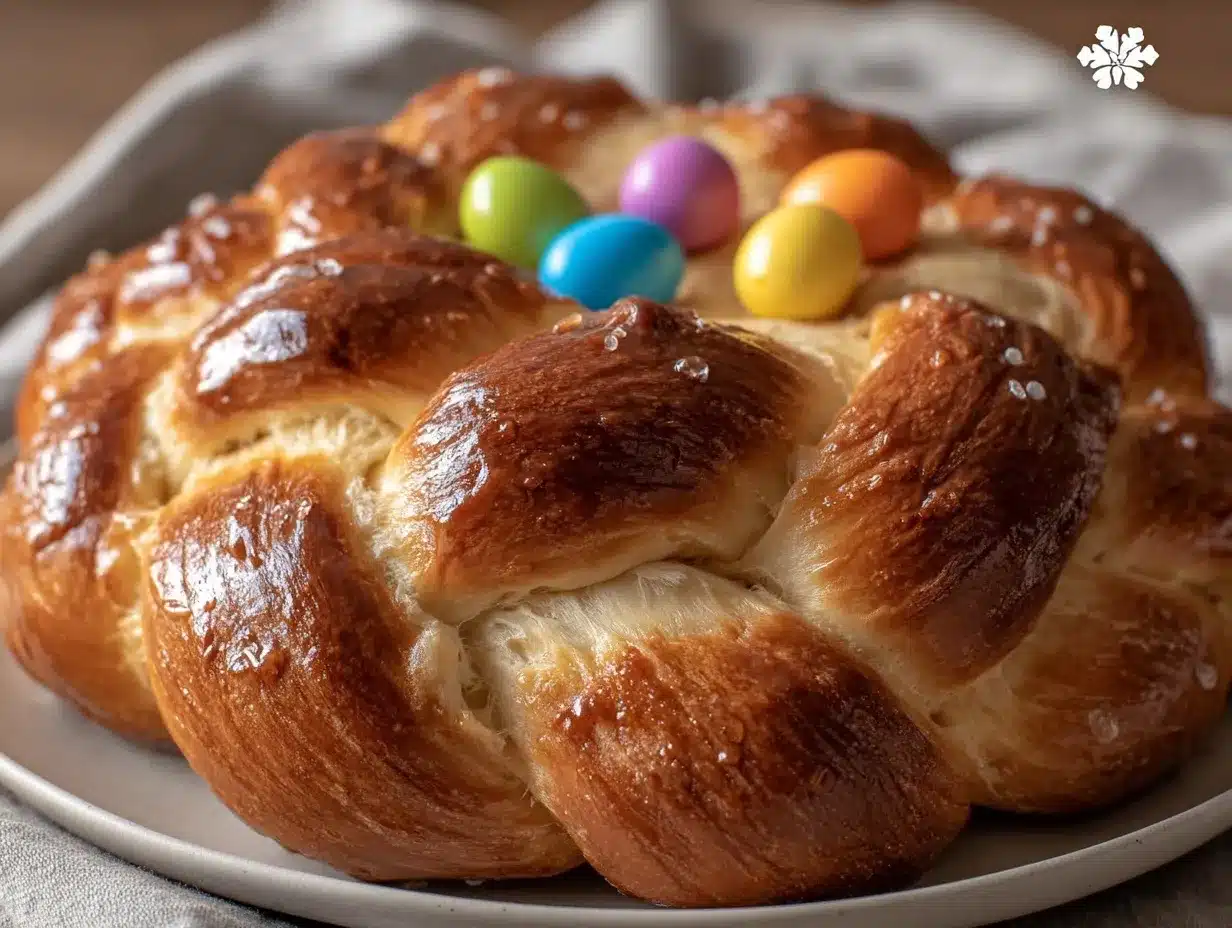
- Divide and Braid: Once risen, punch down the dough gently and divide into three equal portions. Roll each into a long rope about 16 inches (40 cm) long. Place the dyed eggs evenly spaced along the middle rope and carefully braid the three ropes together, tucking the eggs in the folds.
- Second Rise: Transfer the braided loaf to a parchment-lined baking sheet. Cover loosely and let rise for 30-45 minutes until puffed.
- Egg Wash and Bake: Preheat your oven to 350°F (175°C). Beat the remaining egg with a tablespoon of water and brush the loaf gently to get that glossy, golden crust. Bake for 30-35 minutes, checking halfway through. The brioche should sound hollow when tapped and have a deep golden color.
- Cool and Serve: Let the bread cool completely on a wire rack before slicing. The eggs nestled inside make each slice a colorful surprise!
Cooking Tips & Techniques
Brioche dough can be temperamental, but a few tricks can make the process smoother. I always warm the milk carefully—too hot and you kill the yeast, too cold and it won’t activate. Using room-temperature eggs helps the dough come together nicely, too.
Don’t rush the kneading. The butter needs to incorporate fully to get that soft, tender crumb. If your dough feels too sticky, resist the urge to add too much extra flour; a slightly sticky dough is normal for brioche.
When braiding, keep your hands lightly floured but not too dry, or the dough will resist. Use gentle pressure to keep the eggs secure without squashing them.
For consistent color on your rainbow dyed eggs, soak them longer for deeper hues, but watch out—they will stain your hands!
Lastly, if your bread starts to brown too fast, tent it loosely with foil for the last 10 minutes of baking to avoid burnt spots.
Variations & Adaptations
- Gluten-Free Option: Substitute the all-purpose flour with a gluten-free baking blend, but add an extra egg for binding. The texture will be slightly different but still delicious.
- Flavored Brioche: Add a teaspoon of orange zest or vanilla extract to the dough for a subtle aromatic twist perfect for spring.
- Vegan Version: Swap butter with vegan margarine and use flax eggs (1 tbsp ground flaxseed + 3 tbsp water per egg). Use plant-based milk for the yeast activation.
- Alternative Egg Dyes: Try natural dyes from beet juice, turmeric, or red cabbage for a chemical-free spectrum.
- Different Braids: If a three-strand braid feels intimidating, try a simple two-strand twist or even roll the dough into a spiral with the dyed eggs nestled inside.
I once tried adding a sprinkle of coarse sugar on top before baking, which gave the crust a lovely crunch and sweet contrast. It became a hit at our brunch!
Serving & Storage Suggestions
This braided brioche Easter bread is best served at room temperature, allowing that buttery crumb to shine. It pairs beautifully with soft butter, honey, or a smear of fruit preserves. For an elegant brunch, arrange slices alongside fresh fruit and a light salad.
Leftovers keep well wrapped tightly in plastic wrap or in an airtight container at room temperature for up to two days. For longer storage, slice the bread and freeze in a zip-top bag for up to one month. Toast slices straight from the freezer for a warm, fresh-eating experience.
Reheating in a low oven (around 300°F / 150°C) for 10 minutes refreshes the crust nicely. The flavors actually deepen a bit overnight, so it’s worth making a day ahead if you can!
Nutritional Information & Benefits
This brioche contains approximately 280 calories per serving (one slice), with 12 grams of fat and 5 grams of protein. It’s rich in energy and perfect for a special occasion treat. The eggs add a boost of protein and essential vitamins, including B12 and choline.
Using whole milk and real butter provides healthy fats, while the moderate sugar content keeps it balanced. For those watching carbs, this bread is more indulgent but well worth it for holidays and celebrations.
Keep in mind this recipe contains gluten, eggs, and dairy, so it’s not suitable for those with allergies to these ingredients, but the variations section offers some alternatives.
Conclusion
This perfect braided brioche Easter bread with rainbow dyed eggs isn’t just a recipe—it’s a joyful way to mark a special day. It brings people together, brightens the table, and gives you that satisfying feeling of baking something truly homemade. I love how it turns a simple loaf into a centerpiece full of color and tradition.
Feel free to tweak the colors, flavors, or braiding style to fit your family’s tastes. I’d love to hear how your loaf turns out or any creative twists you try, so don’t hesitate to share your thoughts or questions below. Here’s to many happy, delicious holidays with this charming bread!
Frequently Asked Questions
How long does the brioche dough need to rise?
Typically, the first rise takes about 1 to 1.5 hours until doubled in size. The second rise after braiding is shorter, around 30-45 minutes.
Can I dye the eggs without vinegar?
Vinegar helps the dye adhere to the eggshell, but you can try lemon juice as a substitute. Without acid, the colors might be less vibrant and won’t last as long.
What if my dough is too sticky to handle?
A slightly sticky dough is normal for brioche. Lightly flour your hands and work surface, but avoid adding too much flour, or the bread can turn dense.
Can I prepare the dough the night before Easter?
Yes! After the first rise, punch down the dough and refrigerate overnight. Let it come to room temperature before shaping and braiding the next day.
Are there any tips for getting a shiny crust?
Using an egg wash made with one egg and a tablespoon of water brushed on before baking gives that beautiful golden shine.
For a cozy meal that pairs well with this festive bread, you might enjoy a comforting Irish lamb stew or a fresh spring vegetable frittata to round out your holiday table.
Pin This Recipe!
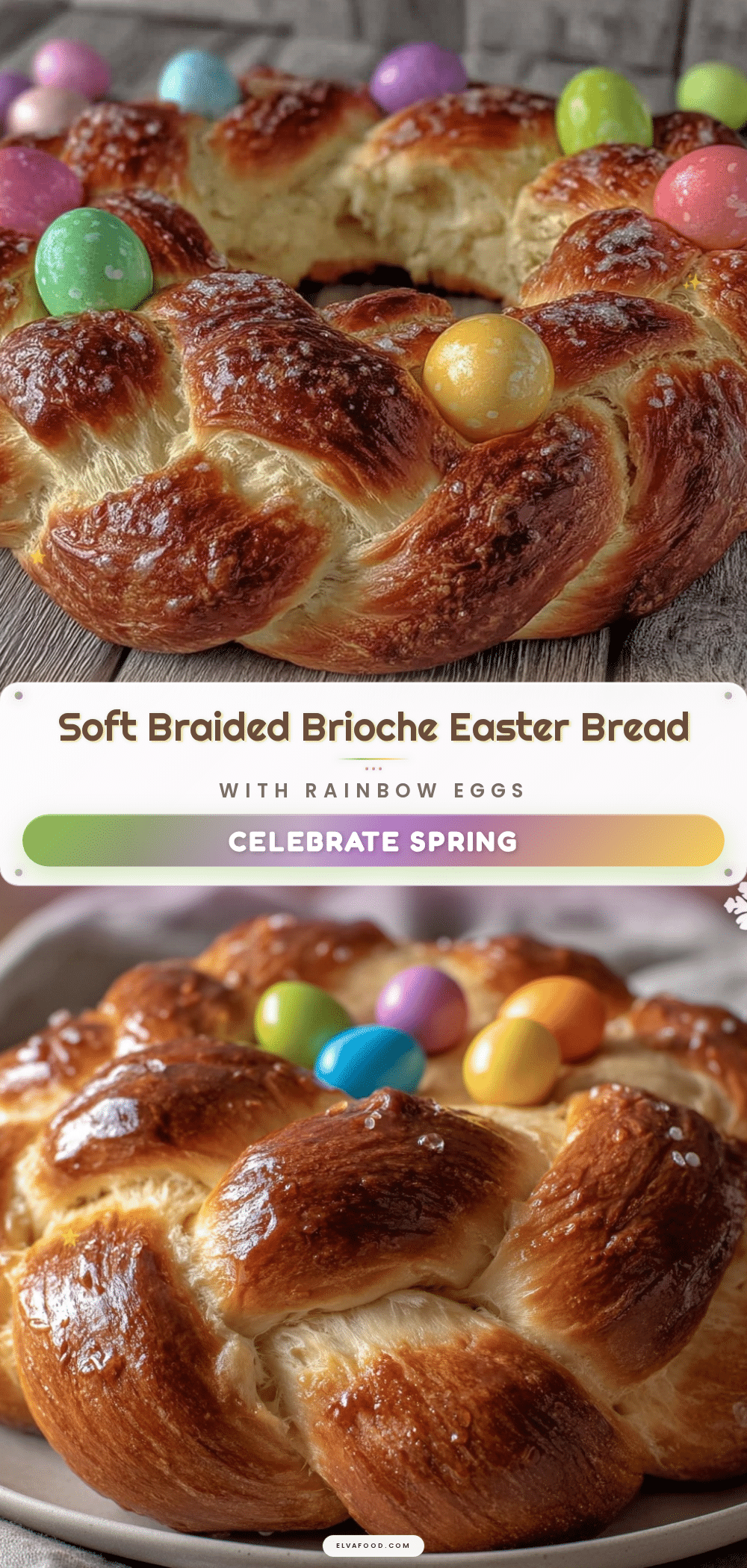
Perfect Braided Brioche Easter Bread Recipe with Rainbow Dyed Eggs for Easy Holiday Baking

A festive braided brioche bread featuring rainbow dyed eggs, perfect for Easter gatherings. This recipe combines a tender, buttery crumb with colorful eggs for a joyful centerpiece.
- Prep Time: 30 minutes
- Cook Time: 30-35 minutes
- Total Time: 2 hours 15 minutes
- Yield: 8-10 servings
- Category: Bread, Holiday Baking
- Cuisine: French
Ingredients
- All-purpose flour – 4 cups (500 g), sifted
- Granulated sugar – 1/3 cup (65 g)
- Salt – 1 tsp (fine sea salt)
- Active dry yeast – 2 1/4 tsp (one packet)
- Whole milk – 1/2 cup (120 ml), warmed to about 110°F (43°C)
- Unsalted butter – 1 cup (227 g), softened to room temperature
- Large eggs – 4, room temperature (3 for the dough, 1 for egg wash)
- White eggs – 6 to 8, hard-boiled and peeled (for dyeing)
- Vinegar – 1/4 cup (60 ml), white or apple cider
- Food coloring – assorted colors (liquid or gel)
- Water – 4 cups (960 ml)
Instructions
- Activate the Yeast: In a small bowl, combine the warm milk (110°F / 43°C) with the yeast and 1 tablespoon of sugar. Stir gently and let it sit for 5 to 10 minutes until foamy.
- Mix Dry Ingredients: In a large bowl or the bowl of a stand mixer, whisk together the sifted flour, remaining sugar, and salt.
- Add Wet Ingredients: Beat 3 eggs lightly and add them to the flour mixture along with the yeast-milk mixture. Using the dough hook attachment (or a wooden spoon), combine until the dough starts to come together.
- Knead in Butter: Gradually add the softened butter in small pieces. Continue kneading for about 8-10 minutes until the dough is smooth, shiny, and elastic but still slightly sticky.
- First Rise: Shape the dough into a ball and place it in a lightly greased bowl. Cover with a damp kitchen towel or plastic wrap. Let it rise in a warm, draft-free spot for about 1 to 1.5 hours or until doubled in size.
- Prepare Dyed Eggs: While the dough rises, prepare your dye baths. Mix vinegar, water, and food coloring in separate bowls. Submerge peeled hard-boiled eggs for 5-10 minutes depending on desired color intensity. Remove and let dry on a rack or paper towels.
- Divide and Braid: Once risen, punch down the dough gently and divide into three equal portions. Roll each into a long rope about 16 inches (40 cm) long. Place the dyed eggs evenly spaced along the middle rope and carefully braid the three ropes together, tucking the eggs in the folds.
- Second Rise: Transfer the braided loaf to a parchment-lined baking sheet. Cover loosely and let rise for 30-45 minutes until puffed.
- Egg Wash and Bake: Preheat your oven to 350°F (175°C). Beat the remaining egg with a tablespoon of water and brush the loaf gently to get that glossy, golden crust. Bake for 30-35 minutes, checking halfway through. The brioche should sound hollow when tapped and have a deep golden color.
- Cool and Serve: Let the bread cool completely on a wire rack before slicing.
Notes
Warm milk carefully to activate yeast properly. Use room-temperature eggs for better dough consistency. Knead thoroughly to incorporate butter fully for tender crumb. Slightly sticky dough is normal; avoid adding too much flour. When braiding, keep hands lightly floured and handle eggs gently. Soak eggs longer for deeper dye colors but beware of staining hands. Tent bread with foil if browning too fast during baking. Variations include gluten-free, vegan, and flavored versions.
Nutrition
- Serving Size: 1 slice
- Calories: 280
- Fat: 12
- Protein: 5
Keywords: braided brioche, Easter bread, rainbow dyed eggs, holiday baking, festive bread, brioche recipe, colorful eggs, homemade bread