“Are you sure you don’t want to just order in?” my friend joked as I pulled out a massive prime rib from the fridge one chilly Saturday afternoon. Honestly, I get it — cooking a prime rib can feel like a high-stakes game, especially when you want that perfect herb-crusted exterior and juicy, tender center. But this recipe for the Perfect Herb-Crusted Prime Rib with Red Wine Au Jus came about during one of those chaotic weeks when I had zero time but a craving for something special. I’d picked up a beautiful prime rib roast on a whim, and while I was skeptical about pulling off something so fancy with my busy schedule, I figured, why not?
The magic happened when I slapped on a simple herb crust (no complicated sauces or marinades) and let the oven work its slow, patient magic. The subtle fragrance of garlic, rosemary, and thyme filled the kitchen, and by the time it came out, the crust was crispy and golden, locking in all that beefy goodness. The red wine au jus, rich and silky, was a last-minute invention from some leftover wine and beef drippings, and honestly, it stole the show.
What stuck with me wasn’t just the taste—it was the way this prime rib became a quiet kind of triumph after a hectic week. It’s the kind of recipe that feels fancy enough to impress, but simple enough to trust yourself with. And once you make it, you’ll find yourself reaching for it whenever you want a meal that says “I’ve got this,” even on your busiest days.
Why You’ll Love This Recipe
After testing this herb-crusted prime rib multiple times, I can say it’s a serious winner for anyone who wants to serve something impressive without sweating the details. Here’s why it might quickly become your go-to special occasion dish:
- Quick & Easy: Prep takes about 15 minutes, and then it’s mostly hands-off roasting while you relax or prep sides.
- Simple Ingredients: No need for exotic spices or hard-to-find items—just fresh herbs, garlic, salt, pepper, and quality beef.
- Perfect for Holidays & Dinner Parties: The show-stopping presentation makes it ideal for festive dinners, yet it’s approachable enough for weekend family meals.
- Crowd-Pleaser: This recipe always gets rave reviews, from meat lovers to those who usually steer clear of red meat.
- Unbelievably Delicious: The herb crust adds a perfect crunch and aroma, and the red wine au jus ties everything together with a silky, deep flavor.
What sets this apart is the balance—the herbs aren’t overpowering, and the roast stays juicy inside thanks to a careful roasting method I’ve refined over time. Plus, the au jus is easier than you think but tastes like you spent hours fussing over it. If you’ve enjoyed recipes like the Irish Lamb Stew with Guinness or are a fan of rich, comforting meals like the Dublin Coddle sausage and potato stew, you’ll appreciate this prime rib’s hearty sophistication without the stress.
What Ingredients You Will Need
This recipe uses straightforward, wholesome ingredients that work together to create bold flavor and a satisfying texture. Most are pantry staples or easily found at your local market.
- Prime rib roast (bone-in, about 4 to 5 pounds / 1.8 to 2.3 kg): Choose a well-marbled cut for juicy results. I like USDA Choice for a good balance of quality and price.
- Fresh rosemary (2 tablespoons, finely chopped): Adds that classic piney aroma that pairs perfectly with beef.
- Fresh thyme (2 tablespoons, finely chopped): Complements rosemary and deepens the herb flavor.
- Garlic (6 cloves, minced): Essential for punchy, savory notes in the crust.
- Olive oil (3 tablespoons): Helps herbs stick and promotes browning on the crust.
- Salt (2 tablespoons, preferably kosher salt): The key seasoning that penetrates the meat.
- Black pepper (1 tablespoon, freshly ground): Adds subtle heat and earthiness.
- Red wine (1 cup / 240 ml, preferably dry like Cabernet Sauvignon): For making the au jus, bringing acidity and depth.
- Beef broth (1 cup / 240 ml): Adds body to the au jus; low sodium is best to control seasoning.
- Butter (2 tablespoons): For finishing the au jus with silky richness.
You can swap the fresh herbs for dried if needed, but fresh really lifts this recipe. If you want a gluten-free au jus, just double-check your broth or make your own. I’ve tried this with organic herbs from my garden, which gave the crust a vibrant flavor punch that was unforgettable.
Equipment Needed
- Roasting pan with rack: The rack allows air circulation around the roast, helping the crust get crispy and the meat cook evenly. If you don’t have a rack, you can improvise with a sturdy wire rack set inside a baking dish.
- Meat thermometer (instant-read preferred): This is a game-changer for prime rib — it takes out all the guesswork and helps you hit the perfect doneness.
- Small bowl and spoon: For mixing the herb crust.
- Saucepan: To reduce the au jus.
- Sharp knife: For carving the roast cleanly.
I’ve tried roasting this prime rib in both my standard oven and convection setting; the convection speeds things up a bit but keep a close eye on the crust so it doesn’t burn. For au jus, a nonstick saucepan makes cleanup easier, but any heavy-bottom pan works. If you’re on a budget, a simple roasting pan and a reliable thermometer from a trusted brand like ThermoPro will serve you well for years.
Preparation Method
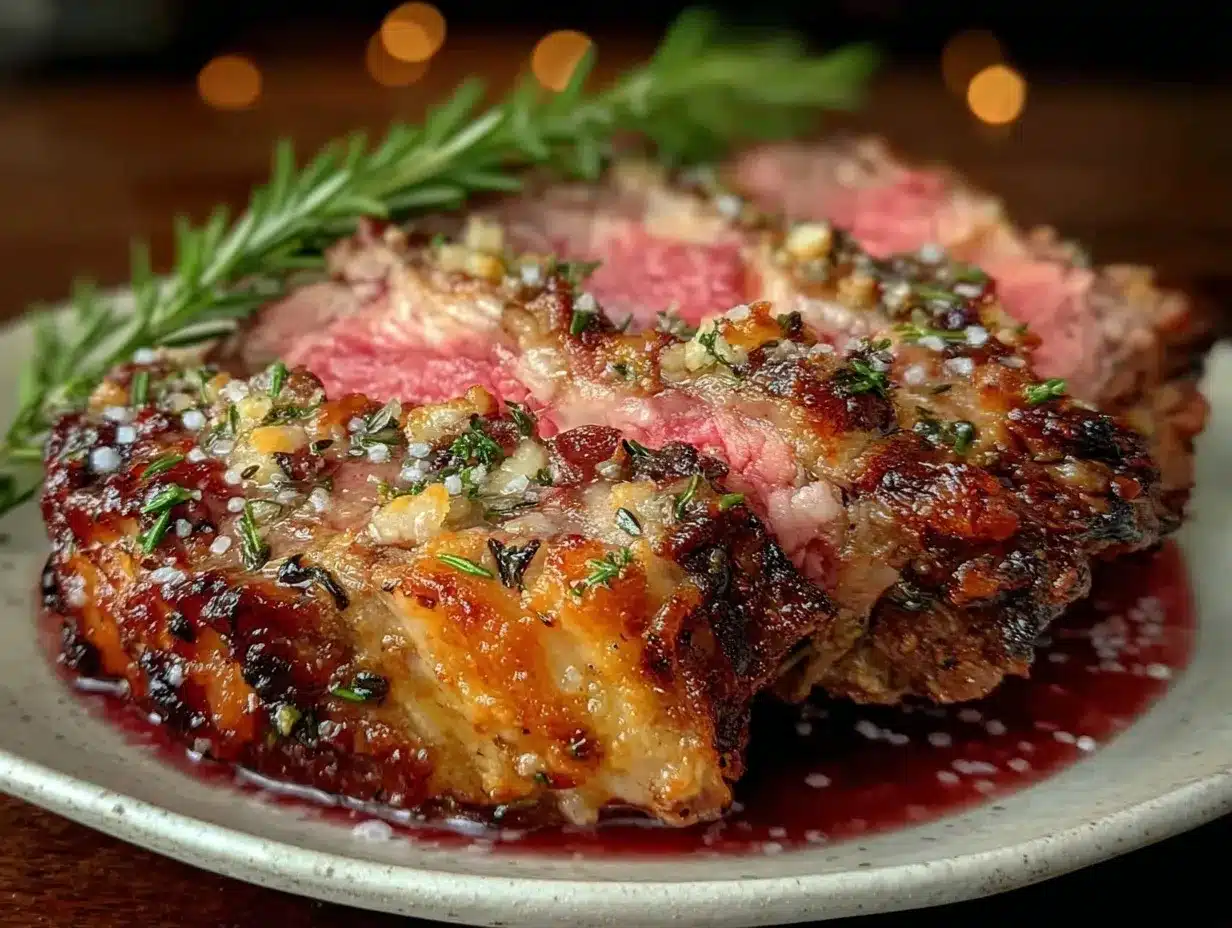
- Bring the roast to room temperature (about 1 hour): Take the prime rib out of the fridge and let it sit on the counter, uncovered. This step is crucial to even cooking — cold meat tends to roast unevenly. You’ll notice the exterior losing its chill, which helps the herb crust adhere better.
- Preheat your oven to 450°F (232°C): This high heat at the start creates a beautiful sear on the crust, locking in juices.
- Prepare the herb crust: In a small bowl, combine the olive oil, minced garlic, chopped rosemary, thyme, salt, and pepper. Mix until it forms a thick paste.
- Pat the roast dry: Use paper towels to remove excess moisture — this helps the crust stick and promotes browning.
- Apply the herb crust evenly: Rub the herb mixture all over the prime rib, making sure to coat all sides and crevices. You want a generous, even layer that will crisp up nicely.
- Place the roast on the rack in the roasting pan: Position the fat side up so the fat renders down during cooking, basting the meat naturally.
- Roast at 450°F (232°C) for 20 minutes: This initial blast forms the crust. You’ll smell the garlic and herbs intensify here.
- Reduce oven temperature to 325°F (163°C) and continue roasting: Cook for approximately 15 minutes per pound (about 1 hour for a 4-pound roast) for medium rare. Use your meat thermometer to check internal temperature—120°F (49°C) for rare, 130°F (54°C) for medium rare.
- Rest the roast: Transfer the prime rib to a cutting board and tent loosely with foil. Let it rest for 20 minutes. This step redistributes juices and makes carving easier.
- Make the red wine au jus: While the roast rests, pour the beef drippings from the roasting pan into a saucepan. Place the pan over medium heat, add the red wine and beef broth, and simmer until reduced by half (about 10 minutes). Stir in butter at the end for a silky finish. Season to taste.
- Carve and serve: Slice the prime rib against the grain into thick slices and serve with the warm red wine au jus on the side.
If your roast is larger or smaller, adjust the cooking time accordingly but always rely on the thermometer—overcooked prime rib is a tragedy I’ve learned to avoid the hard way. The crust should be golden and fragrant, and the meat inside juicy and tender. If the crust starts getting too dark before reaching temperature, tent the roast with foil.
Cooking Tips & Techniques
One lesson I learned early is that prime rib isn’t about rushing—it’s about patience and respecting the meat. Here are some tips to help you nail this recipe every time:
- Don’t skip resting: It’s tempting to carve right away, but resting allows the juices to settle so every slice stays moist.
- Use an instant-read thermometer: This tool is your best friend. I’ve ruined prime rib by guessing doneness more than once.
- Pat the roast dry before applying herbs: Moisture on the surface will steam the crust instead of crisping it.
- Start with high heat, then lower: That initial sear sets the stage for flavor and texture.
- For au jus, always scrape the pan drippings: Those browned bits hold tons of flavor. Don’t let them go to waste.
- If you have time, season the roast a day ahead: Salt draws moisture out and then reabsorbs it, seasoning deeper and improving texture.
Personally, I’ve learned that multitasking works well here—while the roast is in the oven, you can prep sides like roasted vegetables or a creamy potato gratin. If you’re a fan of pasta dishes, pairing this prime rib with something like the creamy cacio e pepe pasta makes the meal even more indulgent without adding fuss.
Variations & Adaptations
This herb-crusted prime rib is a classic, but you can tailor it easily:
- Dietary alternatives: Substitute olive oil with avocado oil for a neutral flavor or use dried herbs if fresh aren’t available.
- Seasonal twists: In winter, add a pinch of smoked paprika or ground mustard to the herb crust for warmth. Summer? Try fresh oregano or sage.
- Cooking method swap: For a smoky twist, try finishing the roast on a charcoal grill after oven roasting to add subtle char flavor.
- Flavor customizations: Mix in horseradish powder with the herbs for a bit of heat or top the crust with coarse sea salt before roasting for extra crunch.
- Personal favorite variation: I once experimented with a coffee and herb rub for the crust—unexpected but surprisingly delicious with the red wine au jus.
Serving & Storage Suggestions
Serve this prime rib hot, sliced thick, with the red wine au jus drizzled over or alongside for dipping. It pairs beautifully with rich sides like creamy mashed potatoes, roasted root vegetables, or even a fresh arugula salad with lemon vinaigrette to cut through the richness.
If you have leftovers (and you probably will), wrap them tightly in foil or plastic wrap and store in the fridge for up to 3 days. For freezing, slice the meat first, place in freezer bags, and consume within 2 months for best quality.
To reheat, gently warm slices in a low oven (about 275°F / 135°C) wrapped in foil to keep them moist, or use a skillet over medium-low heat with a splash of broth or au jus. Avoid microwaving if possible—prime rib can dry out fast that way.
Over time, the flavors in the au jus deepen, so if you make extra, it keeps nicely refrigerated for a few days and tastes even better warmed back up.
Nutritional Information & Benefits
This prime rib recipe offers a protein-packed meal rich in iron and B vitamins, essential for energy and muscle health. Using fresh herbs like rosemary and thyme adds antioxidants and a burst of flavor without extra calories.
Though prime rib is higher in fat, choosing a well-marbled cut ensures tenderness and flavor without needing heavy sauces—making the red wine au jus a lighter but flavorful companion. For gluten-free diets, this recipe fits perfectly since it uses no flour or gluten ingredients.
Keep in mind that portion size impacts calorie intake; a 4-ounce (113 g) serving contains roughly 350 calories, depending on trimming. For those mindful of sodium, adjust the salt in the crust and use low-sodium broth for the au jus.
Conclusion
Making the Perfect Herb-Crusted Prime Rib with Red Wine Au Jus might seem like a big deal, but with the right approach, it’s a totally achievable and rewarding experience. From the crispy, aromatic herb crust to the luscious, silky au jus, this recipe has become a quiet favorite in my kitchen for marking special moments or turning a simple night into something memorable.
Feel free to tweak the herbs or try different wine varieties in the sauce to make it your own. I love how this roast brings people to the table and sparks conversations—like that time it led to a debate over the best roasting temperatures with friends. If you’ve enjoyed hearty dishes like the miso-glazed salmon, this prime rib offers a different kind of rich comfort that’s well worth the effort.
Give it a try, and I’d love to hear how your version turned out—comments and recipe stories always brighten my day. Here’s to good food, good company, and meals that make you feel proud in the kitchen.
Frequently Asked Questions
How do I know when my prime rib is done?
Use an instant-read meat thermometer. For medium-rare, aim for an internal temperature of 130°F (54°C) before resting.
Can I make the red wine au jus ahead of time?
Yes, you can prepare it a day ahead and gently reheat before serving. It actually tastes better after resting in the fridge.
What if I don’t have fresh herbs?
Dried rosemary and thyme work in a pinch—use about one-third the amount of fresh herbs called for.
Can I cook this prime rib without a roasting rack?
Yes, just place the roast directly in the pan or on a bed of chopped vegetables to keep it elevated.
How long does the prime rib need to rest before carving?
At least 20 minutes, tented loosely with foil. This helps the juices redistribute for juicy slices.
Pin This Recipe!
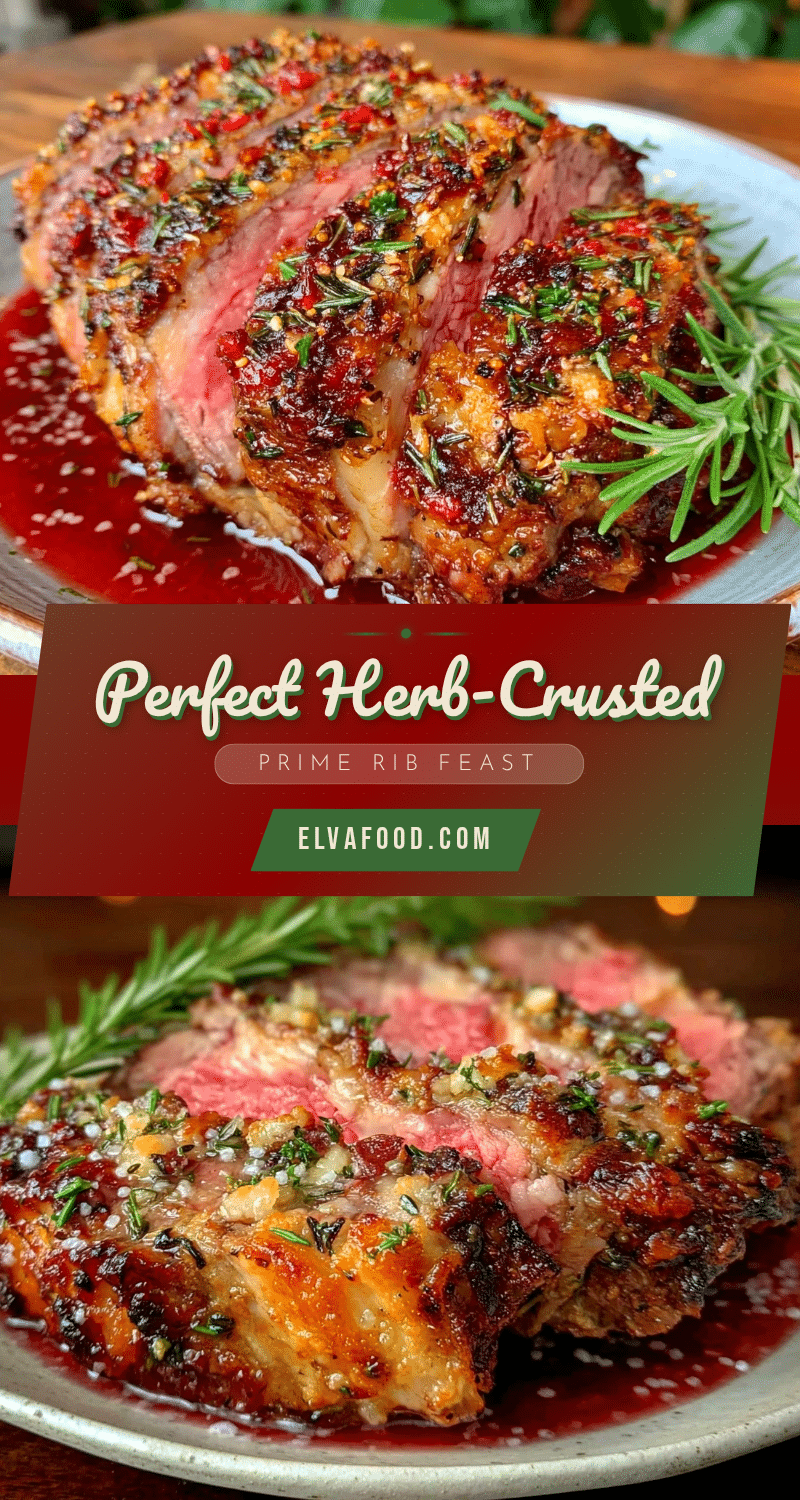
Perfect Herb-Crusted Prime Rib with Red Wine Au Jus
A simple yet impressive prime rib roast with a crispy herb crust and a rich red wine au jus, perfect for special occasions or cozy family dinners.
- Prep Time: 15 minutes
- Cook Time: 1 hour 20 minutes
- Total Time: 1 hour 35 minutes
- Yield: 8 servings 1x
- Category: Main Course
- Cuisine: American
Ingredients
- 4 to 5 pounds bone-in prime rib roast (USDA Choice recommended)
- 2 tablespoons fresh rosemary, finely chopped
- 2 tablespoons fresh thyme, finely chopped
- 6 cloves garlic, minced
- 3 tablespoons olive oil
- 2 tablespoons kosher salt
- 1 tablespoon freshly ground black pepper
- 1 cup dry red wine (such as Cabernet Sauvignon)
- 1 cup low sodium beef broth
- 2 tablespoons butter
Instructions
- Bring the roast to room temperature by letting it sit uncovered on the counter for about 1 hour.
- Preheat oven to 450°F (232°C).
- In a small bowl, combine olive oil, minced garlic, chopped rosemary, thyme, salt, and pepper to form a thick paste.
- Pat the roast dry with paper towels to remove excess moisture.
- Rub the herb mixture evenly all over the prime rib, coating all sides and crevices.
- Place the roast fat side up on a rack in a roasting pan.
- Roast at 450°F (232°C) for 20 minutes to form the crust.
- Reduce oven temperature to 325°F (163°C) and continue roasting about 15 minutes per pound for medium rare (about 1 hour for a 4-pound roast). Use a meat thermometer to check internal temperature: 120°F (49°C) for rare, 130°F (54°C) for medium rare.
- Remove roast from oven and tent loosely with foil. Let rest for 20 minutes to redistribute juices.
- While resting, pour beef drippings into a saucepan. Add red wine and beef broth, simmer until reduced by half (about 10 minutes). Stir in butter and season to taste.
- Carve the prime rib against the grain into thick slices and serve with warm red wine au jus.
Notes
Bring the roast to room temperature before cooking for even roasting. Use an instant-read thermometer to avoid overcooking. Rest the meat for at least 20 minutes before carving to keep it juicy. If the crust darkens too quickly, tent with foil. The au jus can be made ahead and reheated gently.
Nutrition
- Serving Size: 4 ounces (113 grams)
- Calories: 350
- Sodium: 600
- Fat: 28
- Saturated Fat: 12
- Carbohydrates: 2
- Protein: 25
Keywords: prime rib, herb crust, red wine au jus, roast beef, holiday roast, dinner party, easy prime rib