Slicing a fresh green onion on the diagonal, I heard the timer go off behind me and nearly dropped my knife. The broth had been bubbling away for exactly seven minutes — just enough time for the garlic and gochugaru to wake up and start smelling like actual dinner. I had thirty seconds to get the soft egg into the bowl before the noodles turned into a gluey mess. Honestly, this is how most of my weeknights go. A little bit of controlled chaos, a whole lot of hunger, and the desperate hope that I remembered to buy eggs.
This spicy Korean ramen with soft egg started as a pantry rescue mission. I had a pack of instant noodles, a few eggs, and a jar of gochujang that was staring at me from the fridge door. I was too tired for takeout and too hungry to care about presentation. So I just started throwing things into a pot. The result? A bowl of noodles that made me forget I was eating a last-minute dinner. The kind of meal where you lean over the bowl, steam in your face, and just keep going until the broth is gone.
There’s something about that first bite — the way the rich, spicy broth coats the chewy noodles, and then you hit a pocket of runny yolk that melts into everything. It’s not fancy. It’s not complicated. But it is exactly what a cold, tired evening needs. And honestly, that’s the kind of recipe I actually want to share.
Why You’ll Love This Recipe
I’ve tested this spicy Korean ramen with soft egg about a dozen times now. I’ve burned my tongue on it, undercooked the egg, and once added way too much gochugaru and had to drink milk straight from the carton. So trust me when I say — this version is the one that works. It’s the kind of recipe you can make with your eyes half-closed after a long day, and it still turns out perfect.
- Quick & Easy : From fridge to bowl in under 15 minutes. No marinating, no complicated steps, no waiting around.
- Simple Ingredients : You probably have most of this stuff already. Instant ramen, eggs, garlic, soy sauce. The only specialty item is gochujang, and that’s worth keeping in your fridge forever.
- Perfect for Lazy Nights : This is the meal you make when you want something that feels like a hug but takes less time than ordering delivery.
- Crowd-Pleaser : I’ve served this to friends who claimed they didn’t like spicy food, and they went back for seconds. Something about the runny egg just balances everything out.
- Unbelievably Satisfying : The broth is rich, the noodles are chewy, and that soft egg is basically liquid gold. It’s comfort food that actually delivers.
What makes this different from just jazzing up instant ramen is the broth. Most people just add hot water and call it a day. But taking an extra five minutes to build a real broth with garlic, gochujang, and a splash of sesame oil changes everything. It turns a snack into a real meal. And honestly, it’s the kind of recipe that makes you feel like you actually cooked something — even if it took almost no effort.
What Ingredients You Will Need
This recipe uses simple, everyday ingredients to build big flavor. Most of these are pantry staples if you cook Asian food regularly, but I’ve included easy swaps for whatever you have on hand.
- Instant ramen noodles (2 packs) — Discard the seasoning packets. You want the curly, chewy noodles. I prefer Nongshim or Shin Ramyun for texture, but any brand works. The seasoning packet can be saved for another use or tossed.
- Gochujang (2 tablespoons) — This Korean chili paste is the heart of the broth. It’s sweet, spicy, and deeply savory. Look for it in the international aisle or any Korean grocery. I like the brand O’Food for balanced heat.
- Gochugaru (1 tablespoon) — Korean red pepper flakes. They add color and a smoky heat that gochujang alone can’t provide. If you don’t have it, use ½ teaspoon of regular red pepper flakes, though the flavor will be different.
- Soy sauce (2 tablespoons) — Use low-sodium if you have it. Regular works fine too. This adds the salty, umami backbone to the broth.
- Sesame oil (1 tablespoon) — Toasted sesame oil is non-negotiable here. It adds that nutty, aromatic finish that makes the broth taste like it simmered for hours.
- Garlic (4 cloves, minced) — Fresh garlic is best. Pre-minced jarred garlic works in a pinch, but fresh gives a sharper, more aromatic punch.
- Fresh ginger (1 teaspoon, grated) — Adds warmth and a slight zing. Use a microplane if you have one. If you don’t have fresh, skip it rather than using dried ginger.
- Brown sugar (1 teaspoon) — Just a touch to balance the heat and salt. You can substitute honey or maple syrup.
- Chicken or vegetable broth (3 cups) — Low-sodium is best so you control the salt. Water works in a pinch, but broth gives the ramen a richer, more satisfying base.
- Eggs (2 large) — Room temperature eggs cook more evenly. You’ll want the yolks runny for that gorgeous, creamy finish.
- Green onions (2, thinly sliced) — For garnish and a fresh, sharp contrast to the rich broth.
- Sesame seeds (1 teaspoon, optional) — For topping. Adds a nice visual touch and a bit of crunch.
- Nori or seaweed sheets (optional) — Cut into thin strips for garnish. Adds a subtle ocean flavor that pairs beautifully with the broth.
Ingredient Selection Tip: For the best soft egg, use the freshest eggs you can find. Fresh eggs hold their shape better when poached and have firmer whites. If your eggs are older, add a splash of vinegar to the poaching water to help the whites set faster.
Equipment Needed
- Medium pot (4-quart) — For boiling the noodles and making the broth. A nonstick pot makes cleanup easier.
- Small saucepan — For poaching the eggs separately. You could also poach them directly in the broth, but doing them separately gives you more control.
- Slotted spoon — For gently removing the poached eggs without breaking the yolk.
- Microplane or fine grater — For grating the ginger. A regular box grater works too, just use the fine side.
- Sharp knife and cutting board — For slicing green onions and mincing garlic.
- Measuring spoons — For accurate seasoning. I’ve eyeballed it before and ended up with broth that was either too salty or not spicy enough.
- Timer — Seriously. The noodles and the egg both have narrow windows of perfection. Set a timer so you don’t get distracted scrolling on your phone.
Budget-Friendly Tip: You don’t need any fancy equipment for this recipe. A basic pot and a slotted spoon are all you really need. If you don’t have a microplane, just chop the ginger as finely as possible with a knife.
Preparation Method
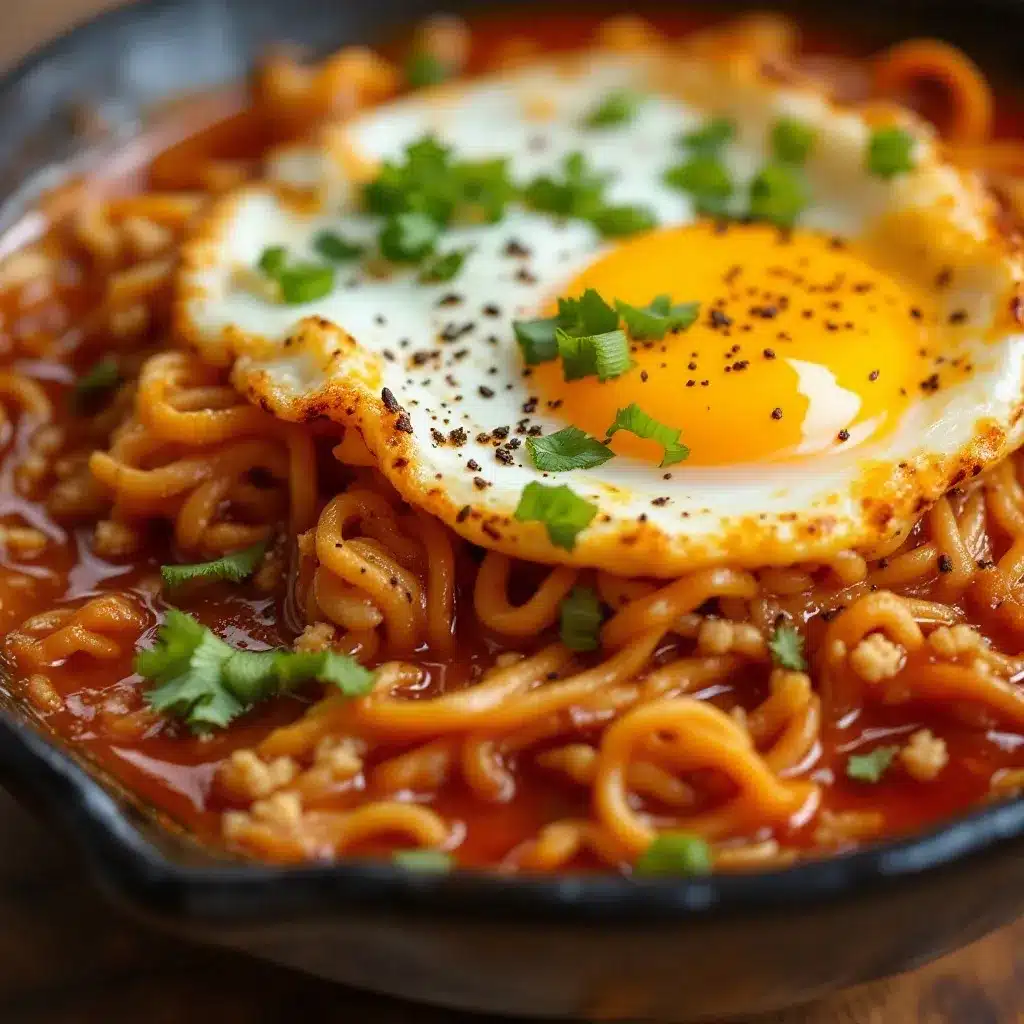
- Start the broth. In your medium pot, heat 1 tablespoon of sesame oil over medium heat. Add the minced garlic and grated ginger. Cook for about 30 seconds, stirring constantly, until fragrant. You want it to smell amazing, not burn. If the garlic starts browning too fast, lower the heat.
- Build the flavor base. Add the gochujang and gochugaru to the pot. Stir them into the oil and garlic mixture. Cook for another minute, stirring constantly. The paste will darken and become incredibly aromatic. This step is where the magic happens — don’t rush it.
- Add the liquids. Pour in the chicken or vegetable broth, soy sauce, and brown sugar. Stir everything together until the gochujang is fully dissolved. Bring the broth to a gentle boil, then reduce the heat to low and let it simmer while you prepare the noodles and eggs. Taste the broth and adjust seasoning — more soy sauce for salt, more sugar for sweetness, more gochugaru for heat.
- Cook the noodles. In a separate pot, bring water to a boil. Add the instant ramen noodles and cook according to package directions, but subtract 30 seconds from the recommended time. The noodles will continue to cook slightly in the hot broth, so you want them just shy of al dente. Drain the noodles and divide them between two serving bowls.
- Poach the soft eggs. While the noodles cook, bring a small saucepan of water to a gentle simmer. Add a splash of vinegar (optional, but helps the whites set). Crack each egg into a small bowl or ramekin first — this makes sliding them into the water much easier and prevents shell fragments. Gently slide the eggs into the simmering water. Cook for exactly 3 minutes for a runny yolk with fully set whites. Use a slotted spoon to carefully remove the eggs and place them on a paper towel to drain excess water.
- Assemble the bowls. Ladle the hot broth over the noodles in each bowl. The broth should come about halfway up the noodles — you want enough to coat everything, but not so much that it drowns the egg. Gently place a poached egg on top of each bowl, right in the center.
- Garnish and serve immediately. Sprinkle sliced green onions, sesame seeds, and nori strips over the top. Serve right away while the egg is still warm and the yolk is perfectly runny. The broth should be piping hot.
Sensory Cue: When the garlic and ginger hit the hot oil, you should smell a sharp, aromatic fragrance within 15 seconds. If you smell burning, your heat is too high. When the gochujang goes in, the kitchen will fill with a sweet, smoky, spicy scent that tells you you’re on the right track.
Cooking Tips & Techniques
I’ve made this spicy Korean ramen with soft egg enough times to know exactly where things can go wrong. Here are the lessons I learned the hard way so you don’t have to.
Don’t overcook the noodles. This is the most common mistake. Instant ramen is designed to cook fast, and if you follow the package directions exactly, they’ll be mushy by the time you finish eating. Cook them 30 seconds less than recommended. They’ll finish cooking in the hot broth, and you’ll get that perfect chewy texture that slurps beautifully.
Use a timer for the egg. I cannot stress this enough. Three minutes is the sweet spot for a runny yolk with fully set whites. At two minutes, the whites are still too liquid. At four minutes, the yolk starts to thicken. Set your timer the moment the egg hits the water, and don’t walk away. I’ve ruined more eggs by getting distracted by my phone than I care to admit.
Build the broth in stages. Don’t just dump everything in the pot at once. Cooking the garlic and ginger in oil first, then adding the gochujang, then adding the liquid — each step builds layers of flavor. It only takes an extra two minutes, but the difference in the final broth is night and day.
Keep the broth hot. When you’re ready to assemble, make sure the broth is simmering, not just warm. The heat from the broth will finish cooking the noodles and keep the egg warm. If the broth is lukewarm, everything will feel sad and flat.
Multitask smartly. Start the broth first, then get the noodle water boiling. While the noodles cook, poach the eggs. This way, everything finishes at the same time and you’re not eating cold noodles while waiting for an egg to cook.
Variations & Adaptations
One of the best things about this recipe is how easily it adapts to whatever you have in your fridge or whatever mood you’re in. Here are some variations I’ve tried and loved.
Vegetarian Version: Use vegetable broth instead of chicken broth. Add sliced mushrooms (shiitake or cremini work great) to the broth while it simmers. The mushrooms add umami that replaces the depth lost by skipping meat. I’ve also added a handful of baby spinach right before serving for extra greens.
Extra Spicy: If you’re like me and can’t get enough heat, add an extra teaspoon of gochugaru and a drizzle of sriracha or chili oil on top. You can also slice a fresh Thai chili and add it to the broth while it simmers. Just remember to remove it before serving unless you want a surprise fireball.
Protein-Packed: Add leftover shredded chicken, sliced pork belly, or tofu to the bowl before pouring the broth over. The hot broth will warm everything through. I’ve also added a handful of frozen edamame or a soft-boiled egg alongside the poached egg for extra protein.
Low-Carb Option: Swap the ramen noodles for zucchini noodles or shirataki noodles. Cook them according to package directions and add them to the broth just before serving. The broth is so flavorful that you won’t miss the carbs as much as you think.
Kimchi Ramen: Add ½ cup of chopped kimchi to the broth while it simmers. The fermented tanginess adds another layer of complexity. Top with extra kimchi for crunch and a bit of sourness that cuts through the richness.
I once made this with a leftover piece of miso glazed salmon flaked on top, and honestly, it was one of the best bowls of ramen I’ve ever had. The sweet, savory salmon paired perfectly with the spicy broth. Don’t be afraid to experiment — that’s half the fun.
Serving & Storage Suggestions
This spicy Korean ramen with soft egg is best enjoyed immediately, while the noodles are still chewy and the yolk is gloriously runny. But I know life happens, and sometimes you need leftovers.
Serving: Serve the ramen in deep bowls so the broth doesn’t spill. Provide chopsticks and a spoon — you’ll want to drink every last drop of that broth. I like to serve this with a side of crispy sesame chicken or Korean fried chicken for a full meal, but it’s plenty satisfying on its own. A cold beer or a glass of iced tea pairs beautifully with the spicy broth.
Storage: If you have leftovers, store the components separately. The broth can be refrigerated in an airtight container for up to 3 days. The noodles should be stored separately, otherwise they’ll absorb all the broth and turn into a mushy mess. The soft egg doesn’t store well — it’s best to make a fresh one when you reheat the leftovers.
Reheating: Reheat the broth in a small pot over medium heat until bubbling. Cook fresh noodles according to package directions (or use leftover noodles, which will be softer but still edible). Poach a fresh egg while the broth heats. Assemble and enjoy. The flavors in the broth actually deepen overnight, so leftovers can taste even better the next day.
Freezing: The broth freezes beautifully for up to 3 months. Let it cool completely, then pour into freezer-safe containers. Leave some headspace for expansion. Thaw overnight in the refrigerator and reheat as directed. Make fresh noodles and egg when serving.
One thing I’ve noticed — the broth develops a deeper, more complex flavor after sitting in the fridge for a day. The garlic and ginger mellow out, and the gochujang becomes more pronounced. So if you have the time, making the broth a day ahead is actually a great strategy.
Nutritional Information & Benefits
Here’s the honest truth — this is comfort food, not health food. But it’s not as bad as you might think, especially if you make a few smart choices.
| Nutrient | Per Serving (approx.) |
|---|---|
| Calories | 420-480 |
| Protein | 18-22g |
| Carbohydrates | 45-55g |
| Fat | 18-22g |
| Fiber | 3-5g |
| Sodium | 900-1100mg |
Health Benefits: The egg provides high-quality protein and essential vitamins like B12 and D. The garlic and ginger are known for their anti-inflammatory properties. Gochujang contains capsaicin, which can boost metabolism and reduce inflammation. The broth keeps you hydrated and the vegetables (green onions, nori) add a small but meaningful dose of vitamins and minerals.
Dietary Considerations: This recipe is naturally dairy-free and can be made gluten-free by using gluten-free ramen noodles and tamari instead of soy sauce. It’s not low-carb unless you swap the noodles. The sodium content is moderate — use low-sodium broth and soy sauce to reduce it further.
Allergens: Contains eggs, soy, and gluten (from the noodles). Sesame oil is a common allergen for some people — substitute with avocado oil if needed.
I’m not a nutritionist, so take these numbers as rough estimates. The point isn’t to count every calorie — it’s to enjoy a bowl of something that makes you feel good, both while eating it and after.
Conclusion
This spicy Korean ramen with soft egg is the kind of recipe that proves you don’t need fancy ingredients or hours of time to make something genuinely delicious. It’s born from the beautiful chaos of a weeknight kitchen — a little improvisation, a lot of hunger, and the willingness to trust your instincts. The broth is rich and complex, the noodles are satisfyingly chewy, and that soft egg is the crowning glory that ties everything together.
I hope you make this on a night when you need something fast but don’t want to settle for boring. I hope you customize it with whatever you have in your fridge — leftover chicken, a handful of spinach, an extra drizzle of chili oil. The best recipes are the ones that become yours, and this one is ready to be adapted.
If you try this recipe, I’d love to hear about it. Leave a comment below and tell me how it turned out, or share your own twist. And if you’re looking for more comforting, easy meals, check out my recipe for easy lo mein noodles with chicken and veggies — it’s another weeknight hero that comes together in a flash.
Happy cooking, and don’t forget the extra green onions on top. Trust me on that one.
Frequently Asked Questions
Can I use a different type of noodle?
Absolutely. While instant ramen noodles are traditional and give the best texture, you can use udon noodles, soba noodles, or even rice noodles. Just adjust the cooking time according to the package directions. Soba noodles add a nice nutty flavor, while udon gives a thicker, chewier bite.
How do I make the egg perfectly runny every time?
The key is timing and temperature. Bring the water to a gentle simmer — not a rolling boil. Crack the egg into a small bowl first, then slide it into the water. Cook for exactly 3 minutes. Use a slotted spoon to remove it and let it drain on a paper towel. If the water is too hot, the egg will cook too quickly and the yolk might set. If it’s too cool, the whites won’t set properly.
Can I make this recipe vegan?
Yes, with a few swaps. Use vegetable broth instead of chicken broth. Skip the egg or replace it with a soft tofu block or sliced avocado for creaminess. Use a vegan ramen noodle brand (some contain egg). The broth is naturally vegan-friendly without the egg, and it’s still incredibly flavorful and satisfying.
How spicy is this recipe?
It has a moderate level of heat — noticeable but not overwhelming. The gochujang provides a sweet, balanced spiciness, while the gochugaru adds a smoky kick. If you’re sensitive to spice, reduce the gochugaru to ½ teaspoon or omit it entirely. If you love heat, add extra gochugaru or a drizzle of chili oil on top.
Can I use leftover broth for other dishes?
Definitely. The broth is incredibly versatile. Use it as a base for soup, as a sauce for stir-fried vegetables, or as a marinade for chicken or tofu. You can also freeze it in ice cube trays for small portions to add flavor to other dishes. It keeps in the fridge for up to 3 days and freezes beautifully for up to 3 months.
Pin This Recipe!
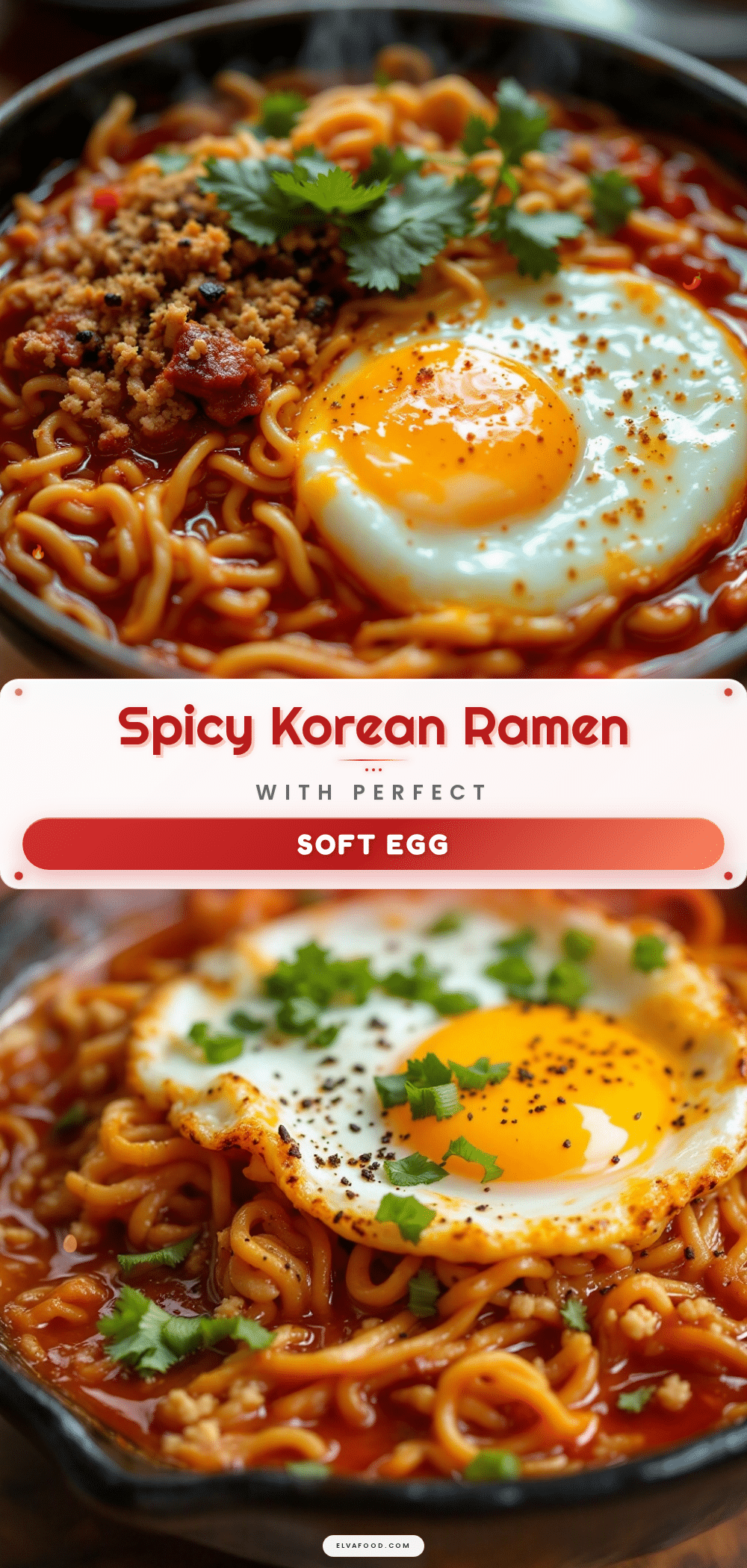
Easy Spicy Korean Ramen with Soft Egg Recipe

A quick and easy spicy Korean ramen with a rich, flavorful broth and a perfectly runny soft egg. Ready in under 15 minutes, this comforting bowl is perfect for lazy weeknights.
- Prep Time: 5 minutes
- Cook Time: 10 minutes
- Total Time: 15 minutes
- Yield: 2 servings 1x
- Category: Main Course
- Cuisine: Korean
Ingredients
- 2 packs instant ramen noodles (discard seasoning packets)
- 2 tablespoons gochujang (Korean chili paste)
- 1 tablespoon gochugaru (Korean red pepper flakes)
- 2 tablespoons soy sauce (low-sodium preferred)
- 1 tablespoon toasted sesame oil
- 4 cloves garlic, minced
- 1 teaspoon fresh ginger, grated
- 1 teaspoon brown sugar
- 3 cups chicken or vegetable broth (low-sodium)
- 2 large eggs (room temperature)
- 2 green onions, thinly sliced
- 1 teaspoon sesame seeds (optional)
- Nori or seaweed sheets, cut into thin strips (optional)
Instructions
- Start the broth. In a medium pot, heat 1 tablespoon of sesame oil over medium heat. Add the minced garlic and grated ginger. Cook for about 30 seconds, stirring constantly, until fragrant.
- Build the flavor base. Add the gochujang and gochugaru to the pot. Stir them into the oil and garlic mixture. Cook for another minute, stirring constantly, until the paste darkens and becomes aromatic.
- Add the liquids. Pour in the chicken or vegetable broth, soy sauce, and brown sugar. Stir until the gochujang is fully dissolved. Bring to a gentle boil, then reduce heat to low and let simmer while you prepare the noodles and eggs. Taste and adjust seasoning.
- Cook the noodles. In a separate pot, bring water to a boil. Add the instant ramen noodles and cook according to package directions, but subtract 30 seconds from the recommended time. Drain and divide between two serving bowls.
- Poach the soft eggs. While the noodles cook, bring a small saucepan of water to a gentle simmer. Add a splash of vinegar (optional). Crack each egg into a small bowl, then gently slide into the water. Cook for exactly 3 minutes for a runny yolk with fully set whites. Use a slotted spoon to remove and drain on a paper towel.
- Assemble the bowls. Ladle the hot broth over the noodles in each bowl. Gently place a poached egg on top of each bowl.
- Garnish and serve immediately. Sprinkle sliced green onions, sesame seeds, and nori strips over the top. Serve right away while the egg is still warm and the yolk is runny.
Notes
For the best soft egg, use the freshest eggs you can find. Cook noodles 30 seconds less than package directions to avoid mushiness. Build the broth in stages for maximum flavor. Keep the broth hot when assembling. Multitask smartly: start broth first, then noodle water, then poach eggs while noodles cook.
Nutrition
- Serving Size: 1 bowl
- Calories: 450
- Sugar: 6
- Sodium: 1000
- Fat: 20
- Saturated Fat: 4
- Carbohydrates: 50
- Fiber: 4
- Protein: 20
Keywords: spicy Korean ramen, soft egg ramen, quick ramen recipe, easy ramen, gochujang ramen, weeknight dinner