I ruined birthday cake for my own kid three years in a row before I figured out what I was doing wrong. Not the flavor—that was always fine. But the texture? Dense. Dry by day two. The kind of cake that crumbles when you try to cut it and leaves you picking sad little yellow bits off the serving platter while everyone pretends it’s fine. My daughter would smile, eat the frosting off her piece, and leave the rest. And honestly? I couldn’t blame her.
The problem was I kept treating sheet cake like it was just layer cake batter poured into a bigger pan. It’s not. Sheet cakes need a different approach—more moisture, a tighter crumb, and a frosting that spreads like a dream without tearing the cake apart. I finally cracked the code during a particularly stressful birthday prep (think: three dozen cupcakes, a broken mixer, and a toddler having a meltdown over the color of the sprinkles). I threw together a batch using a technique I’d read about years ago—reverse creaming—and something just clicked. The cake came out tender, evenly baked, and stayed moist for days.
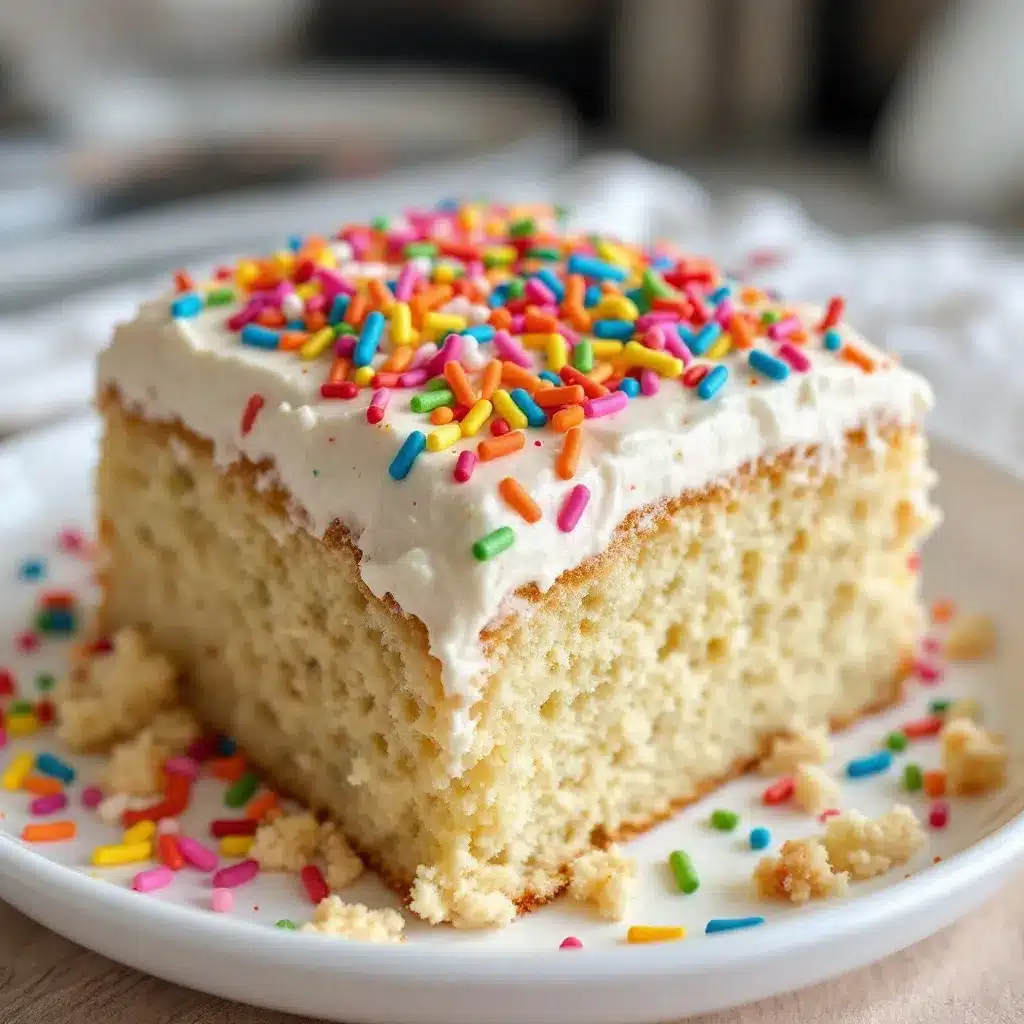
This is that cake. The one I make for every birthday now, including my own. It’s the kind of sheet cake that makes people close their eyes after the first bite, and then ask for the recipe before they’ve even swallowed. The buttercream is simple—butter, powdered sugar, a splash of vanilla—and those rainbow sprinkles on top? Non-negotiable. They make everything better. I think that’s the real secret to a good birthday: you don’t need fancy. You just need something that feels like a celebration.
Why You’ll Love This Recipe
This isn’t just another sheet cake recipe. I’ve made this cake for picky kids, critical in-laws, and friends who “don’t really like cake.” Every single time, it disappears. Here’s what makes it different from the rest.
- One Pan, No Fuss : You mix everything in one bowl and bake it in a single 9×13 pan. No layering, no torting, no stress. Perfect for busy birthdays or last-minute celebrations.
- Stays Moist for Days : The reverse creaming method locks in moisture, so this cake tastes just as good on day three as it does fresh out of the oven. I’ve tested this—extensively.
- Simple Pantry Ingredients : You probably already have everything you need. Butter, sugar, eggs, flour, milk, vanilla. No weird extracts, no specialty flours, no trips to three different stores.
- Buttercream That Spreads Like a Dream : This frosting is soft, silky, and doesn’t tear the cake. It’s the kind of buttercream that makes you want to lick the bowl clean—and I fully support that.
- Crowd-Pleaser Guaranteed : Kids love the sprinkles. Adults love the balanced sweetness. Everyone loves that it’s not too rich, not too plain, and somehow exactly what they were hoping for.
This recipe is the result of years of trial and error. I’ve tried every variation—sour cream, buttermilk, oil instead of butter—and this version wins every time. It’s the one I bring to potlucks, the one my daughter requests for her actual birthday, and the one I make when I just need a win in the kitchen. It’s simple enough for a beginner but good enough to impress someone who really knows cake.
What Ingredients You Will Need
This recipe uses straightforward ingredients, but the way you handle them matters. Here’s what you’ll need and why each one plays a role in creating that perfect birthday sheet cake.
For the Cake
- 2 ½ cups (315g) all-purpose flour – Spoon and level it. Scooping directly from the bag packs in too much flour and makes the cake dry.
- 2 cups (400g) granulated sugar – Regular white sugar. Don’t substitute with brown sugar here—it changes the texture and makes the cake denser.
- 1 cup (226g) unsalted butter, softened – I use Land O’Lakes or Kerrygold. Softened means left out for about an hour, not microwaved until it’s half-melted.
- 1 ½ teaspoons baking powder – Make sure it’s fresh. If your baking powder is more than six months old, it might not give you the lift you need.
- ½ teaspoon baking soda – Helps with browning and tenderness.
- 1 teaspoon salt – Balances the sweetness. Don’t skip it.
- 1 cup (240ml) whole milk, room temperature – Whole milk gives the best texture, but 2% works in a pinch. Cold milk will seize the butter, so let it sit out for 15 minutes.
- 2 large eggs, room temperature – Cold eggs can cause the batter to curdle. Place them in a bowl of warm water for 5 minutes if you’re in a hurry.
- 2 teaspoons vanilla extract – Pure vanilla, not imitation. It makes a real difference in flavor.
For the Buttercream Frosting
- 1 ½ cups (339g) unsalted butter, softened – Yes, it’s a lot of butter. That’s the point. It’s a birthday cake.
- 5 cups (625g) powdered sugar – Sift it if you want an extra-smooth frosting, but I rarely bother and it turns out fine.
- 3 tablespoons whole milk or heavy cream – Heavy cream makes it richer, but milk works.
- 2 teaspoons vanilla extract – Again, pure vanilla.
- ⅛ teaspoon salt – Cuts the sweetness and brings out the vanilla.
For the Topping
- ½ cup rainbow sprinkles (jimmies, not nonpareils) – Jimmies are the long ones. Nonpareils are the tiny round balls that bleed color and get crunchy. Trust me on this one.
Equipment Needed
You don’t need a fancy kitchen to pull this off. Here’s what you’ll actually use.
- 9×13-inch metal baking pan – Glass pans bake differently and can cause the edges to overcook before the center is done. Stick with metal.
- Stand mixer or hand mixer – I use my KitchenAid for the frosting, but a hand mixer works fine for both the cake batter and the buttercream.
- Large mixing bowl – One bowl for the dry ingredients, one for the wet. That’s it.
- Whisk and rubber spatula – The whisk for combining dry ingredients, the spatula for scraping down the bowl and folding in the last bits of flour.
- Cooling rack – Essential for even cooling. If you leave the cake in the pan, the bottom gets soggy.
- Offset spatula – Not strictly necessary, but it makes spreading the frosting so much easier. A butter knife works in a pinch.
- Parchment paper – Line the pan with it for easy removal. Leave some overhang on the long sides.
Preparation Method
Take your time with this one. The cake comes together quickly, but rushing the steps—especially the mixing and cooling—can mess things up. Here’s exactly how I do it.
- Preheat and prep the pan. Set your oven to 350°F (175°C). Line your 9×13 pan with parchment paper, leaving about an inch of overhang on the long sides. Lightly grease the parchment and the exposed sides of the pan with butter or nonstick spray.
- Whisk the dry ingredients. In a large bowl, whisk together the flour, baking powder, baking soda, and salt. Set aside.
- Start the reverse creaming. In the bowl of your stand mixer (or a large bowl if using a hand mixer), beat the softened butter and sugar together on medium speed for about 2 minutes. It should look light and fluffy, but not too airy. Scrape down the sides and bottom of the bowl.
- Add the dry ingredients in two additions. With the mixer on low speed, add about half the flour mixture. Mix until just combined—it will look crumbly, like wet sand. Add the remaining flour and mix again. The mixture should look like coarse crumbs with no dry pockets left.
- Add the milk and eggs. In a separate small bowl or liquid measuring cup, whisk together the milk, eggs, and vanilla. With the mixer on low speed, pour in about half the liquid mixture. Mix until the batter comes together, then add the rest. Increase the speed to medium and beat for about 30 seconds. The batter will be smooth, thick, and slightly glossy. Don’t overmix—stop as soon as it looks uniform.
- Pour and spread the batter. Scrape the batter into your prepared pan and spread it evenly with a spatula. Give the pan a gentle tap on the counter to release any air bubbles.
- Bake. Place the pan on the middle rack and bake for 28 to 33 minutes. The cake is done when a toothpick inserted in the center comes out clean or with just a few moist crumbs. The edges will be lightly golden and pulling away from the sides of the pan.
- Cool completely. Let the cake cool in the pan for 15 minutes, then use the parchment overhang to lift it out onto a cooling rack. Let it cool completely—at least 1 hour. Do not frost a warm cake. The buttercream will melt and slide right off.
- Make the buttercream. While the cake cools, make the frosting. In a clean mixer bowl, beat the softened butter on medium speed for about 3 minutes until it’s pale, fluffy, and smooth. Reduce the speed to low and gradually add the powdered sugar, about 1 cup at a time. Add the vanilla, salt, and 2 tablespoons of milk or cream. Increase the speed to medium-high and beat for 2 to 3 minutes until the frosting is light and airy. If it’s too thick, add the remaining tablespoon of milk. If it’s too thin, add a little more powdered sugar.
- Frost the cake. Once the cake is completely cool, spread the buttercream evenly over the top. Use an offset spatula for smooth, swooping strokes, or just pile it on and swirl it around. It doesn’t have to be perfect—it’s a sheet cake.
- Add the sprinkles. Sprinkle the rainbow jimmies generously over the frosting while it’s still soft. Press them in gently with your hand so they stick. Don’t wait until the frosting sets, or the sprinkles will just bounce off.
- Slice and serve. For clean slices, use a sharp knife and wipe it clean between cuts. Or just dig in with a spatula. I won’t judge.
Cooking Tips & Techniques
I’ve made this cake more times than I can count, and I’ve learned a few things the hard way. Here are the tips that actually matter.
Room temperature ingredients are not optional. I know it’s annoying to wait for butter and eggs to warm up, but cold ingredients don’t emulsify properly. The batter will look curdled, and the cake will bake unevenly. Set everything out an hour before you start. If you forget, place the eggs in a bowl of warm water for 5 minutes and cut the butter into small cubes—it’ll soften in about 15 minutes.
The reverse creaming method changed everything for me. Most cake recipes cream the butter and sugar first, then add eggs, then alternate dry and wet ingredients. Reverse creaming means you mix the dry ingredients with the butter first, then add the liquids. It creates a more tender crumb because the flour coats the butter fat, which inhibits gluten development. Less gluten means a softer, more delicate cake. It’s the same technique used for many bakery-style cakes, and it works beautifully for sheet cakes.
Don’t overmix the batter. Once you add the liquid ingredients, mix just until the batter comes together. Overmixing develops gluten and makes the cake tough. A few small lumps are fine—they’ll bake out.
Check your oven temperature. Ovens run hot or cold more often than you’d think. If your cake is browning too quickly on the edges but still jiggly in the center, your oven might be running hot. An inexpensive oven thermometer is worth buying.
Let the cake cool completely before frosting. I cannot stress this enough. I once frosted a cake that was still slightly warm, and the buttercream slid off in a sad, buttery puddle. The cake was fine, but the presentation was a disaster. Give it a full hour on the cooling rack.
Variations & Adaptations
This sheet cake is flexible. Here are a few ways I’ve adapted it over the years.
Chocolate Birthday Cake: Replace ½ cup (60g) of the all-purpose flour with ½ cup (50g) unsweetened cocoa powder. Sift it together with the other dry ingredients to avoid lumps. Everything else stays the same. Top with the same vanilla buttercream, or make a chocolate version by adding ¼ cup cocoa powder to the frosting.
Lemon Birthday Cake: Add the zest of 2 lemons to the sugar and rub it in with your fingers before creaming with the butter. Replace 2 tablespoons of the milk with fresh lemon juice. For the frosting, add 1 tablespoon lemon zest and 1 tablespoon lemon juice, and reduce the milk by 1 tablespoon.
Gluten-Free Option: Substitute the all-purpose flour with a 1:1 gluten-free baking flour blend that contains xanthan gum. I’ve used Bob’s Red Mill and King Arthur with good results. The texture will be slightly more tender and crumbly, but still delicious.
Dairy-Free Option: Use vegan butter sticks (not margarine from a tub) and unsweetened oat or almond milk. The cake will be slightly less rich, but it still works. I’ve tested this with Miyoko’s vegan butter and it turned out well.
Funfetti Style: Fold ⅓ cup rainbow jimmies into the batter right before pouring it into the pan. The sprinkles will bleed a little into the batter, giving the cake a subtle confetti effect throughout. This is my daughter’s favorite version.
Serving & Storage Suggestions
This cake is best served at room temperature. If you’ve refrigerated it, let it sit out for about 30 minutes before serving. The buttercream softens and the cake becomes more tender. Cold cake tastes fine, but the texture is firmer and less luxurious.
For serving, I like to cut the sheet cake into squares—about 2×2 inches for a crowd, or larger if you’re feeding fewer people. A glass of cold milk is the classic pairing, but it also goes beautifully with a hot cup of coffee or a cold glass of horchata. If you’re serving it at a party, set out small bowls of extra sprinkles so people can add more if they want. Kids love this.
Storage: Cover the cake tightly with plastic wrap or aluminum foil, or store it in an airtight container. It will keep at room temperature for up to 3 days. Do not refrigerate it unless you absolutely have to—the fridge dries out the cake and hardens the buttercream. If you must refrigerate, bring it back to room temperature before serving.
Freezing: This cake freezes beautifully. Freeze the unfrosted cake wrapped tightly in plastic wrap and then foil for up to 3 months. Thaw overnight in the refrigerator, then bring to room temperature before frosting. You can also freeze the frosted cake, but place it in the freezer unwrapped for 1 hour first to set the frosting, then wrap it tightly.
Nutritional Information & Benefits
Let’s be honest—this is a birthday cake, not a health food. But here’s the estimated nutritional breakdown for one slice (based on 20 servings):
| Nutrient | Amount Per Serving |
|---|---|
| Calories | 410 |
| Total Fat | 22g |
| Saturated Fat | 14g |
| Cholesterol | 85mg |
| Sodium | 210mg |
| Total Carbohydrates | 52g |
| Sugar | 38g |
| Protein | 4g |
That said, there are a few redeeming qualities. The butter provides vitamin A and healthy fats, and the eggs add protein. If you use organic or pasture-raised ingredients, you’ll get a bit more nutritional value. But really—this cake is about joy, not macros. It’s the kind of treat that makes a birthday feel special, and that has its own kind of value.
FAQs
Can I use a different size pan?
Yes, but the baking time will change. For two 8-inch round pans, bake for 22 to 26 minutes. For a 9-inch round pan, bake for 30 to 35 minutes. For a half-sheet pan (18×13), bake for 15 to 18 minutes. Keep an eye on it and test with a toothpick.
Why did my cake sink in the middle?
This usually happens for one of three reasons: the oven door was opened too early, the cake was underbaked, or the leavening agents were too old. Make sure your baking powder and baking soda are fresh, and resist the urge to peek until the cake has baked for at least 25 minutes.
Can I make this cake ahead of time?
Absolutely. Bake the cake a day ahead, cool it completely, wrap it tightly in plastic wrap, and store it at room temperature. Frost it the next day. The cake actually tastes better on day two—the flavors have time to meld.
How do I get clean slices?
Use a long, sharp knife and wipe it clean with a damp paper towel between each cut. For the cleanest slices, refrigerate the cake for 20 minutes before cutting. The buttercream firms up just enough to cut through without smearing.
Can I use a different type of sprinkle?
You can, but I recommend sticking with jimmies. Nonpareils (the tiny round sprinkles) tend to bleed their color into the frosting and can taste slightly waxy. Sanding sugar works well for a more subtle sparkle, but it doesn’t give you that classic birthday cake look.
Conclusion
This birthday sheet cake is the one I make when I want to show up for someone without spending all day in the kitchen. It’s simple enough for a Tuesday night celebration and special enough for a big party. The cake is tender, the buttercream is silky, and those rainbow sprinkles on top? They make everything feel like a celebration.
I’ve made this cake for my daughter’s birthdays, for friend’s potlucks, and for no reason at all except that I wanted a slice of something sweet. Every time, it delivers. If you try it, I’d love to hear how it turns out. Leave a comment below and let me know—did you add sprinkles to the batter too? Did you go with the chocolate version? Did anyone ask for the recipe? Because I guarantee someone will.
Happy baking, and happy birthday to whoever you’re celebrating.
Pin This Recipe!
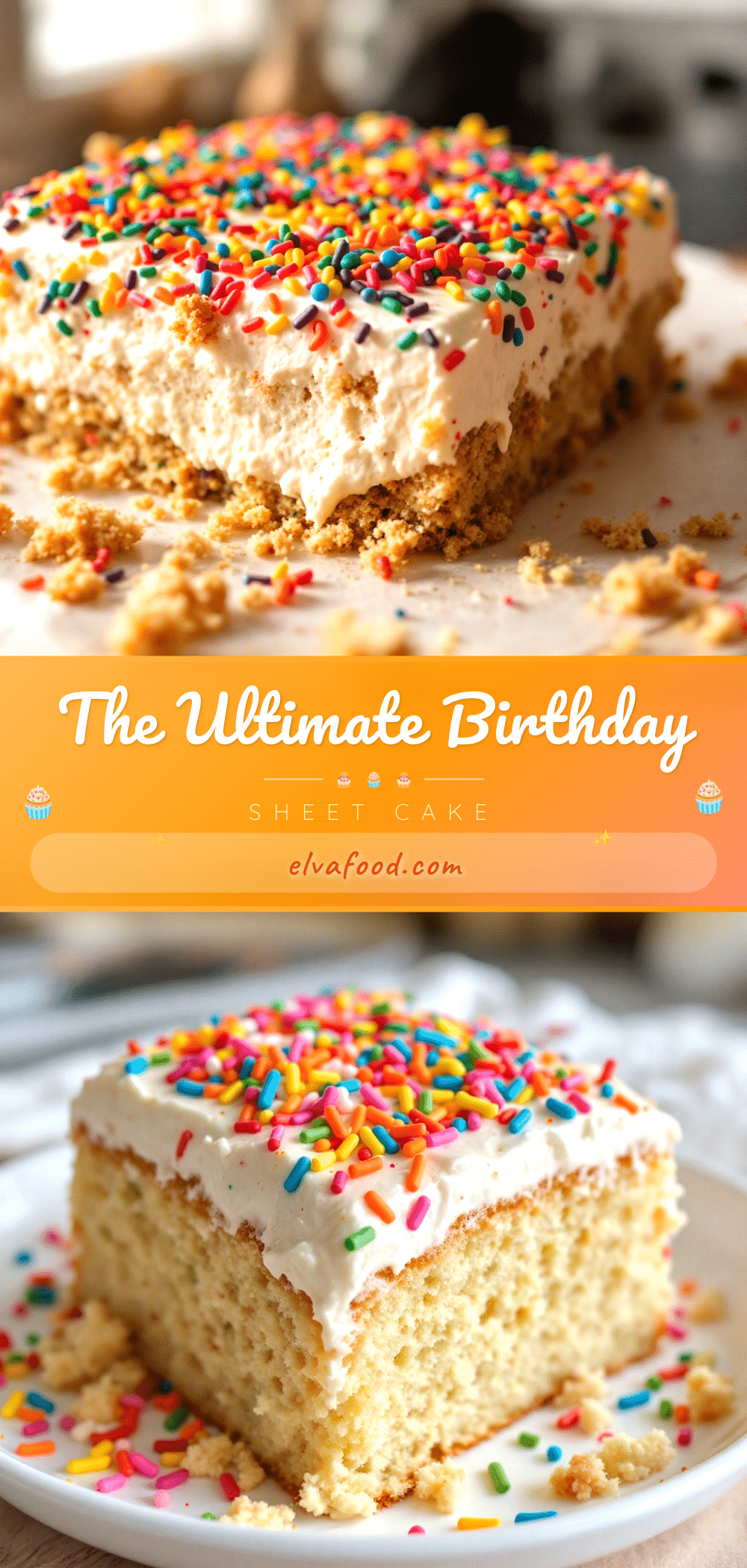
The Perfect Birthday Sheet Cake with Rainbow Sprinkles
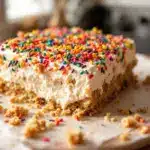
This tender, moist sheet cake uses the reverse creaming method for a perfect crumb, topped with silky vanilla buttercream and rainbow sprinkles. It’s the ultimate crowd-pleasing birthday cake that stays delicious for days.
- Prep Time: 20 minutes
- Cook Time: 30 minutes
- Total Time: 1 hour 50 minutes (includes cooling)
- Yield: 20 servings 1x
- Category: Dessert
- Cuisine: American
Ingredients
- 2 ½ cups (315g) all-purpose flour
- 2 cups (400g) granulated sugar
- 1 cup (226g) unsalted butter, softened
- 1 ½ teaspoons baking powder
- ½ teaspoon baking soda
- 1 teaspoon salt
- 1 cup (240ml) whole milk, room temperature
- 2 large eggs, room temperature
- 2 teaspoons vanilla extract
- 1 ½ cups (339g) unsalted butter, softened (for frosting)
- 5 cups (625g) powdered sugar
- 3 tablespoons whole milk or heavy cream
- 2 teaspoons vanilla extract (for frosting)
- ⅛ teaspoon salt (for frosting)
- ½ cup rainbow sprinkles (jimmies)
Instructions
- Preheat oven to 350°F (175°C). Line a 9×13-inch metal baking pan with parchment paper, leaving overhang on the long sides. Lightly grease the parchment and exposed pan sides with butter or nonstick spray.
- In a large bowl, whisk together flour, baking powder, baking soda, and salt. Set aside.
- In the bowl of a stand mixer (or large bowl with hand mixer), beat softened butter and sugar on medium speed for about 2 minutes until light and fluffy. Scrape down sides and bottom.
- With mixer on low, add half the flour mixture and mix until just combined (looks like wet sand). Add remaining flour and mix again until coarse crumbs form with no dry pockets.
- In a small bowl, whisk together milk, eggs, and vanilla. With mixer on low, pour in half the liquid mixture and mix until batter comes together. Add remaining liquid and increase speed to medium; beat for about 30 seconds until smooth, thick, and slightly glossy. Do not overmix.
- Scrape batter into prepared pan and spread evenly. Tap pan gently on counter to release air bubbles.
- Bake on middle rack for 28-33 minutes, until a toothpick inserted in center comes out clean or with a few moist crumbs. Edges should be lightly golden and pulling away from pan.
- Cool cake in pan for 15 minutes, then use parchment overhang to lift onto a cooling rack. Cool completely, at least 1 hour.
- While cake cools, make buttercream: In a clean mixer bowl, beat softened butter on medium speed for 3 minutes until pale and fluffy. Reduce speed to low and gradually add powdered sugar, 1 cup at a time. Add vanilla, salt, and 2 tablespoons milk or cream. Increase speed to medium-high and beat 2-3 minutes until light and airy. Add remaining milk if too thick, or more powdered sugar if too thin.
- Once cake is completely cool, spread buttercream evenly over top using an offset spatula.
- Generously sprinkle rainbow jimmies over soft frosting and press gently so they stick.
- Slice and serve. For clean slices, use a sharp knife and wipe clean between cuts.
Notes
Room temperature ingredients are essential for proper emulsification. The reverse creaming method creates a tender crumb by coating flour with butter before adding liquids. Do not overmix the batter. Cool cake completely before frosting to prevent buttercream from melting. Use jimmies (long sprinkles) rather than nonpareils to avoid color bleeding. Cake can be stored at room temperature for up to 3 days or frozen for up to 3 months.
Nutrition
- Serving Size: 1 slice (1/20 of cak
- Calories: 410
- Sugar: 38
- Sodium: 210
- Fat: 22
- Saturated Fat: 14
- Carbohydrates: 52
- Protein: 4
Keywords: birthday cake, sheet cake, rainbow sprinkles, vanilla cake, buttercream, easy cake, one-pan cake